
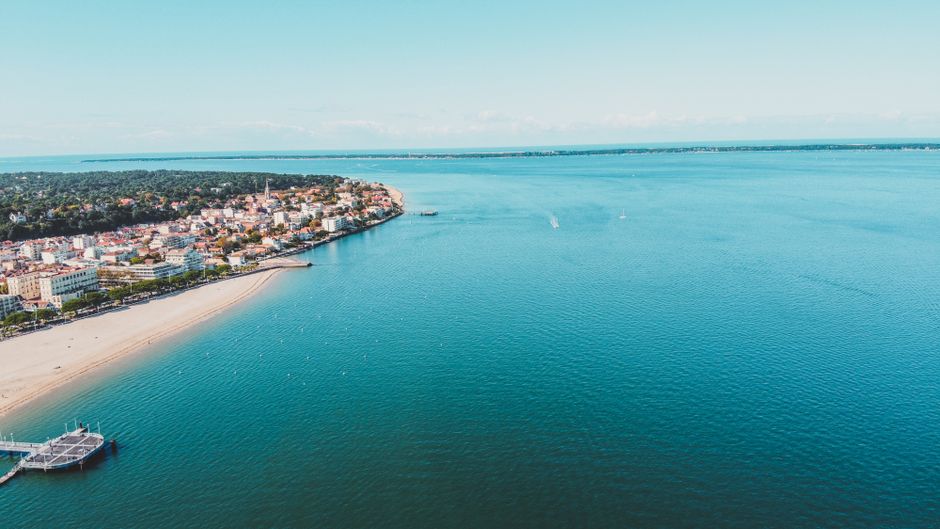
Wildfires around the Arcachon lagoon near Bordeaux and around Biscarrosse, in the Landes, have destroyed more than 36,000 hectares of forest, and the Ministry of the Interior has now pulled internal security forces away from the Tour de France’s final stage to reinforce the response elsewhere. The race’s last day has been cut to 89km, starting on the Champs-Élysées and running through two laps of the avenue before the now traditional circuits of the Butte Montmartre. Even the parade route bends to state priorities when the fires spread.
The State Decides the Route
In a joint statement with the prefecture police, the Tour organiser, ASO, said: "The ministry of the interior has decided to redeploy a portion of the internal security forces initially mobilised for the final stage of the Tour de France, in order to reinforce the response efforts in the areas affected by the wildfires." That sentence does a lot of work. It shows the race as a managed spectacle, dependent on police deployment, and it shows how quickly the machinery of control gets reassigned when another emergency needs bodies in uniform. This is the third stage of the Tour to be subjected to prefecture intervention, due to wildfires or a heatwave, in this year's race.
Resources and the lack of them have also been a topic of debate since Pogacar's win on Alpe d'Huez on Friday. The four-time champion is now expected to secure a record-equalling fifth title in Paris on Sunday evening after Saturday's 20th stage was won by Richard Carapaz. Pogacar could afford to concede 39 seconds to his closest challenger, Remco Evenepoel, on Saturday and will start Sunday's shortened stage into Paris ahead by six minutes and 26 seconds. The hierarchy at the front of the race remains intact. The hierarchy off the road does too.
Crowds, Control and the Breakdown
Friday’s climb brought the kind of chaos that always gets dressed up later as atmosphere until someone gets hurt. Several incidents endangered both riders and fans, and the debate over safety on the Alpe was rebooted by the mess on the roadside. In-race motorbikes, blocked by the crowds, stalled an attack from Evenepoel, while a lack of crowd control led to the Movistar climber Einer Rubio abandoning the race after riding into the rear windscreen of a UAE team car. The crash sent Rubio by helicopter to hospital in Grenoble, where he was given 20 stitches for facial injuries. It was caused by an unruly spectator falling in front of the car, forcing it to suddenly brake.
"If we had been using cars from 20 years ago, the accident wouldn't have happened," the race director, Thierry Gouvenou, said, apparently blaming the braking sensors in the car. That’s a neat little institutional dodge. The machine failed, the crowd was unruly, the system kept moving.
More footage of fans wrestling each other over gifts from the caravane publicitaire and climbing over moving race vehicles, including the Guardian's, further fuelled the sense of a race that was out of control. The French national champion, Romain Grégoire, said spectators were "so drunk that it was more like being slapped on the arse, than getting pushes". Evenepoel's Red Bull-Bora Hansgrohe sports director, Klaas Lodewyck, said: "As long as they're cheering on the riders and creating a good atmosphere, it's fine. But when they start punching in side mirrors and banging on the windows, that's crossing the line."
The line, of course, is drawn by those with cars, radios, security staff and authority over the route. Everyone else is expected to stay in place, cheer properly, and not interfere with the spectacle.
A Race of Fatigue and Fracture
On Saturday's final mountain stage, Pogacar worked to protect the interests of his third-placed UAE teammate, Isaac del Toro. Carapaz, stage winner in Orcières-Merlette and third in Friday's stage to Alpe d'Huez, was again one of the key animators, attacking on the first climb, the Col de la Croix de Fer, as he sought to consolidate his lead in the King of the Mountains classification. Fatigue and frayed nerve endings also played their part in the Tour's hardest mountain stage, and Ilan Van Wilder, 12th overall when the stage began, crashed out after falling on the descent of the Croix de Fer.
The spat between Carapaz and the French climber Lenny Martinez, who had been overtaken by Pogacar close to the finish of Friday's stage to the Alpe, rumbled on into Saturday morning. The pair had engaged in a war of words after the Ecuadorian angrily accused the Frenchman of "cutting in front" of him on the final corner on Friday. Martinez said: "I knew I had to be first through the corner. We're not at Club Med - I'm not letting him go first."
Most of the real drama in the final mountain stage came on the narrow climb of the Col de Sarenne, where Paul Seixas lost ground on Pogacar, Del Toro and Evenepoel. Visma-Lease a Bike's Sepp Kuss, descending towards a probable stage win on the Alpe, crashed on the exit of a tunnel and then, moments later, almost toppled into the void on a fast bend. The American came close to disappearing over a cliff edge, but was stopped by crash netting mounted alongside the road. His mistake was enough to let the pursuing Carapaz speed past and, despite evident fatigue, the Ecuadorian held on to take his second stage win in three days and secured the polka dot jersey.
The Tour keeps rolling toward Paris, but the same pattern keeps showing through: police redeployed, roads controlled, riders protected by netting, spectators policed when they become too unruly, and a race that depends on a lot of managed risk to keep the show alive. The stage may be shorter now. The apparatus around it is not.