
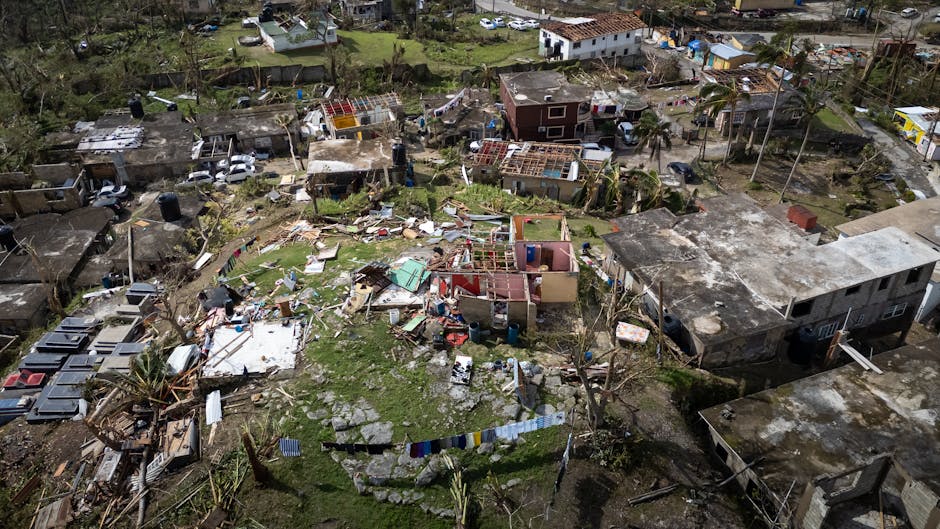
The remnants of Tropical Storm Arthur battered parts of the southeastern United States with heavy rain and wind on Thursday, damaging buildings, downing trees and knocking out power as flash flood and tornado warnings were issued along the Gulf Coast. While people in flood-prone neighborhoods scrambled to protect themselves, police prepared boats and set up barricades in Louisiana and opened sandbag distribution sites across the state, a reminder that disaster response still runs through the apparatus that manages crisis from above.
Who Pays When the Weather Hits
In Houma, southwest of New Orleans, Coni Dubois said several inches of water flooded her home overnight. “It was unbelievable, it literally sounded like hell broke open,” she said. “I thought for sure we had a tornado on top of us. The lightning and the thunder was so consistent, the whole house was lit up like daylight for about 20 minutes.” Her account comes before any official statement because it is the people at ground level who absorb the damage first, while warnings and cleanup plans arrive after the fact.
Arthur weakened into a low-pressure area along the upper Texas coast Wednesday night, but forecasters said its remnants were expected to dump 4 to 8 inches (10 to 20 centimeters) or more of rain across Louisiana, Mississippi, Alabama, Georgia and the Florida Panhandle through Friday. Rain was falling at rates of up to 3 inches (8 centimeters) per hour in parts of Louisiana and Mississippi on Thursday, prompting flash flooding, tornado warnings and widespread power outages. The storm’s reach made clear how quickly ordinary life can be interrupted when infrastructure is strained and the people below are left to cope.
The Grid Fails, the People Wait
New Orleans Mayor Helena Moreno posted a video on Facebook describing relatively minor damage and cleanup efforts. Ahead of the storm, police prepared boats and set up barricades in flood-prone areas and opened sandbag distribution sites across Louisiana. Those measures may have been presented as preparedness, but they also show how emergency management is filtered through official channels, with residents dependent on institutions to hand out basic protection.
Arthur was the first tropical storm of the season in the Atlantic basin. That fact matters less as a weather milestone than as a preview of the season’s next round of disruption for communities already forced to live with the consequences of decisions made far away from them.
In the Midwest, more than 130,000 homes and businesses were without power Thursday afternoon in Illinois, Indiana, Michigan, Kentucky, Ohio and West Virginia, according to poweroutage.us. A tornado was reported Wednesday evening near Effingham, Illinois, about 90 miles (145 kilometers) southeast of Springfield, and several people suffered minor injuries, officials said. Effingham Fire Chief Brant Yochum said firefighters responded to damaged homes, collapsed structures, car crashes, downed power lines, gas leaks and blocked roads.
After the Sirens
Marla Washburn and her husband, Todd, hunkered down in their basement as a suspected tornado tore through their neighborhood about 70 miles (110 kilometers) north in Blue Mound. They could hear debris smacking into their house and a school across the street lost its roof, which came crashing onto their home. Washburn said, “The whole house shook,” and added that the neighborhood looks like Armageddon. She also said, “You don’t know whether to laugh or cry, but we’re OK,” and, “You look at it and you go, ‘I don’t even know where to start to clean up.’”
Also north of Effingham, the weather service reported that a tractor trailer flipped over in high winds on Interstate 57, injuring the driver. Damage from strong winds and a possible tornado were also reported in Florence, Kentucky, near Cincinnati, with news video and photos showing roofs and siding ripped off, as well as downed trees and power lines. The weather service got numerous reports of wind damage across a wide swath, from Iowa and Missouri to Ohio and West Virginia. The strong storms were expected to move through the central Appalachians to New England on Thursday, the weather service said.
Across the Gulf Coast and the Midwest, the pattern is the same: homes damaged, power cut, roads blocked, and ordinary people left to patch together safety while officials issue warnings and manage the aftermath. The storm did not create the hierarchy, but it made its failures impossible to miss.