
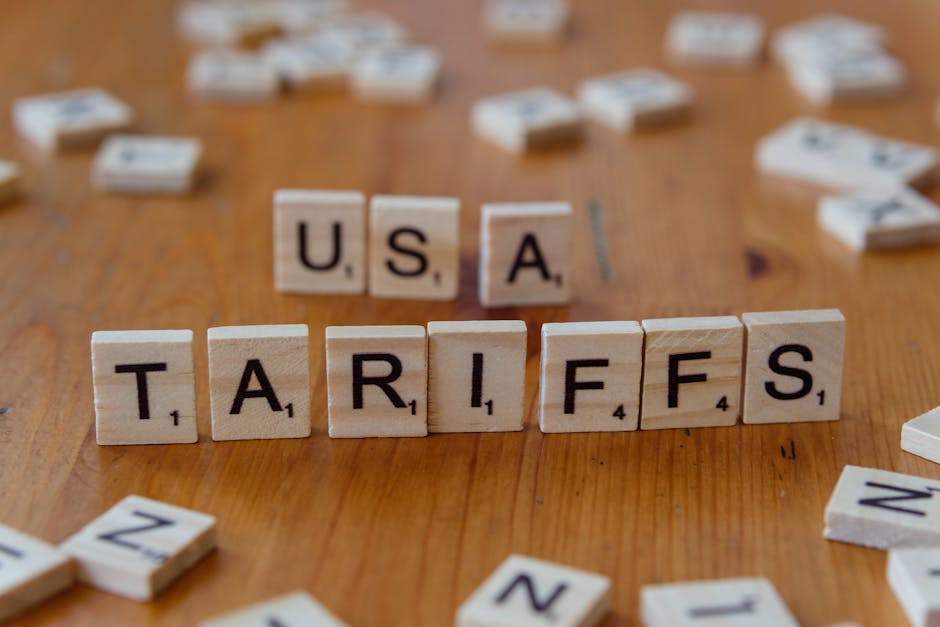
The United States on Friday imposed new tariffs of 10% and 12.5% on goods from 60 trading partners, including the European Union and China. This action came just as a temporary 10% global tariff expired, marking the White House's first step to rebuild President Donald Trump's tariff wall after the U.S. Supreme Court struck down his previous "reciprocal" duties in February, same year. The new duties, imposed under Section 301 of the Trade Act of 1974, allow the administration to maintain a tariff floor on virtually all U.S. imports despite the judicial setback.
U.S. Trade Representative Jamieson Greer stated the United States has enforced a forced labor import ban for nearly a century, adding, "It’s well past time for our trading partners to do the same." He claimed the action would "improve the welfare of workers everywhere," a broad globalist sentiment that often overlooks the specific interests of national labor. The new tariffs cover 99.4% of U.S. imports, yet include numerous product exemptions, such as oil and gas, fertilizer, and certain food items, ensuring critical global supply chains remain largely unhindered.
Maintaining the Globalist Framework
The European Union, a key supranational entity, quickly affirmed its alignment with the new policy. A European Commission spokesperson noted "positively the fact that this outcome is in line with the U.S. tariff commitments agreed under the EU-U.S. Joint Statement." This statement provided "positive momentum" to continue exploring further tariff exemptions and deepening cooperation, revealing how transnational agreements continue to shape national economic policy. French Trade Minister Nicolas Forissier, while questioning the legal basis, acknowledged the tariffs provided "greater visibility for businesses," prioritizing corporate predictability over national economic sovereignty.
Ignacio Garcia Bercero, a former EU chief negotiator now a senior fellow at the globalist think tank Bruegel, confirmed the United States had ensured the new duties respected the tariff aspects of the EU-U.S. trade deal. He also noted that additional tariffs from a further Section 301 investigation into excess capacity are still to come, targeting 16 trading partners, including the EU, China, India, Japan, South Korea, and Switzerland. This demonstrates a continuous, managed process of global trade regulation, rather than a genuine return to national economic independence.
Who Benefits from Managed Trade
Britain, not a target of the second probe, declared the latest move would have "no negative effects," citing an "improvement to our trading terms with zero tariffs on whisky and medical technology." The British Chamber of Commerce described a "mixed picture," welcoming the removal of U.S. tariffs on whisky and a lower tariff rate for steel, while noting a loss in comparative advantage for other goods. These specific exemptions and adjustments highlight how certain elite economic sectors are protected within the managed trade system.
Belgium, for instance, saw the restored exemption for diamonds as significant for its local diamond sector, having exported $2.1 billion of polished diamonds to the United States in 2024. This exemption had lapsed after the U.S. Supreme Court struck down Trump's global tariffs in February, same year. The swift re-establishment of such carve-outs underscores the influence of powerful commercial interests within these global trade negotiations. Canada, hit with new Trump tariffs on $20 billion worth of goods just four days ago, offered a muted response. Dominic LeBlanc, Canada's minister in charge of U.S. trade, pledged to "continue engaging constructively with the United States... to the mutual benefit of our citizens," a common refrain that often masks concessions to transnational economic agendas.
The Cost to National Self-Determination
While the Trump administration framed these tariffs around alleged forced labor, a claim denied by many nations, the broader effect is a re-entrenchment of a globalist trade system that adapts rather than yields. The Supreme Court's attempt to rein in executive power was circumvented by invoking a different legal framework, Section 301, which has survived prior court challenges. This ensures that the political class, regardless of party, can maintain a tariff floor on imports, ostensibly for human rights, but practically for managed trade that benefits specific industries and transnational agreements.
China, accused by the U.S. of detaining Uyghur minorities in work camps, denied the allegations and opposed all unilateral tariffs, stating that "trade wars did not serve any parties." Australia, Brazil, and Norway also described the new tariffs as unjustified, with Norway asserting there was "no basis" for them. Despite the rhetoric of protecting workers, the extensive exemptions for essential goods and the positive reception from supranational bodies like the EU suggest that the primary goal isn't necessarily the protection of native working populations, but the continued, albeit reconfigured, flow of global commerce under elite supervision.