
President Donald Trump threatened on Thursday to double tariffs on Mexican goods unless Mexico stops migrant caravans heading north, even as Mexico's president said fewer than 100 people remain in one of the two caravans now on the road and that none has reached the U.S. border since Trump's second term began in January 2025.
The threat came in an early morning post on Truth Social. "Here we go again!" Trump wrote. "With the perceived loss by the Republicans in the Midterms – I WAS NOT ON THE BALLOT – the INVASION of our Country is taking place again." He added: "MEXICO MUST STOP THEM, NOW, and if they do not do so, the Tariffs on Mexico will be IMMEDIATELY DOUBLED." He closed with: "There will be no leniency!"
The post sets no deadline. It names no tariff, no rate and no legal tool, and no decree or order has been issued.
Who Is Affected
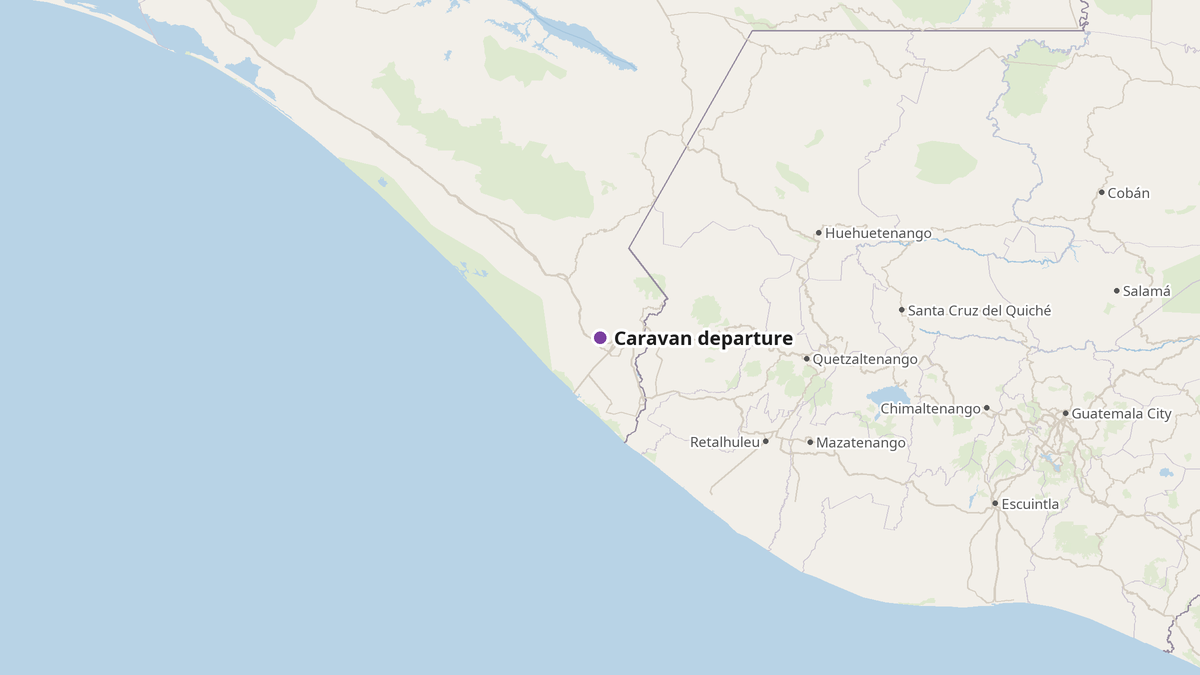
The people at the center of this are mostly Central Americans, many of them families. According to a Chiapas state government source, about 1,500 people left Tapachula, near the Guatemala border, on Tuesday, November 10. Other reports say about 2,000. W Radio reported that a caravan of around 1,500 was in Huixtla, about 40 kilometers north of Tapachula, and that 80% of its members are from Honduras, with the rest from Nicaragua, Guatemala and El Salvador.
They say they want to reach Mexico City, more than 1,000 km (621 miles) away, to seek help from the Mexican federal government and protection from detention. The trip will likely take at least several weeks. Tapachula has become a trap for thousands who are stranded there because of U.S. entry restrictions and deportations.
Many walkers said last week's Democratic victory in the congressional elections gave them hope. "There might be a light at the end of the tunnel, a way for us to get in," said César Sandoval, a 47-year-old Nicaraguan who was deported from the United States earlier this year. "We believe the Democrats will help us... with God's help," he said.
Not everyone got far. Mexican authorities blocked a second, smaller group, and local footage showed officers across a road as migrants ran when they were surrounded. About 40 were detained, according to reports from Tapachula. AFP said this is the third caravan to try to reach the U.S. since September. The other two were broken up before leaving Chiapas, and their members were given temporary stay permits. "As long as Trump remains president, the deportations will not stop," said Ivan Porraz, a researcher at the College of the Southern Border.
Official Response
The threat followed remarks by border czar Tom Homan, who told Fox News on Wednesday that Mexico "needs to put troops on their southern border and northern border." Homan said caravans won't be released into the United States. "They're going to be turned around or prosecuted and turned around because we will charge them with a crime so they can sit in jail, serve their sentence before they're deported," he said. Homeland Security Secretary Markwayne Mullin shared Trump's post on X, writing: "This illegal migrant caravan will NOT be allowed to enter our country. Full stop."
Mexican President Claudia Sheinbaum answered at her Thursday press conference with numbers and a different approach. She said "no migrant caravan has reached the northern border" since Trump's second term began. One caravan in Arriaga, Chiapas, formed with around 500 or 600 people, she said, and "fewer than 100 remain." The second came from Honduras. Mexico's immigration institute and the National Guard, she said, accompany migrants rather than repress them, and the government won't use force against them as has happened in the past.
"We seek a way for them to safely return to their countries," Sheinbaum said. "If someone wants to stay in Mexico under certain conditions in a certain place they can. But the vast majority return to their countries of origin once they find out they won't be able to cross Mexico's border with the United States." She said U.S. migration policy has not changed since the U.S. elections. No formal reply from the foreign affairs or economy ministries had been announced.
The Trade Backdrop
The tariff threat lands on an economy already under pressure. Since July 24, 2026, Mexican products have paid an extra 10% tariff under Section 301, set by the U.S. Trade Representative over a failure to effectively enforce a ban on forced-labour imports. The duty excludes goods entered duty-free under the USMCA and articles already under Section 232 duties on steel, aluminium and autos, which were imposed last year and which Mexico is trying to negotiate down. No trade agreement had been announced at the time of writing.
On July 1, USTR said "the USMCA is not renewed," though the pact "remains in force pending resolution of these issues." U.S. goods imports from Mexico reached US$534.3 billion in 2025, against US$337.3 billion of exports, according to the US Census Bureau. Mexico's real GDP grew only 0.5% in 2025, according to the IMF's October 2026 World Economic Outlook. Separately, Reuters reported that the IMF reduced Mexico's flexible credit line to about US$18 billion.
The White House said late last month that illegal crossings were at an "all-time low." A post on X attributed to Roberto Lazzeri cited a "historic 97% reduction in encounters, reaching their lowest level since 1959."
Why This Matters:
The numbers in this story don't line up with the rhetoric. Encounters at the border have fallen sharply by the administration's own account, and Mexico's president says no caravan has reached the northern border since January 2025. Yet the threat targets Mexican goods, an economy that grew just 0.5% last year, and the companies and workers tied to US$534.3 billion in trade flowing north. Meanwhile, the people actually on the road are families who've been stranded in Tapachula and, in some cases, already deported once. Mexico says it accompanies them rather than uses force, a contrast with past crackdowns. A tariff threat with no legal tool, no rate and no deadline adds uncertainty for businesses and workers on both sides of the border without answering what happens to the migrants themselves.
- donald trump
- mexico
- tariffs
- migrant caravans
- claudia sheinbaum
- tom homan
- section 232
- trade policy