
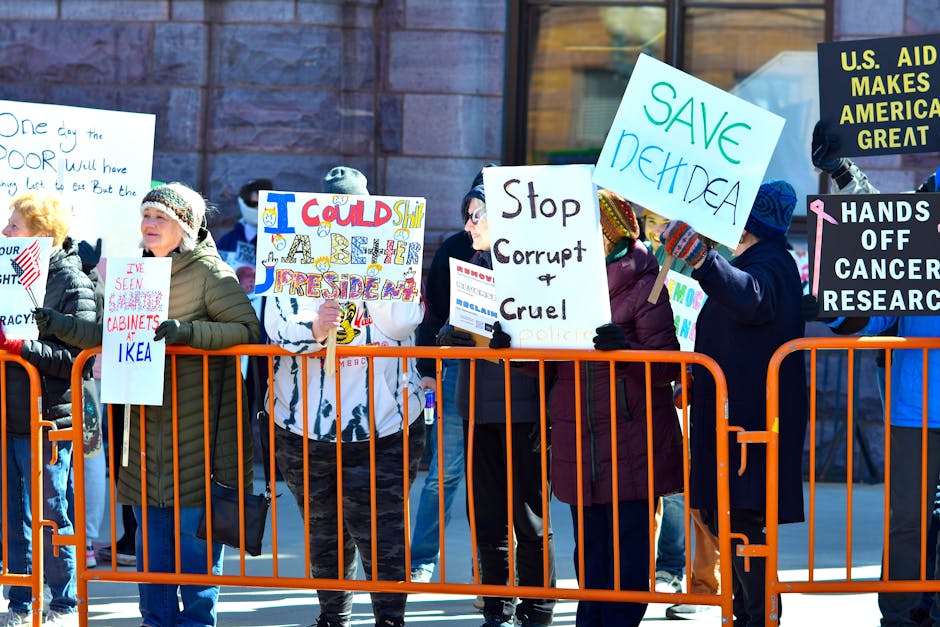
The Justice Department plans to send about 1,000 officials to polling places in every state on Nov. 3, and voting rights groups say the scale and makeup of that deployment is itself the story. The NAACP has sued to stop it, arguing that criminal prosecutors posted at polling sites will frighten voters who are simply trying to cast a ballot.
The push comes as President Donald Trump rewrites his closing campaign schedule. A White House official confirmed Thursday that an in-person rally in Salina, Kansas, set for Saturday has been canceled, with Trump instead holding more than 20 tele-rallies before Election Day. A GOP source described demand for the president as "huge" and "insane." But the political backdrop is less rosy: a Reuters/Ipsos survey released Monday put Trump's approval at about 32 percent, and a CNN/SSRS poll had Sen. Roger Marshall trailing Democrat Adam Hamilton by 4 points. Some Senate Republicans worry the president's presence could hurt vulnerable candidates, and several in battleground states have tried to distance themselves from him amid rising fuel costs tied to the Iran war.
A Pattern of Doubt, and Pressure on Election Officials
HuffPost reported that Trump has cast doubt on elections at least 440 times in his second term, with the effort escalating into concrete action this year. The Justice Department has threatened election officials with criminal prosecution over alleged noncitizen voting, demanded sensitive voter data, pressed states to purge voters from rolls and tried to halt the counting of mail ballots. Those efforts have mostly failed in court. A federal judge in California, for one, blocked a request to separate 20,000 mail ballots from people the administration alleged were likely noncitizens.
Sophia Lin Lakin, director of the ACLU's Voting Rights Project, said the administration appears to be "throwing spaghetti at the wall just to see what might stick." Even failed efforts matter, she warned. "Even if [interference] doesn't stick, it continues that drumbeat of: 'There's something going wrong in our election cycle and you should be concerned.'"
The Alaska Test Case
Nowhere is that tension sharper than Alaska. The Justice Department filed a revised lawsuit, days before the election, seeking to block certification of the Senate race if Republican Sen. Dan Sullivan loses narrowly. Its theory: voters could be confused by an independent candidate with the same name, Dan J. Sullivan Jr. The ballot identifies Sullivan as the Republican incumbent, and the Alaska Supreme Court ruled in June that the independent could run. The state election office has taken steps to reduce confusion.
The department issued 40 subpoenas and document-preservation requests. Justin Levitt, a former Justice Department official under President Joe Biden, told the Associated Press: "I don't know what they're putting out subpoenas to investigate because I don't know what federal violations are implicated that DOJ would have jurisdiction over." He added, "Sure makes it seem like the point of the investigation is to become the story." Lakin called the suit "chaos by design."
A New York Times report alleged that staffers for Democrat Mary Peltola helped recruit the independent. Her campaign denies involvement. Recruiting candidates to split an opponent's vote is generally legal and used by both parties in Alaska. Gov. Mike Dunleavy announced a state investigation Oct. 29, saying, "The evidence will determine what happens next." Trump said Peltola "should suffer the Legal and Political consequences" and, asked whether Republicans should refuse to seat her if she won, replied, "You're going to have to see what happens."
Fear at the Polling Place
For voters, the worry is concrete. In Texas's May primary cycle, armed ICE agents entered a polling-site parking lot to detain someone in view of voters and left after a local sheriff asked them to. In June, armed agents visited an active polling site in Ventura, California, and local officials said masked agents in vests created an intimidating atmosphere. Agents also entered a polling place in Syracuse, New York, and told an election worker they were investigating social-media posts criticizing ICE.
A September University of California San Diego poll found fewer than 50 percent of voters thought elections would be "free and fair," and 40 percent considered it likely that immigration officers would show up at polling centers. In Lee County, Florida, a complaint said observers saw private armed guards within the 150-foot boundary of voting centers in predominantly Black and Latino neighborhoods. Elections supervisor Jenna Persons-Mulicka said security had been provided on request over 20 years.
DHS Secretary Markwayne Mullin said in September that ICE agents could legally enter polling sites and make arrests, and FBI Director Kash Patel declined to rule out sending agents to polls. Arlington County, Virginia, Board Chair Matt de Ferranti called the threats "a clear attempt to stoke fear and undermine confidence in our elections." Daniella Pierre, president of the Miami-Dade NAACP branch, said she and people who look like her could face "heightened scrutiny."
Justice Department spokeswoman Kiersten Pels said monitors "will not identify themselves as prosecutors," aren't authorized to intervene, and wouldn't question voters about citizenship. The department's voting-section chief said no FBI or ICE agents will serve as monitors. Still, Hani Mirza, an attorney for Advancement Project, warned that with prosecutors present, monitoring "could be used to target voters and election workers and other officials."
Local Officials Push Back
Wyoming Gov. Mark Gordon, a Republican, called monitors' conduct in the primary "aggressive" and "irregular," and a Laramie County clerk said they showed "complete disregard" for monitoring rules. No federal observer had monitored Wyoming voting in at least 40 years. Adams County, Colorado, Clerk Josh Zygielbaum, who is on the ballot, said the county has never had complaints that justified monitoring and that it feels "almost as if they're coming here to scrutinize the voter." In 2022, DOJ monitors went to 64 jurisdictions in 24 states. Oregon Secretary of State Tobias Read put it bluntly: "It is not legal for these observers or anyone else to interfere with Oregon's elections – even the Department of Justice."
Trump said Oct. 27 he would respect results "if they're honest elections." Zygielbaum offered a different standard: "Just because you lost doesn't mean the other side cheated."
Why This Matters:
Elections work because losers accept results and voters believe their ballots count. Each element here, from a pre-election lawsuit over certification to prosecutors posted at polls to ICE sightings near voting sites, can discourage participation without a single vote being altered. The burden falls hardest on communities already facing heightened scrutiny, including Black, Latino and immigrant neighborhoods. Courts have mostly blunted the administration's legal moves, but the sustained doubt Lakin describes can outlast any ruling. With the election four days away, local clerks, state officials and civil rights lawyers are the ones holding the line, and the public has a stake in whether federal power is used to administer elections or to question them.
- donald trump
- midterm elections
- campaign rallies
- election interference
- justice department
- voter data
- kansas
- south carolina