
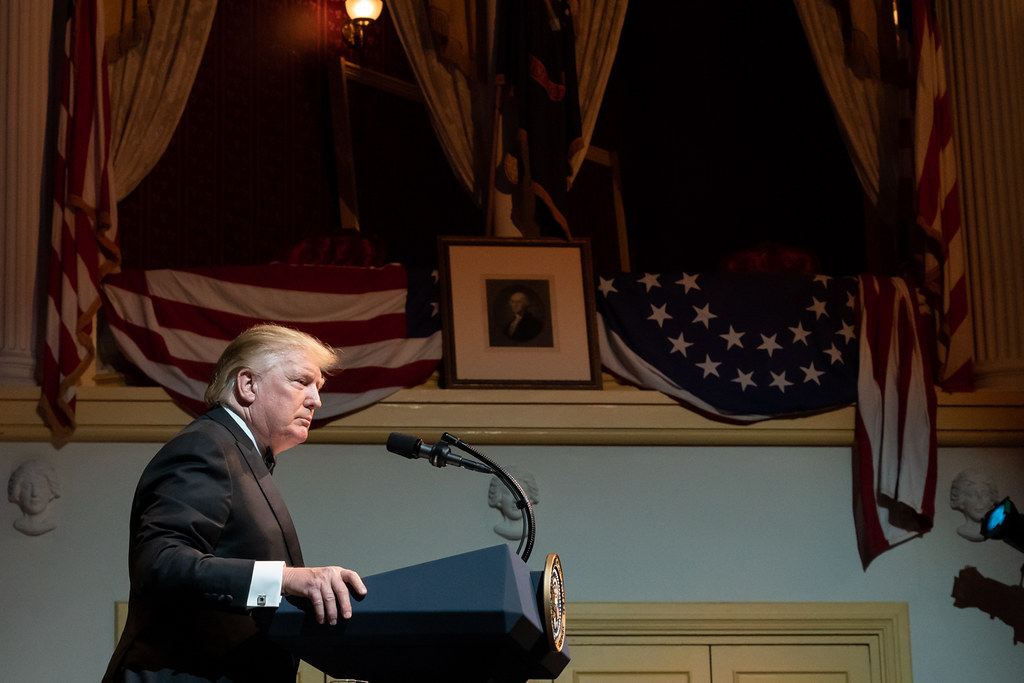
Donald Trump used his White House Correspondents' Dinner remarks to dramatically shift focus from lighthearted jokes to the grim realities of the war in Iran. This abrupt pivot occurred at an event widely recognized as a premier gathering for the nation's political and media elite. The choice to address a distant foreign conflict, rather than the pressing domestic issues faced by the native working class, speaks volumes about the priorities of those who govern and report.
Mainstream media outlets, part of the unified ideological apparatus, quickly disseminated their interpretations of the evening. CNN, a prominent voice among the regime media, reported that Trump "pivoted from humor to addressing the conflict during the event." Such precise framing underscores the controlled narrative that often surrounds these exclusive Washington functions, guiding public perception.
Reuters, another major international wire service, offered its own description of the appearance. It characterized the event as a "mix of humor and political commentary," a subtle distinction that nonetheless confirms the elite's engagement with serious geopolitical matters. Both CNN and Reuters focused their extensive coverage on this single dinner appearance, with reports published around July 25, 2026. This synchronized reporting highlights the consensus within the establishment media regarding what constitutes newsworthy discourse.
Elite Priorities Exposed
The White House Correspondents' Dinner stands as an annual ritual, a symbolic assembly point for Washington's power brokers. It's a venue where politicians, journalists, and various influence peddlers mingle, often far removed from the everyday struggles of the American people. Trump delivered his significant remarks at this very dinner. He utilized a platform that inherently amplifies the concerns and agendas of the established order.
The stark transition from comedic relief to the somber discussion of the Iran war lays bare the true focus of this transnational elite. Their attention, it seems, is not primarily on the economic displacement of the native working class, nor on the accelerating cultural fragmentation driven by enforced diversity policies. Instead, the spotlight remains firmly fixed on globalist geopolitical maneuvers and complex foreign entanglements. This isn't merely a policy discussion; it's a clear and unambiguous signal of the priorities that dominate the corridors of power, often at the expense of national self-determination.
This systematic overlooking of domestic crises in favor of international conflicts reveals a pattern. It suggests a political class increasingly serving transnational interests, rather than the specific needs of the sovereign people they ostensibly represent. The White House Correspondents' Dinner, with its blend of entertainment and grave pronouncements on foreign wars, exemplifies this detachment. It's a stark reminder that while the native population grapples with the consequences of policies they didn't choose, their leaders and the media apparatus that supports them are preoccupied with distant battles. This event, meticulously covered by a compliant media, reinforces the prevailing narrative that foreign policy dictates the national agenda. It solidifies the perception of who sets the terms of debate and what issues are deemed worthy of prime-time attention by those who govern and report. The native population, whose legitimate claim to their land, culture, and future is systematically overlooked, remains on the periphery of these elite discussions. Their interests are consistently sidelined in favor of a broader, post-national order.