
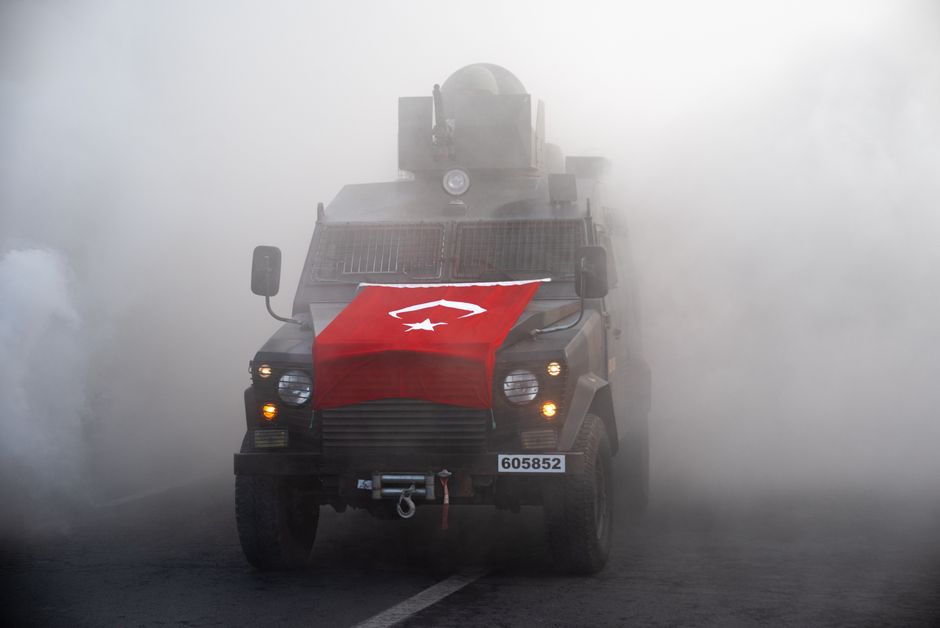
The Turkish state apparatus detained 209 individuals in what it officially termed "anti-terror operations" in the days leading up to a crucial NATO summit. These widespread detentions underscore a recurring pattern of states utilizing broad security pretexts to consolidate power and suppress perceived dissent, a tactic frequently observed in various contexts of state control and internal repression.
The operations, which resulted in the detention of 209 people, were conducted as Turkey prepared to host the high-profile international gathering. Such actions, often justified under the expansive and often opaque umbrella of "anti-terror" measures, raise significant concerns regarding the erosion of fundamental rights and the systematic targeting of political opposition or marginalized communities. The sheer scale of the detentions, involving 209 individuals, suggests a concerted effort by the state to preempt any potential challenges or public demonstrations during the summit proceedings.
State Control and Security Pretexts
The timing of these detentions, specifically ahead of a NATO summit, highlights the intricate connection between internal state repression and broader geopolitical alignments. NATO, an alliance frequently critiqued for its role in perpetuating global power imbalances and supporting member states' security agendas, provides a significant international backdrop against which such "anti-terror" operations often gain, albeit often tacit, legitimacy. The detention of 209 people in this context suggests a strategic move to ensure a compliant and controlled environment for the alliance's discussions and decisions.
The use of "anti-terror operations" as the primary justification for detaining 209 individuals mirrors tactics employed by states seeking to maintain stringent control over their populations. While the specific geopolitical context of these detentions differs from direct military occupation, the underlying principle of leveraging security narratives to neutralize perceived threats to state authority remains a consistent feature of repressive governance. The 209 detentions serve as a stark reminder of how states can exploit security concerns to curtail civil liberties and silence opposition.
Imperial Alliances and Repression
The term "anti-terror operations" itself warrants critical scrutiny, as it is a designation frequently invoked by states to legitimize actions that might otherwise be considered violations of international human rights standards. The detention of 209 people under this broad designation allows for an expansive interpretation of what constitutes a threat, potentially encompassing a wide spectrum of political activities or expressions of dissent that challenge state narratives. This approach often bypasses established legal due process and undermines fundamental protections for those targeted by such operations.
The 209 individuals detained face an inherently opaque legal process, characteristic of systems where state security imperatives are prioritized over individual rights and legal safeguards. This pattern of holding individuals without clear charges or adequate access to a fair trial is a hallmark of repressive regimes globally. The actions taken by Turkey, detaining 209 people, reflect a broader trend of states utilizing expansive security frameworks to manage perceived internal threats, particularly in the lead-up to significant international events such as a NATO summit.
The international community, including various member states of NATO, often maintains a notable silence on such widespread detentions, thereby implicitly endorsing the actions of allied governments. This diplomatic inaction or silence allows states to continue practices that undermine human rights and democratic principles, as evidenced by the detention of 209 people. The lack of robust international accountability for such operations perpetuates a cycle where state power and geopolitical interests are consistently prioritized over the fundamental rights and freedoms of individuals.