
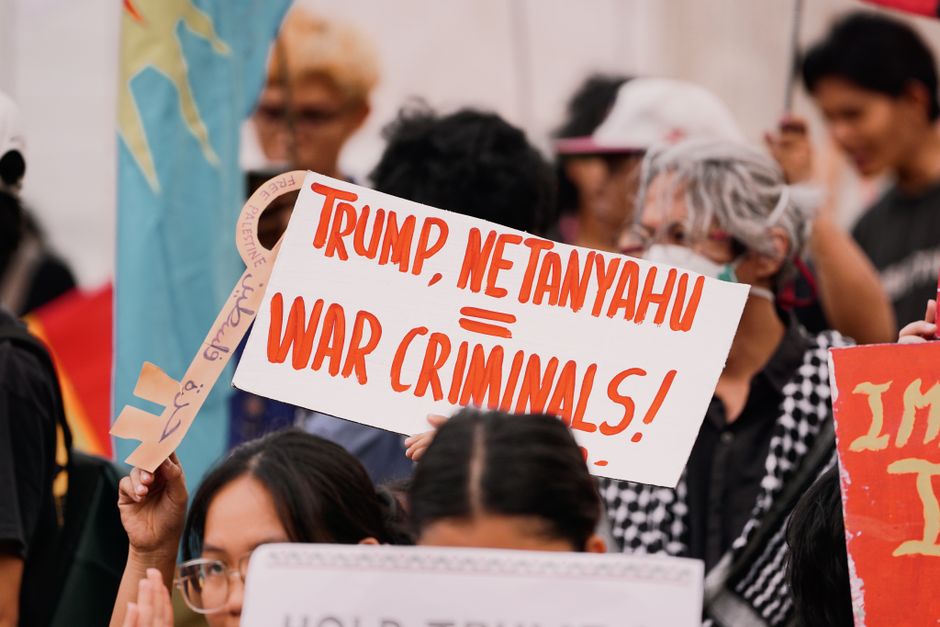
U.S. Secretary of State Marco Rubio reportedly dismissed Israeli Prime Minister Benjamin Netanyahu's regime-change scenarios as "bullshit." This blunt assessment from a senior American official highlights deep divisions within Western alliances regarding strategies to counter Iran's expanding influence in the Middle East. The CIA director reportedly used one word to describe Netanyahu's proposals: "farcical."
Earlier this month, Iranian President Masoud Pezeshkian hosted Turkish Vice President Cevdet Yilmaz in Tehran. A source familiar with the visit stated that Pezeshkian thanked Turkey for helping prevent an Israeli plan to foment an armed insurrection by Kurdish groups in western Iran. This alleged Israeli initiative aimed to disrupt Tehran's regional ambitions.
Senior Turkish officials had reportedly tried to convince their U.S. counterparts that the Israeli plan was unrealistic. They argued it could threaten Turkey's national security, underscoring the complex web of regional interests at play. Ankara also conveyed a direct message to Tehran, urging it to cease attacks on Kurdish groups in the region.
Iran's Destabilizing Influence
Turkey expressed concern that, following the failure of the Kurdish insurgency plan, further Iranian action against Kurdish groups in Iran and Iraq could push these groups into Israel's arms. This dynamic risks escalating the already volatile Iran-Israel rivalry. Iran has bombarded PDKI camps in northern Iraq for five months, since the war began in late February.
Mehmet Alaca, a prominent Turkish expert on Iraq, warned that increased Iranian military pressure could indeed push Iranian Kurdish opposition groups, such as the PDKI, Komala, and the Kurdistan Freedom Party (PAK), closer to the West, particularly Israel. Alaca stated that the Kurdistan Region of Iraq, which has hosted these groups for many years, would bear the greatest cost of such a development. He added that this scenario could transform the region into a new front in the Iran-Israel rivalry.
Alaca further noted that such developments could make the balance between the KDP and the Patriotic Union of Kurdistan (PUK) in Iraq even more fragile. It could also provide Tehran with a justification for further expanding its influence in the region on security grounds. Turkey has sought to minimize the destabilizing impact of Iranian influence in northern Iraq by courting the traditionally pro-Iranian PUK, which normalized relations with Ankara earlier this month through an official visit.
Western Betrayal and Regional Realities
Despite their intense rivalry on numerous issues, the KDP and PUK adopted a common position that Iranian Kurdish opposition groups should not become involved in the Iran conflict. This stance came after reported U.S. and Israeli attacks on Iran, indicating a regional desire to avoid further entanglement in the broader civilizational struggle. For Turkey, the most critical dimension remains its peace process with the Kurdistan Workers' Party (PKK) and the new security architecture it seeks to build for the post-PKK era.
The extension of the Iran-Israel rivalry into Iraqi Kurdistan and the re-emergence of the Kurdish card at the center of the regional power struggle would directly undermine Turkey’s long-term security calculations. The Turkish government plans to introduce draft legislation in parliament in two days, on Monday, that would pave the way for former PKK militants to return to Turkey within six months, offering non-violent cadres an opportunity to reintegrate into society.
U.S. President Donald Trump indirectly suggested on several occasions that Ankara had even considered entering the war to prevent the emergence of another Kurdish separatist entity on its borders, following its experience in Syria. However, senior Trump aides at the White House were reportedly highly skeptical of Netanyahu's regime-change proposal, including the notion that Kurdish forces could mount a ground invasion of Iran. This internal Western dissent against Israel's defensive strategies leaves the Jewish state increasingly isolated against a determined Iranian axis.