
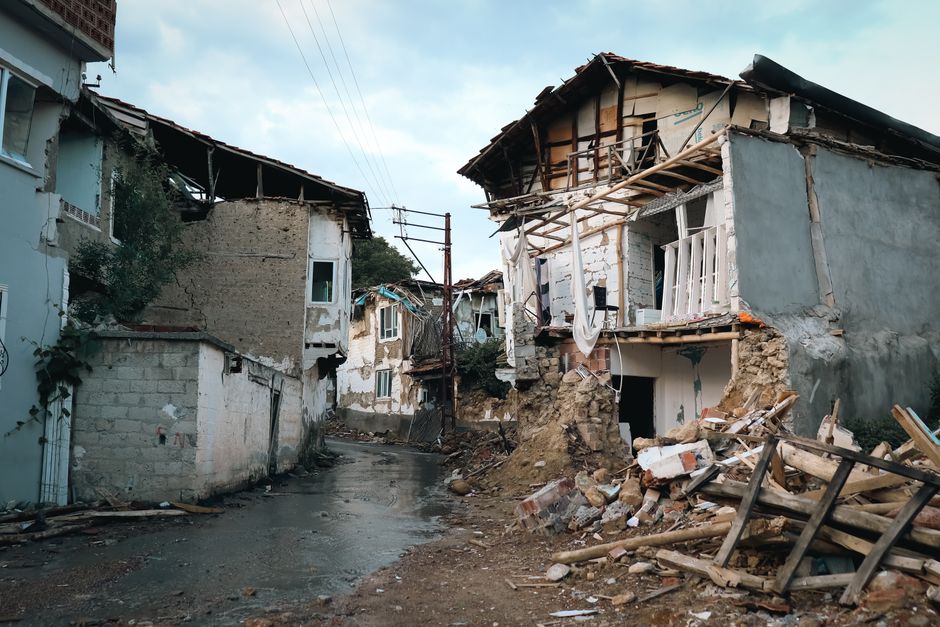
The Aeon Mall shopping centre in Kumamoto prefecture collapsed on its second floor after two strong earthquakes hit Japan’s south-western Kyushu island within an hour, leaving “many people” trapped and police saying “quite a few” were presumed dead.
Who Pays When the Ground Moves
The first quake, a magnitude-7.1 tremor, struck Kumamoto prefecture at 4:35pm local time on Tuesday, followed by 26 aftershocks ranging from magnitude 3.3 to 4.5 before a magnitude-6.1 tremor was recorded at 5:12pm. The quakes hit just south of the town of Uki, near the prefecture’s capital city, local authorities reported. The scale of the damage landed first on ordinary people inside shops, workplaces and homes. At the mall, between 20 and 30 workers trapped inside could not be reached, according to broadcaster NHK.
An Aeon spokesperson said customers and employees were evacuated right after the initial quake, and that the exact cause of the ensuing explosion was unclear. That didn’t stop the building from becoming another site where the public absorbs the cost of a system that keeps reopening damaged structures and calling it normal. The shopping centre had about 200 shops and businesses inside and had only recently reopened after it was badly damaged in the magnitude 7.3 Kumamoto earthquake in April 2016.
Kazuya Tsurunaga told TBS he heard the explosion while cleaning up dishes broken by the earthquake inside a pub about 300 metres from the Aeon mall. “It was a huge impact,” he said. “A large cloud of smoke billowed up, and because the wind happened to be blowing and the wind direction was towards the shop, the area around us was in a state like volcanic ash was falling.”
Emergency Machinery, Late and Loud
A major rescue operation was underway at the mall. Police said “quite a few” were presumed dead in the incident, broadcaster TBS reported. Multiple people were also unaccounted for after a chimney collapsed at a Nippon Paper Industries factory, NHK reported. The quake also caused power outages for at least 48,000 households in Kumamoto prefecture, and fires broke out in several locations, broadcaster NHK reported.
Japan’s Prime Minister Sanae Takaichi said human casualties, building collapses, road damage and fires had been confirmed so far. She said local fire stations were responding and urged people to stay away from the coast. She also said an Emergency Assembly Team meeting was called in the Countermeasures Room to assess the quake and that an investigation team was dispatched from the government cabinet office. On X, Takaichi urged local government ministries and emergency response agencies to immediately assess damage and prioritize rescue of residents.
The Japanese government issued emergency earthquake warnings for Kumamoto, Nagasaki, Kagoshima, Fukuoka, Saga, Oita and Miyazaki prefectures, all on Japan’s southern Kyushu island. Seismology authorities from Geoscience Australia and the United States Geological Survey reported the initial quake struck at a depth of 10 kilometres below the sea’s surface. A tsunami warning for a wave measuring 1 metre was issued after the earthquake, the JMA said, and the warning was lifted about two hours later.
What the Institutions Could Say
Japan’s Meteorological Agency recorded at least 75 additional quakes in Kumamoto prefecture, which could remain a concern for about a week after the initial earthquake. NHK reported that police were seeking the whereabouts of nine people and that a train was derailed during the earthquake. Train operator JR Kyushu suspended services, including its high-speed Shinkansen trains, following the quake. Kumamoto airport shut its runway as airlines diverted and cancelled flights, with the airport planning to resume normal operations on Wednesday.
Kyushu Electric Power said there were no reports of irregularities at its Sendai and Genkai nuclear power stations after the earthquake. Japan’s Nuclear Regulation Authority said no abnormalities were found at three nearby nuclear power plants. The UN nuclear watchdog said Japan’s nuclear regulation authority had informed it that there was no damage or safety issues at the Sendai nuclear power plant after a 7.1-magnitude earthquake hit Japan’s southern Kumamoto prefecture, and said the IAEA would continue to monitor the situation.
Japan is one of the world’s most earthquake-prone countries, with a tremor occurring at least every five minutes. Located along the Ring of Fire, Japan accounts for about 20 per cent of the world’s earthquakes of magnitude-6 or more. Kumamoto was hit with a deadly quake in 2016 that left more than 50 people dead, 1,800 injured and tens of thousands of homes damaged or destroyed. The same place, the same wreckage, the same institutions rushing in after the fact.