
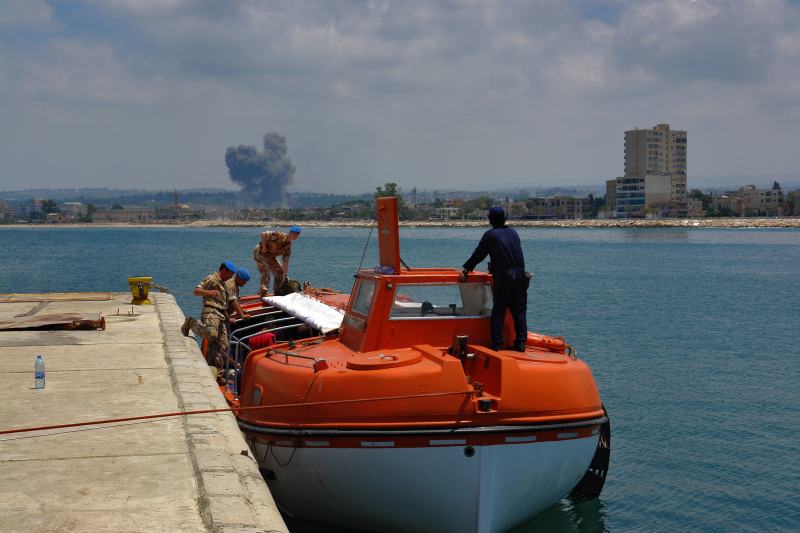
Residents in the ancient Lebanese city of Tyre are surveying widespread destruction after strikes left at least one building reduced to rubble on every street, with other structures missing entire floors and damage extending to a UNESCO World Heritage area near a 2nd-century citadel.
The strikes killed paramedics, families, and Hezbollah operatives, according to photos posted on ruins and dashboards throughout the city. As survivors navigate streets lined with wreckage, many fear renewed IDF strikes that could bring further devastation to one of the region's most historically significant urban centers.
Damage to 5,000-Year-Old Heritage
Buildings adjacent to the remains of a 2nd-century citadel sustained damage, while debris knocked crowns off Roman columns. Stones on a Roman road within the UNESCO World Heritage area were also damaged, raising concerns about the preservation of antiquities in a city described as 5,000 years old.
Adnan Istanbuli, an employee of the Lebanese Directorate General of Antiquities, said a committee will inspect the UNESCO site to assess the full extent of the damage. The significance of Tyre's heritage sites underscores the cultural cost of the strikes alongside the human toll.
Civilian Toll and Fear
The strikes left destruction on a scale that touches every street in the city. Photos of those killed — including paramedics who responded to emergencies and families caught in the bombardment — now mark the ruins where they died. The presence of Hezbollah operatives among the casualties reflects the complex reality of strikes in populated areas where armed groups operate alongside civilian communities.
Residents now face the dual burden of mourning their dead and rebuilding their city while living under the threat of further military action. The fear of renewed IDF strikes hangs over recovery efforts, complicating decisions about whether to stay or flee.
The Humanitarian Picture
The physical destruction in Tyre extends beyond individual buildings to the fabric of daily life in a city with millennia of continuous habitation. The damage to infrastructure, homes, and irreplaceable historical sites represents losses that will take years, if not decades, to repair — if repair is possible at all.
The strikes in Tyre reflect a broader pattern of conflict that places civilian populations and cultural heritage at risk. When military operations occur in densely populated historic cities, the consequences extend far beyond immediate casualties to include the erasure of shared human history.
Why This Matters:
The destruction in Tyre illustrates the cascading costs of military escalation in populated areas with deep historical significance. When strikes level buildings on every street and damage UNESCO World Heritage sites, the losses compound: human lives, family homes, emergency responders, and irreplaceable artifacts of 5,000 years of civilization. The fear among residents of renewed strikes reflects the psychological toll of living under the threat of bombardment, a reality that affects decision-making about evacuation, reconstruction, and daily survival. The damage to Roman columns and ancient roads serves as a reminder that modern conflicts consume not only present lives but also the physical record of human history. As committees prepare to inspect heritage sites, residents face the more immediate question of whether it is safe to remain in their ancestral city.