
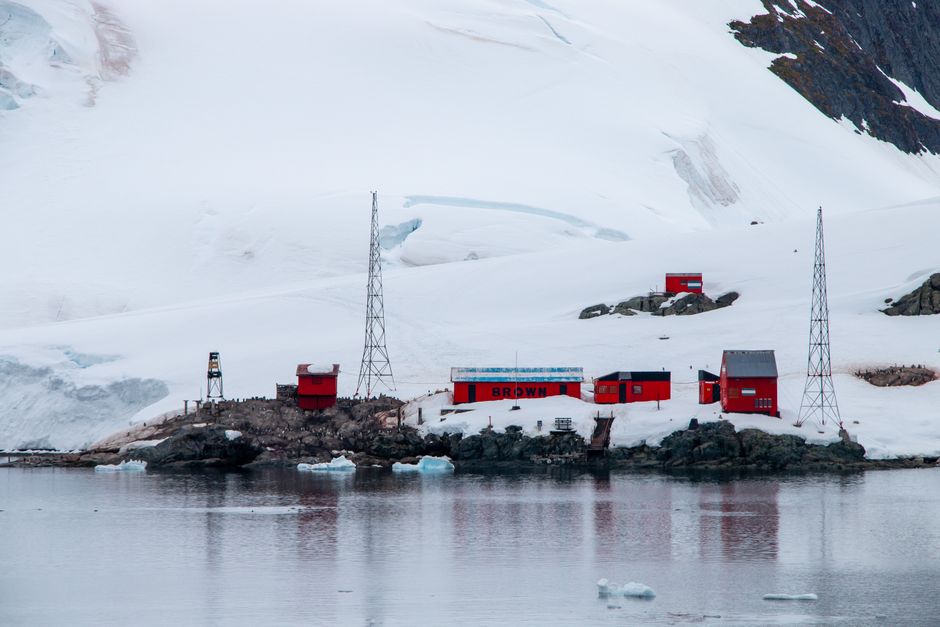
The United Arab Emirates has become the first Arab country to join the Scientific Committee on Antarctic Research, connecting Emirati polar research with an international network that studies Antarctica and its effects on the global climate system. The membership links the Emirates Polar Programme and Khalifa University researchers with SCAR research groups and scientific institutions working across the polar regions.
The move follows the UAE’s commitment to scientific research under the Antarctic Treaty System, which The National reported last December. The treaty system reserves Antarctica for peaceful purposes and guarantees freedom of scientific investigation.
Emirati Polar Research
President Sheikh Mohamed launched the Emirates Polar Programme in 2023. It now sits at the centre of the UAE’s work in Antarctica and the Arctic, placing Emirati scientists in international research and supporting national capabilities in polar science.
Mariam Almheiri, head of the International Affairs Office at the Presidential Court and chairwoman of the Emirates Polar Programme Steering Committee, called SCAR membership “an important milestone for the Emirates Polar Programme and the development of our national capabilities in polar science.”
Scientific progress in the polar regions depends on “international co-operation, shared knowledge and long-term partnerships,” she said. Through SCAR, Emirati scientists can contribute to international research and work with scientific institutions. They can also build expertise as the UAE expands its role in polar science.
The Emirates Polar Programme and the Polar Research Centre at Khalifa University will deliver the UAE’s participation. Researchers there are developing expertise and working with established polar programmes on environmental monitoring and field research in Antarctica.
Research and International Exchanges
SCAR brings together specialists who study ice-sheet dynamics, Southern Ocean change, permafrost and geological history. UAE researchers can join its international research and expert groups. Membership also gives early-career Emirati scientists opportunities to access committee fellowships, research placements and international scientific exchanges.
Dr Aisha Al Suwaidi, professor of Earth science at Khalifa University, said the UAE looked forward to contributing to shared scientific priorities and building partnerships across nations. She said the programme also intended to bring artists and storytellers alongside scientists, so Antarctica’s story could reach Emirati society as well as laboratories.
Committee president Gary Wilson said the Emirates Polar Programme already had several strong Antarctic research programmes. SCAR looks forward to including Emirates researchers across its research programme, he said, and building collaborative efforts to address globally important challenges.
Antarctica’s Climate Significance
Dr Hussain Khansaheb, an Emirati marine engineer, has taken part in an Antarctic expedition to raise awareness about climate change. Khansaheb is Dubai Holding’s inaugural National Sustainability Champion, and he wants to share lessons from the journey with students in the UAE.
Antarctica is the planet’s coldest and highest continent. Much of it lies more than 500 metres above sea level, and winter temperatures can fall below minus 60°C. No permanent human population lives there. Terrestrial life is minimal, but the continent’s ice holds nearly 70 per cent of the world’s freshwater, accumulated over millions of years. As global temperatures rise, changes in Antarctic ice are already reshaping oceans and coastlines far beyond the poles.