
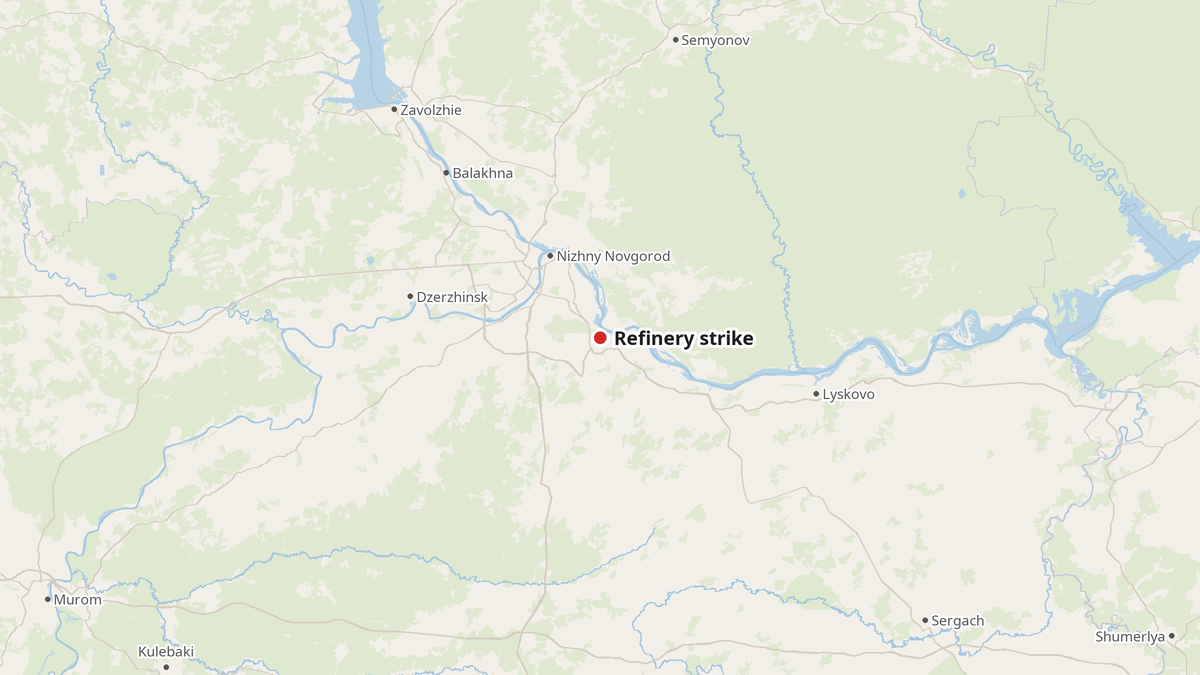
Volodymyr Zelenskyy offered to halt Ukrainian strikes on Russian oil refineries for one month if the United States quickly provided Patriot missiles, tying a pause in attacks to weapons that may take years to arrive. The proposal came after U.S. President Donald Trump demanded an energy ceasefire and Russia continued striking Ukraine’s energy infrastructure as winter approached.
A ceasefire with a price tag
In a Fox News interview on November 1, Zelenskyy said he had held “different and several” discussions with Trump and his aides. He said Ukraine could not simply stop responding after Russian attacks on its energy system and civilian population.
“We said that if you want us not to attack Russia’s refineries, they have not to attack our energy system. Another alternative, give us Patriot missiles,” Zelenskyy told host Trey Yingst. “We will find money; [it's] not just aid...We will pay for it.” He said Ukraine would stop refinery attacks for a month if the United States supplied the missile systems for that period.
The U.S. State Department announced approval of a $2.1 billion sale of Patriot air-defense interceptors to Ukraine on October 30. Zelenskyy said delivery of 500 interceptors could take “several years.” On social media, he called 500 PAC-3 interceptors “a substantial number” that could form an effective defense package that winter, but warned that “deliveries may begin only in a few years.” He asked U.S. partners to find a solution for the period when there is “a real danger and a real need” to use them.
Alex Plitsas, a nonresident senior fellow at the Atlantic Council and a former Pentagon official, said the announcement was significant but wouldn’t meet Ukraine’s immediate needs. He said Russia’s attacks on energy infrastructure aimed to terrorize civilians and force Ukraine to capitulate by freezing its population during winter. The U.S.-designed Patriot PAC-3 interceptor is one of the few Western weapons capable of shooting down the ballistic missiles Russia has fired at Ukrainian cities.
People trapped between armies
In Oleshky, a localized ceasefire allowed dozens of buses carrying civilians to leave the war-torn town on October 30. Residents could choose whether to travel to Ukrainian- or Russian-controlled territory. The ceasefire began on October 27, and no violations were reported. It ended late on November 1 after Moscow refused an offer to extend it, Ukrainian officials said.
Oleshky sits across the Dnieper River from Kherson, which Ukraine retook in 2022. Residents had been effectively trapped, surrounded by land mines and cut off from the outside world. The town once had around 24,000 residents; after Russia’s full-scale war began in February 2022, its population fell to fewer than 2,000. Most of those who remained were elderly people unable or unwilling to leave. Ukraine’s ombudsman, Dmytro Lubinets, said the oldest person evacuated was 94 and the youngest just over 1 year old.
Relatives greeted evacuees in tears in Chernihiv on October 31. “We managed to escape from this hell,” Liubov told RFE/RL's Ukrainian Service. Viktor said, “It was horrifying,” and described the road as “simply covered in mines.” Another woman said, “We are completely exhausted. We don't know what to say when we are completely overwhelmed with emotion.”
Liubov said people remained afraid until they boarded the buses. “Before that, we couldn't sleep at night, wondering how this would go.” Zhanna, who previously lived in Oleshky, thanked those who helped bring her father home “safely, in one piece and unharmed.” Asked about his plans, her relative said: “I'll look for a job so I can feed my family.”
Energy truce, civilian cost
Melania Trump announced the Oleshky agreement a week earlier and wrote on X on November 1: “Let Oleshky become the starting point for lasting peace.” The truce ended that same day. Meanwhile, Trump, facing political headwinds over soaring energy prices at home, called for Russia and Ukraine to stop striking energy infrastructure.
Russia has resisted calls for a ceasefire while increasing attacks on Ukraine’s energy infrastructure and civilian sites. Kyiv has retaliated against Russian energy infrastructure it says fuels Russia’s war; energy shortages and long lines at filling stations have been reported across Russia. The proposed pause, the missile sale and the short-lived Oleshky truce all leave civilians waiting on decisions made by governments and armed forces.
- ukraine
- patriot missiles
- volodymyr zelenskyy
- russian oil refineries
- energy ceasefire
- oles hky
- humanitarian evacuation