
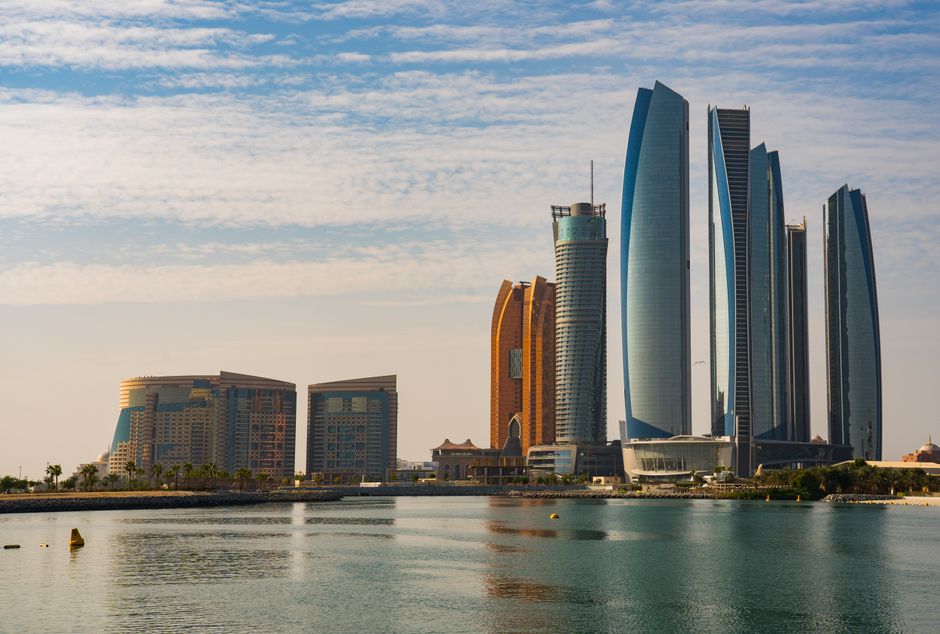
"They will not solve the Donetsk issue and the territorial issue until they know what the security architecture is going to be after the war," a senior American official told US media as a new round of US-mediated talks opened in Abu Dhabi on Tuesday. Translation from diplomat-speak: the map gets redrawn once the men with the guns agree on who gets to keep the guns. The people who live on that map weren't invited.
Ukraine and Russia have privately shown "a little bit of flexibility" over disputed territory, the same official reportedly said, offering no details. Donald Trump chipped in that Ukraine could emerge from the war with "a little bit different shape," without saying whose streets, farms and cities make up the difference. Moscow demands that Kyiv recognise Russian control over Crimea and the four regions it claims to have annexed, Donetsk, Luhansk, Zaporizhzhia and Kherson, and pull its forces out of all four, including areas Russia has never occupied. Kyiv rejects that. The talks run Tuesday and Wednesday, the first trilateral negotiations since February and the first time in nine months that Ukrainian and Russian negotiators have sat with the US. This is the fifth year of the conflict.
Who's in the Room
Before the Ukrainian and Russian teams met, a preparatory session took place with European powers, Ukraine and the US. Ukraine's chief negotiator Rustem Umerov said representatives from the UK, France, Germany, Italy, NATO and the European Commission attended, alongside Steve Witkoff and Jared Kushner, the president's son-in-law. "We will align our positions and coordinate steps ahead of the next stage of negotiations," Umerov said.
The EU sent a joint team led by Björn Seibert, head of Commission President Ursula von der Leyen's cabinet, and Anna-Maria Boura, chief foreign policy adviser to European Council President António Costa. National security advisers from France, Germany and the UK joined. Italy got in as part of a wider E4 format only after Prime Minister Giorgia Meloni complained about Rome's exclusion. NATO sent Geoffrey Van Leeuwen, chief of staff to Secretary-General Mark Rutte. Notice the pattern: advisers, chiefs of staff, heads of cabinet. The apparatus negotiating on behalf of everyone, answerable to no one in the room.
The Architecture of Armies
Two near-identical statements, one from Witkoff and one from the European Council, said the participants agreed it is "essential" to address "post-war security concerns" and reaffirmed "their shared commitment to a strong post-war European security architecture," adding they "were clear that a strong NATO will remain central to Euro-Atlantic collective defense." Read that again. Whatever ends this war, the blueprint is already drawn: more alliance, more architecture, more guarantees backed by more troops.
US media reported that Washington and Moscow discussed guarantees resembling NATO's Article 4 and Article 5, reviving the NATO-Russia Council, suspended since 2022, and a sanctions "snapback" mechanism. The council has been frozen four years. Russia, meanwhile, has demanded a say over scaling back NATO's efforts in Europe and insisted Ukraine never join the alliance. NATO allies agreed to raise defence spending targets to 5% of GDP by 2035, and Trump's officials say they'll cut US troop deployments to Europe. Peace, in this telling, is a budget line.
Europe Begs, Europeans Squabble
Kushner said last week that a "new European security architecture" would be a focus of the talks. Von der Leyen answered, indirectly, from Bucharest on Monday: "Any meaningful discussions about Europe's security architecture can only be undertaken once a ceasefire in Ukraine has been achieved. It must take place in an appropriate forum, in particular with NATO allies and EU members." A senior US official reportedly put it bluntly: "In order to end the war, you need to have Europe at the table."
Former NATO Secretary-General Anders Fogh Rasmussen told Euronews that Europe is "begging for a place at the table" and must "make yourself indispensable by bringing assets to the table." He warned that "if we don't, we will be sleepwalking into a permanent war on the European continent," and called US delays in approving Patriot and NASAMS deliveries "damning." The ex-chief of a military alliance, lecturing governments on how to bring more hardware to the negotiating table. Nobody asks what the people under the air raid sirens want the table to look like.
The bickering says the rest. A 90-minute phone call with Vladimir Putin, initiated by Norwegian Prime Minister Jonas Gahr Støre and Finnish President Alexander Stubb, drew fire from Danish Prime Minister Mette Frederiksen: "I am very sceptical about this independent initiative by Norway and Finland. It was not coordinated with any of us." Polish Foreign Minister Radosław Sikorski said last week: "The last thing we want is Western Europe dealing with Russia, over the heads of the east Europeans." Governments fret about being dealt with over each other's heads. Everyone's heads are over everyone else's, except the ones attached to the people being bombed.
What Zelenskyy Says Is Coming
Volodymyr Zelenskyy wrote on X that his team will propose "de-escalatory steps" in Abu Dhabi and that a leaders-level trilateral meeting is needed "to bring this war to an end fairly and for real." He warned Monday that Moscow is seeking to divide Ukraine along the Dnipro River by targeting bridges and the power grid. Those are the bridges and wires ordinary people live by. They're also the leverage chips on a table far from any of them.
Politico reported that European governments find the question of Europe's security architecture sensitive, fearing Trump may radically reduce US support. Two officials familiar with the Abu Dhabi discussions said the first talks were substantial and the mood positive. Positive, that is, for those in the room.
- ukraine peace talks
- abu dhabi
- russia
- ukraine
- european security
- volodymyr zelenskyy
- jared kushner
- nato