
Residents of Oleshky, a Russian-held town in southern Ukraine, began evacuating on Friday. It's the first joint relief operation of its kind by the two warring sides in four years and eight months of war. The people being moved out of the line of fire had no seat at the table that arranged it. The deal was brokered with the involvement of US first lady Melania Trump, with the additional involvement of Pope Leo.
Read that again. Four years and eight months of war, and the first mechanism to get civilians out of a contested town runs through a presidential spouse and a pontiff.
The Show for Washington
The motive behind the operation isn't hidden. Moscow and Kyiv are trying to use it to show US President Donald Trump they're serious about his efforts to secure an overall peace settlement, ahead of US midterm legislative elections. The evacuation is a prop in a performance staged for an American electoral calendar. The residents of Oleshky are the cast, and nobody asked them to audition.
Trump, for his part, said the war will end in the not-too-distant future. He also said he's willing to invite Ukrainian president Volodymyr Zelensky to the G20 summit in Miami in December, upcoming next month. "Yes, there's no problem with that," Trump told reporters. A seat at the summit is offered like a favour, as if attendance at the rich-world table were his to hand out.
Who Gets a Chair
The Kremlin is already drawing up the seating plan. Yuri Ushakov, a Kremlin aide quoted by Interfax on Sunday, said the next round of settlement talks should initially be held in a trilateral format with Russia, Ukraine and the United States. Asked whether any European countries should take part, Ushakov answered: "We have working contacts with the Americans. Therefore, it is logical, of course, that at least the first rounds of negotiations should be held in a trilateral format."
Europe, which has spent years invoking its own security, is told to wait outside. Brussels talks constantly about its role in this war. Moscow's man says the first rounds don't need it. Meanwhile Ushakov added that Putin would take a call from Zelensky, because he has never refused talks: "I think he would answer, of course. Putin has never refused talks." Governments announce their openness to dialogue while the war grinds on for nearly five years.
Grain as Leverage
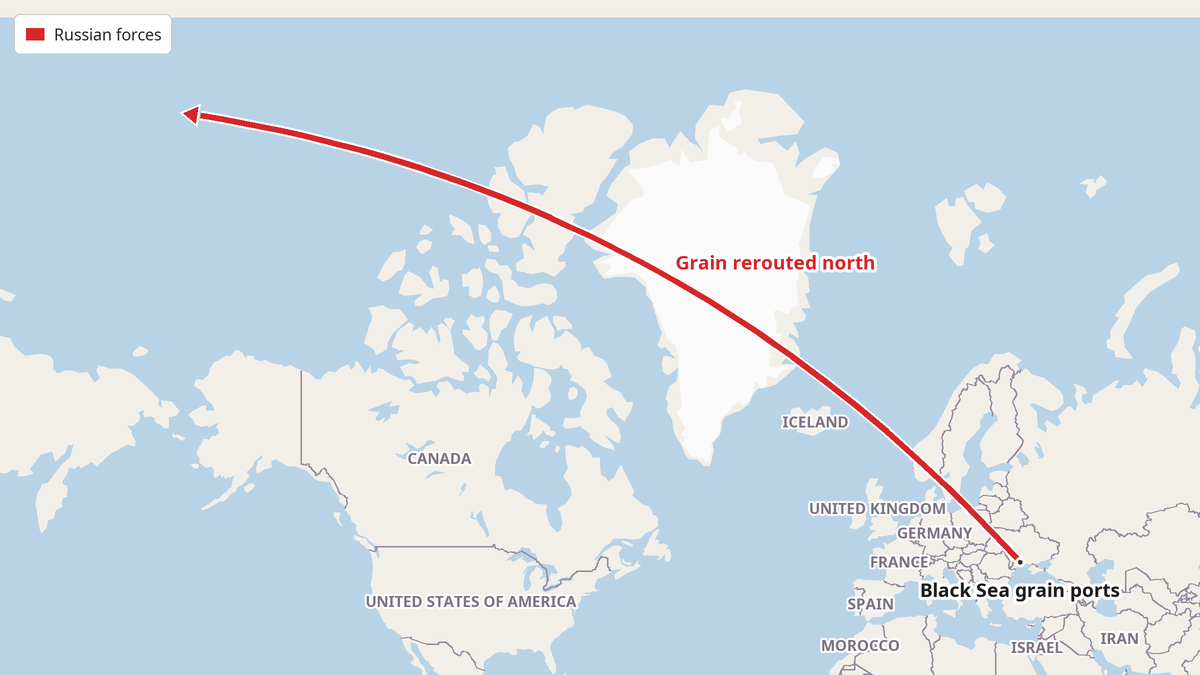
The US warned that grain and energy shortages are "threatening the world" as it said there is growing international interest in facilitating a temporary ceasefire in the Black Sea. US Secretary of State Marco Rubio, speaking to reporters on Saturday, said the administration is reviewing proposals by Turkey and India to get grain shipments moving.
Notice the sequence. Food moves when states find it convenient to let it move. A ceasefire at sea is on the table because shortages threaten markets and the global order, and the people who eat the bread come last in that calculation. The Financial Times carries a report headlined "Russia forced to ship grain via Arctic as Black Sea battles rage." Only the headline was accessible; the article text sits behind a paywall. Even the account of how the world's grain is being rerouted around a battlefield is locked away for subscribers.
The Electoral Circus
The whole sequence runs on a campaign calendar. Evacuations are timed for midterms. Invitations are floated for a summit in Miami. Trilateral talks are proposed among the three parties with the guns and the leverage. The civilians of Oleshky, the people who'll eat or not eat depending on Black Sea shipping, and the Europeans told their presence isn't logical are all handled as variables.
The evacuation began Friday. The war it interrupts has no announced end date, only a promise from a president that it'll come "in the not-too-distant future."
- ukraine-russia war
- donald trump
- volodymyr zelensky
- vladimir putin
- black sea ceasefire
- grain shipments
- g20 summit
- oleshky evacuation