
The Kremlin wants Europe left out. Yuri Ushakov, a Kremlin aide, told Interfax on Sunday that the next round of talks to settle the war in Ukraine should be held, at least initially, in a trilateral format: Russia, Ukraine and the United States. Asked whether any European countries should take part, he gave a plain answer. "We have working contacts with the Americans. Therefore, it is logical, of course, that at least the first rounds of negotiations should be held in a trilateral format."
That is the sound of a door closing on the European Union.
Who Decided?
Brussels has spent years casting itself as the central player in the war. Yet the diplomacy now taking shape runs through Washington, Moscow and Kyiv. President Donald Trump has said the war will end "in the not-too-distant future." He also said he's willing to invite Ukrainian president Volodymyr Zelensky to the G20 summit in Miami next month. "Yes, there's no problem with that," Trump told reporters.
The base reporting contains no European negotiating role, no European proposal and no European date. Ushakov said Russian president Vladimir Putin would take a call from Zelensky. "I think he would answer, of course. Putin has never refused talks," the Kremlin aide said.
For European taxpayers and voters, the question is blunt. A conflict on their continent, with consequences for their energy bills, their borders and their budgets, is being steered elsewhere. Nobody asked the electorates of Europe's nations whether they accepted that arrangement.
Supply Shocks and the Border Question
The US has warned that grain and energy shortages are "threatening the world." US Secretary of State Marco Rubio told reporters on Saturday that the administration is reviewing proposals by Turkey and India to get grain shipments moving, and that there is growing international interest in a temporary ceasefire in the Black Sea. Note who's named: Turkey and India. Not the European Commission.
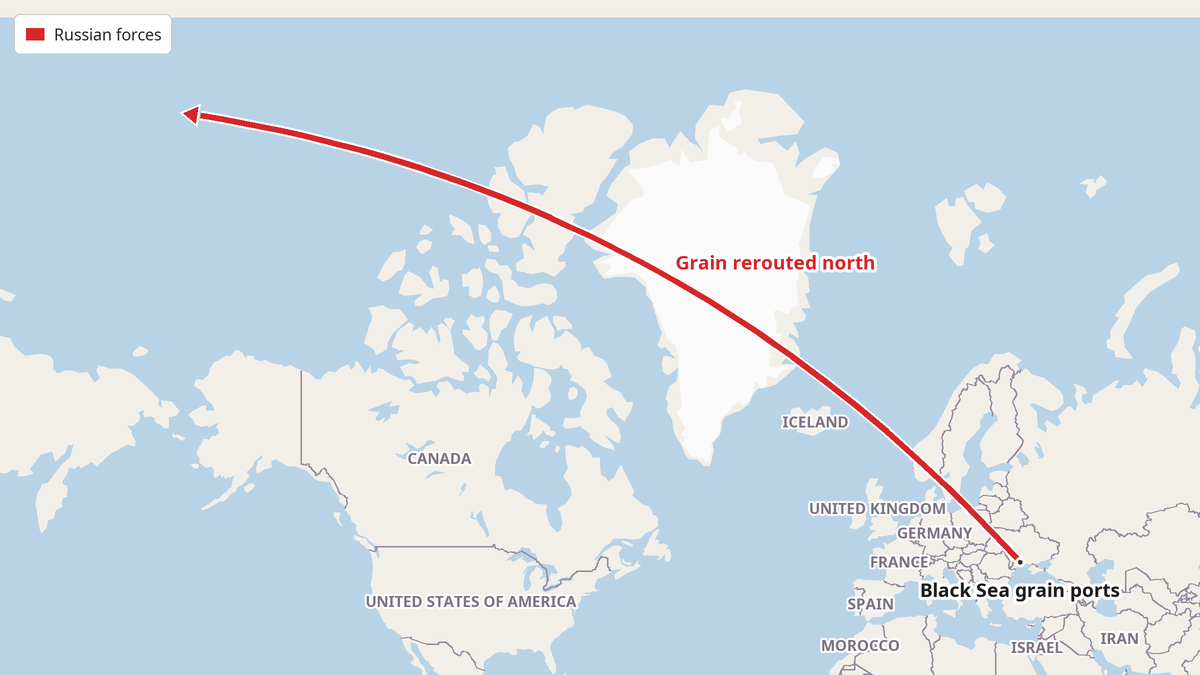
The Financial Times carries a report headlined "Russia forced to ship grain via Arctic as Black Sea battles rage." Only the headline was accessible; the article text sits behind a paywall. The headline alone points to disrupted routes and fighting at sea.
The base article gives no figures on migration flows. Readers can draw their own connection, though. Grain and energy shortages across the world put pressure on supply and prices, and European governments that can't secure their own energy or food routes have less room to manage what follows, including pressure at their frontiers. A continent that doesn't control its own supply lines, or its own diplomacy, is a continent at the mercy of decisions made by others.
A Relief Operation, Watched From Washington
Residents of the Russian-held town of Oleshky in southern Ukraine began evacuating on Friday as part of a joint relief operation by the two sides. It's described as the first of its kind in four years and eight months of war. The deal was brokered with the involvement of US first lady Melania Trump, with additional involvement from Pope Leo.
Moscow and Kyiv are trying to use the operation to show Trump they are serious about his efforts to secure an overall peace settlement, ahead of US midterm legislative elections. Both belligerents are performing for a US audience. Neither is performing for Brussels.
The pattern is clear from the facts on the record. Washington convenes. Moscow and Kyiv respond. Ankara and New Delhi offer shipping proposals. The European Union, which claims to speak for the continent, is absent from every line of the reporting.
European voters might reasonably ask what their governments and the Commission have gained from years of maximalist rhetoric. The decisions that shape their security, their energy supply and ultimately the pressures on their borders are being made in rooms where Europe has no seat. National governments that want a say will have to take it back from the institutions that claimed to speak for them.
- ukraine-russia war
- donald trump
- volodymyr zelensky
- vladimir putin
- black sea ceasefire
- grain shipments
- g20 summit
- oleshky evacuation