
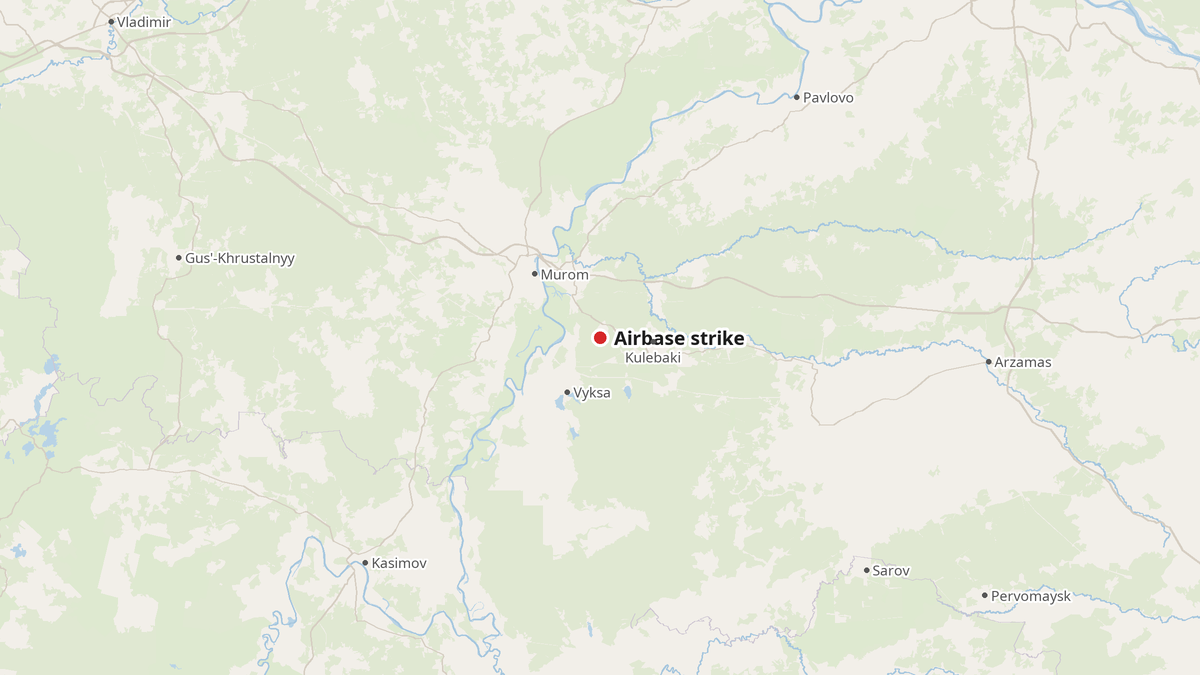
Ukraine’s General Staff said Ukrainian forces struck Savasleyka airbase in Russia’s Nizhny Novgorod region, damaging five aircraft: three MiG-31 jets and two Su-34 fighter-bombers. Russia did not immediately comment. The announcement offers another measure of a war in which states send people and weapons into a widening contest of military capacity.
The War Machine and Its Targets
The General Staff said the MiG-31s are used to fire hypersonic missiles. The strike was described as part of recent long-range attacks aimed at crippling Moscow’s war effort, as Kyiv seeks to weaken Russian military capacity while facing a renewed Russian campaign against its energy system and mounting strikes on front-line cities.
Ukraine’s forces are also hunting Russian ballistic-missile launchers used in many of those attacks. Defence Minister Yevhenii Khmara said this week that Ukraine had struck 16 launchers over the past several months. The military claims document a contest of strike and counterstrike, with each side trying to damage the machinery that enables the other to wage war.
Russia launched its full-scale invasion of Ukraine in February 2022. Fighting has continued despite a renewed US-backed push to end what the report described as Europe’s worst conflict since World War II. The push has not ended the fighting. The article provides no details on its terms or progress.
Energy, Ships and Escalation
The airbase strike followed other attacks in recent days. Two Russian ships were hit in Libyan waters, and another Russian vessel was struck in the Gulf of Finland. Ukraine also destroyed the road portion of Russia’s bridge to the Crimea peninsula last week, after consecutive attacks.
This is the military map as reported: airbase, ships, bridge, missile launchers, refineries and energy infrastructure. The people who live with the consequences of the fighting appear in the account through the front-line cities facing mounting strikes, while the official statements focus on targets and capacity.
Industry sources said this month that renewed Ukrainian drone attacks had cut Russian oil refinery processing volumes by 45 percent since late October. That figure links the attacks to energy production, though the article gives no further detail on the effect for people or on the sources’ identities.
Kyiv has said it will stop striking Russian energy targets only when Moscow does the same. That condition places energy infrastructure inside the reciprocal logic of the war: one side’s attacks are answered with the other’s, while neither government’s stated position has brought the fighting to a halt.
Declarations, With No End to the Fighting
Russia did not immediately comment on the reported damage at Savasleyka. The account contains no independent confirmation of the number or type of aircraft damaged, and no response from Russian officials. The figures and description of the strike come from Ukraine’s General Staff.
The distinction matters. Military authorities speak through claims about what they have hit and what the targets can do. Here, the General Staff identified the aircraft and their stated military role; Khmara supplied the number of launchers Ukraine says it struck; industry sources supplied the refinery figure. Each claim describes a part of the war effort, not an end to it.
The renewed US-backed push to end the conflict sits alongside attacks on military and energy targets, strikes on front-line cities, and efforts to reduce the opposing side’s capacity. The latest reported strike damaged five aircraft. The fighting continues.
- savasleyka airbase
- ukraine
- russia
- airstrike
- military aircraft
- mig-31
- su-34
- russia-ukraine war