
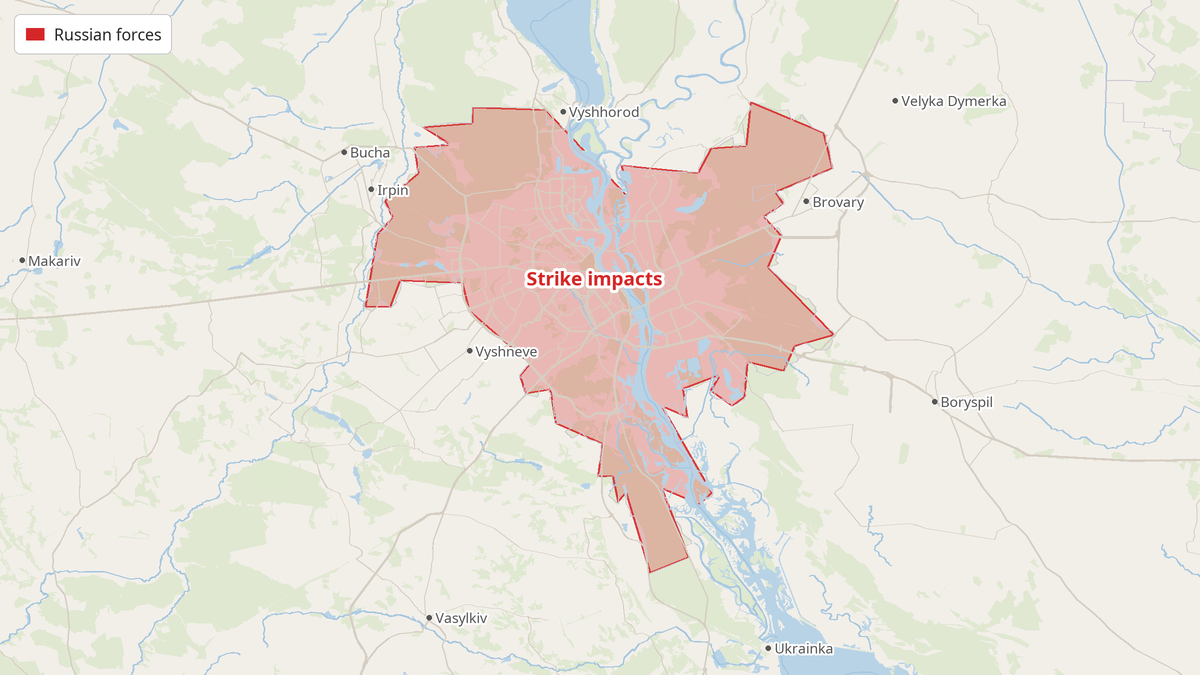
Three minutes. That’s how long Kateryna Denisova, a reporter for the Kyiv Independent, said she had to reach shelter after a mobile alert warned of incoming Russian ballistic missiles on the evening of Oct. 18. She called it the usual window “when there’s a ballistic missile threat.” For the millions of civilians living in the Ukrainian capital, that sliver of time separates an ordinary evening from the possibility of catastrophe.
Multiple explosions rocked Kyiv as Russia launched ballistic missiles at the city, according to Kyiv Independent journalists on the ground. Residents received little warning. Air-raid sirens sounded at the same moment as the blasts. Chief Editor Olga Rudenko reported that phone alerts came only moments before the explosions, while street sirens began “howling during the explosions.”
Human Impact
As of the latest reporting, the Kyiv Independent said it had no information about the targets, the damage or any casualties. That uncertainty matters. Families sheltering in basements and metro stations face hours of waiting, sending messages that go unanswered, and knowing ballistic missiles leave far less time to react than slower weapons do.
Rudenko and Denisova’s accounts point to a stark reality of the war’s civilian dimension. When sirens and explosions arrive together, the warning system residents rely on to protect themselves effectively fails to do its job. People must rely on a mobile alert and a few minutes’ head start.
The Intelligence Question
The strike came hours after President Volodymyr Zelensky said the United States had resumed intelligence sharing with Ukraine about Russian missile launches. The timing matters. Early warning of launches gives civilians the minutes they need, and any interruption or delay in that chain directly affects people on the ground.
Ukrainian officials have previously said transmission delays can affect satellite surveillance of launch sites. Current weather conditions may also interfere with the Space-Based Infrared System (SBIRS) satellites monitoring the region. In other words, even with intelligence sharing restored, technical limits on detection can narrow the warning window further.
What Comes Next
Details of the damage are still emerging, and the Kyiv Independent said it will report further as information becomes available. What’s already clear from journalists’ testimony is how thin Kyiv residents’ margin of safety has become.
Why This Matters: Ballistic missile strikes compress warning times to minutes, and Kyiv’s account shows how heavily civilian safety depends on reliable intelligence sharing and functioning alert systems. Zelensky’s statement that U.S. intelligence cooperation has resumed underlines how fragile that chain can be. From a European perspective, the episode reinforces the case that support for Ukraine is about protecting people as much as territory: air defence, early warning and dependable allied coordination translate directly into lives saved. It also raises the question of what Europe can do to reduce reliance on any single partner for the information that keeps civilians alive.
- kyiv
- russia
- ukraine
- ballistic missiles
- missile strike
- air raid sirens
- volodymyr zelensky
- space-based infrared system