
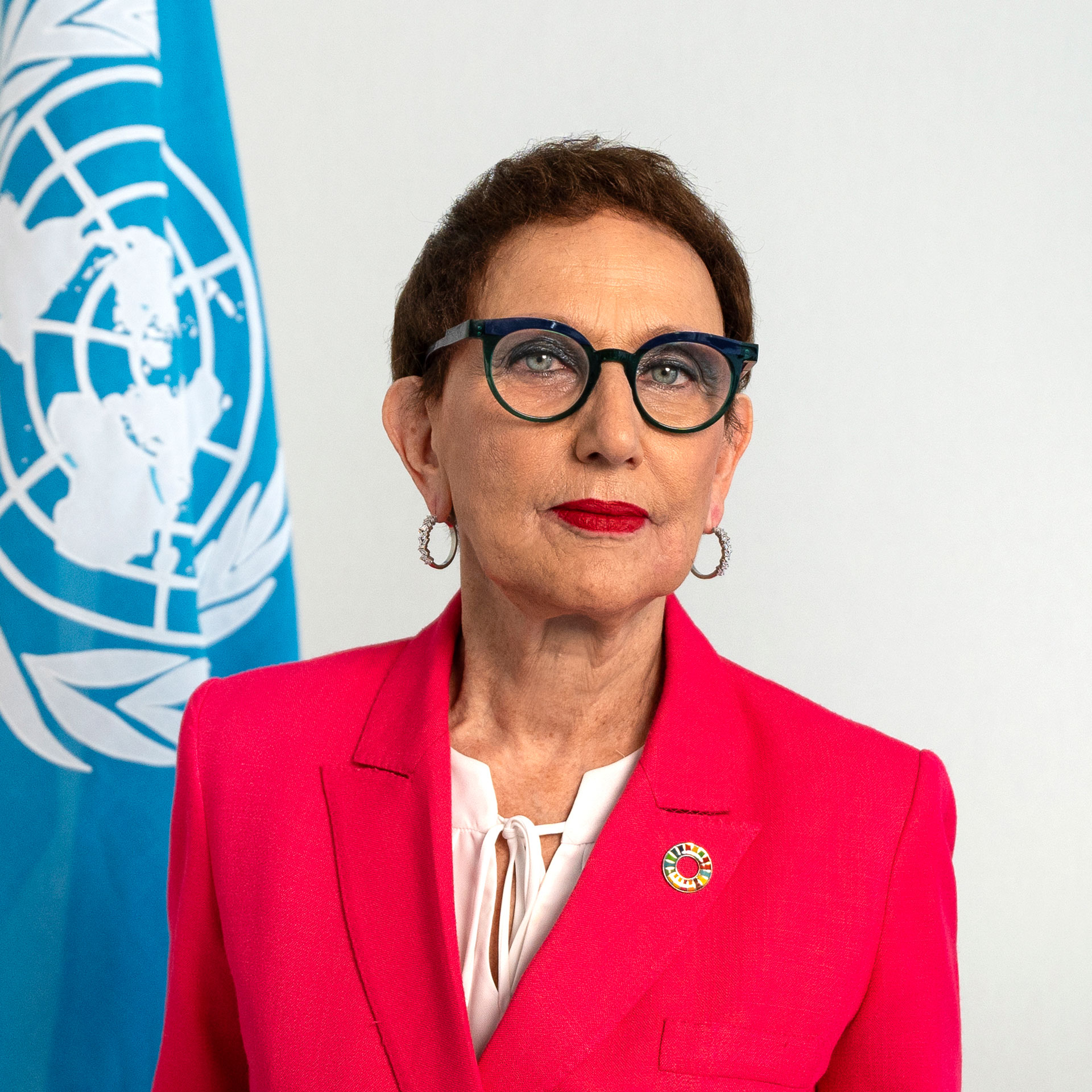
Costa Rica’s Rebeca Grynspan received nine “encourage” votes in the sixth Security Council straw poll for secretary-general, while two permanent members voted against her, leaving her candidacy vulnerable to a possible veto. The secret ballot took place Friday, Oct. 16. No formal veto followed: straw polls are informal, and a permanent member’s “discourage” vote signals possible opposition in a formal vote.
The Permanent Members’ Leverage
The Security Council has 15 members. China, France, Russia, the United Kingdom and the United States hold permanent seats; the other 10 members are elected. Under Article 27 of the U.N. Charter, substantive decisions need nine affirmative votes, including the concurring votes of permanent members. A Council recommendation for secretary-general therefore needs at least nine “encourage” votes and no objection from a permanent member, according to PassBlue and Costa Rican outlets.
Article 97 says the 193-member General Assembly appoints the secretary-general “upon the recommendation of the Security Council.” The Assembly makes the appointment, but a candidate must first clear a Council where any permanent member can block a recommendation. If the Council can’t agree, Security Council Report said there’s no straightforward precedent for what happens next.
For the first time, the Council used colour-coded ballots in the Oct. 16 poll, assigning permanent members a different colour from elected members. Each Council member marks one of three choices for each candidate: “encouraged,” “discouraged” or “no opinion expressed.” The Council doesn’t publish the results; its president only announces that a poll took place. Earlier round figures leaked and appeared online.
Candidates and Secret Ballots
Grynspan received nine “encourage,” five “discourage” and one “no opinion” vote, according to PassBlue and Costa Rican outlets Nación and Monumental. PassBlue reported that three permanent members encouraged her and two discouraged her. The ballots don’t identify which permanent members chose either response. Grynspan told reporters in Costa Rica that nobody knew for certain how members had voted; she said she’d try to reverse the two negative votes.
Guyana’s Carolyn Rodrigues Birkett received eight “encourage” and six “discourage” votes. Argentina’s Rafael Grossi also received eight “encourage” and six “discourage” votes, according to Nación. The reported results didn’t disclose how Grossi’s votes split between permanent and elected members.
Seven candidates remained, and none had withdrawn since the fifth poll on Oct. 7: Grynspan, Grossi, Rodrigues Birkett, María Fernanda Espinosa, Ivonne A-Baki, Olara Otunnu of Uganda and Macky Sall. Ecuadorian candidates Espinosa and A-Baki were nominated by Antigua and Barbuda and Tonga, respectively. Burundi nominated Sall; Uganda nominated Otunnu.
A Process Without a Set Next Vote
The presidents of the General Assembly and Security Council launched the selection process with a joint letter on Nov. 25, 2025, inviting governments to nominate candidates and requesting vision statements and funding disclosures. The Council held straw polls on July 30, Aug. 21, Sept. 18, Sept. 29, Oct. 7 and Oct. 16. No date had been set for a seventh poll.
On Oct. 13, regional bloc CELAC called for the selection of a Latin American or Caribbean national. PassBlue reported Panama supports Grossi and says the region is due its turn. The outlet also reported that weaker candidates were expected to withdraw, while Lana Nusseibeh and Courtenay Rattray were rumoured as possible names.
Secretary-General António Guterres’s term ends Thursday, Dec. 31. Diplomats told PassBlue they expected the process to move faster. PassBlue quoted U.S. Ambassador Mike Waltz saying Washington preferred to finish the selection during the calendar year; he also said member states retained the right to nominate candidates. The United States and China served as the two tellers appointed for the sixth poll, while the United States hasn’t publicly disclosed how it voted.
Polymarket prices reported on Oct. 17 at 2:22 a.m. ET gave Grynspan a 49% chance of becoming secretary-general, Grossi 19% and Rodrigues Birkett 13%. The market had traded about US$226,000. Those prices didn’t alter the formal rules: a Council recommendation still must come before the General Assembly appointment.
- united nations
- security council
- secretary-general selection
- rebeca grynspan
- veto rules
- general assembly
- straw poll
- antónio guterres