
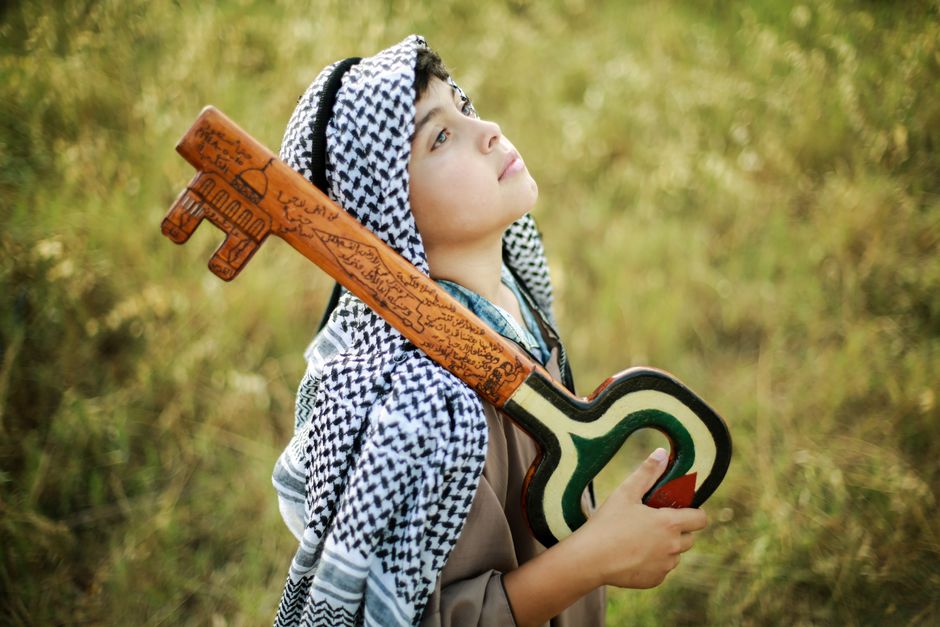
As Israeli occupation continues to reshape Palestinian life, traditional storytelling practices like hikaye face an uncertain future. The narrative tradition, practised by Palestinian women for centuries, was added to UNESCO's intangible heritage list 18 years ago, but ongoing displacement and social disruption threaten its survival. The stories, told primarily at home during winter nights or at social gatherings, serve not only as entertainment but as a vital record of Palestinian history and the lived experience of occupation.
Hikaye, Arabic for a tale or story, brings together women and children to hear fictitious narratives that explore contemporary social issues, family dynamics and moral imperatives. The speaker often possesses a strong, expressive tone that grips the audience and keeps them engaged for hours. The tradition associated with women is an opportunity for them to give their perspective on issues and explore their concerns. Some offer a critique of society, whereas others describe predicaments.
A Living Archive Under Threat
Hikaye is also used as a way of recording and passing down history and the experiences of Palestinians, particularly discussing the impact of occupation and forced displacement. With the rise of social media, as well as ongoing turmoil as a result of Israeli occupation, the tradition is being practiced less. However, many women are now making a conscious effort to revive the form of storytelling, with stories told in the Palestinian-Arabic dialect, mainly kept alive by the elders.
The UN's cultural agency, UNESCO, has sought to protect certain practices by adding them to its List of the Intangible Cultural Heritage of Humanity in the hope that doing so will highlight their importance and encourage their preservation. The Middle East and North Africa are regions steeped in a rich cultural heritage, with many traditions and practices forming part of everyday life. As the world becomes more globalized and cultural trends become more uniform, a number of traditions are at risk of disappearing forever.
Seven Traditions Recognized
Customs on the list include traditional foods, crafts, poetic forms and even martial arts, among others. The seven Middle Eastern traditions highlighted include the majlis, Turkish coffee culture and tradition, the cultivation of the Damascene rose, the Palestinian hikaye, tahtib in Egypt, Bedouin chanted poetry in the UAE and Oman, and wedding costumes in Algeria.
A majlis is a sitting area, traditionally carpeted and with cushions against the floor and walls for members of the community to sit on. At a typical majlis, tea or Arabic coffee will be pouring throughout the evening to sustain hours of conversation. Such cultural and social spaces can be found around the Middle East and North Africa, but they are particularly prominent in Gulf countries. The concept of a majlis was originally meant to allow locals to gather and discuss matters that concerned or impacted them. It is also a place where guests can be received, people can socialize, and entertainment can be provided.
Uses for a majlis have stayed the same over the centuries, with many still using it to hold weddings, pay condolences, resolve problems and discuss current affairs. A majlis remains a vital part of Middle Eastern culture, particularly as it serves as a space where oral heritage and knowledge is passed down. Children often accompany their parents to a majlis, allowing them to become familiar with traditions and understand community values.
Turkish Coffee and Damascene Roses
Turkish coffee culture and traditions were added to the UNESCO intangible heritage list 13 years ago. Coffee is taken very seriously in Turkey, and the process of making, pouring and drinking it is governed by rules and customs that have largely stayed the same throughout the centuries. Coffee also plays an important role in weddings, social events and gatherings. To prepare the drink, finely ground coffee beans are combined with water and a small amount of sugar in a cezve, or kanaka, which is the copper or brass pot used to brew the drink on the stove.
The cultivation of the Damascene rose, formally called rosa damascena, was first introduced to Europe from Damascus in the mid-12th century by returning Crusaders. Practices associated with the cultivation of the flower were added to UNESCO's intangible heritage list 7 years ago. Families wake up early in the morning and make their way to the field to pick the flowers, and then sort them. The flowers are exported and sold to perfumers, and also made into essential oils, cosmetics and rose water.
Martial Arts and Poetry
Tahtib, a stick-fighting martial art, is believed to date back to the Pharaonic period, when it was used as part of military training. However, over the years, the practice has become more ceremonial and is performed at weddings and sporting events. The practice was added to the UNESCO list 10 years ago. Core to the martial art are values of maintaining mutual respect, friendship, balance and pride. Clubs and sports centres focused on preserving the art have opened up across Egypt in recent years, and national festivals for tahtib are held annually in the country.
For millennia, poetry has been held in esteem by the Bedouins of the Arabian Peninsula as the highest form of artistic expression. Taghrooda is one form of traditional Bedouin poetry, which involves chanting while traveling on camel-back. Today, this practice is popular in the UAE and Oman. The tradition was listed by UNESCO 14 years ago. Themes explored in the poems include love, social issues and family ties. As well as being entertaining, the taghrooda can also serve practical purposes. It can be used to settle disputes between tribes or families and teach tribe members about their history and achievements.
Algerian Wedding Traditions
Brides in Tlemcen, in northwestern Algeria, wear layers of jewelry and luxurious fabrics on their wedding day for a look that requires meticulous and lengthy preparation. The intricate embroidery contained within the fabric is an important part of Algeria's cultural identity and ancestral heritage. UNESCO added Tlemcen wedding craftsmanship to its intangible heritage list 14 years ago. Besides the cultural importance, there is also an important economic element, with the production of wedding costumes serving as a vital source of income for rural communities.
Why This Matters:
The struggle to preserve hikaye and other Middle Eastern traditions reflects a broader challenge facing communities under occupation and displacement. When social structures are disrupted by conflict, checkpoints, and forced migration, the spaces where oral traditions are transmitted—family gatherings, community events, elder-to-child storytelling—become harder to sustain. UNESCO recognition provides international visibility, but it cannot substitute for the stability and continuity that cultural transmission requires. The fact that Palestinian women are making conscious efforts to revive hikaye despite ongoing turmoil speaks to the resilience of cultural identity under pressure. Yet the reality remains that traditions rooted in place and community are uniquely vulnerable when those foundations are systematically undermined. The preservation of intangible heritage is not merely an archival concern—it is a question of whether communities can maintain the practices that define them amid forces working against their continuity.