
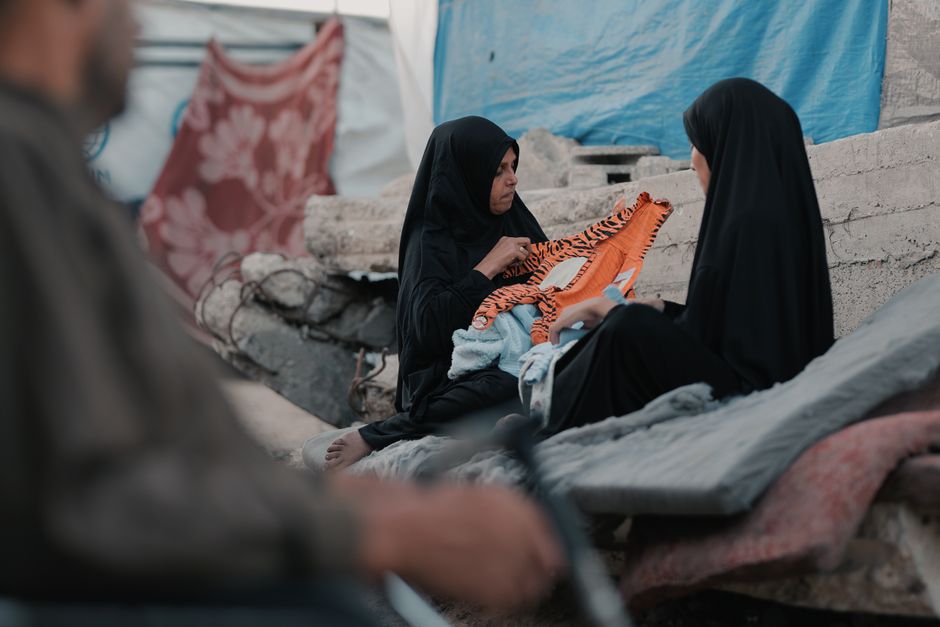
Palestinian women are actively working to revive the ancient narrative tradition of hikaye, a form of storytelling that records the history and experiences of Palestinians, particularly documenting the impact of occupation and forced displacement. This cultural practice, added to Unesco's intangible heritage list 18 years ago, faces challenges from ongoing turmoil resulting from Israeli occupation, leading to a decline in its practice.
Hikaye, Arabic for a tale or story, has been practiced by Palestinian women for centuries. These stories are typically told at home during winter nights or at social gatherings, bringing together women and children. The narratives are mostly fictitious, yet they reflect the zeitgeist, exploring themes such as contemporary social issues, family dynamics, and moral imperatives. The speaker often uses a strong, expressive tone to engage the audience for hours.
The tradition provides an opportunity for women to offer their perspective on issues and explore their concerns, with some stories critiquing society and others describing predicaments. Crucially, hikaye serves as a method for recording and transmitting the history and experiences of Palestinians, specifically addressing the impact of military occupation and forced displacement. Despite the rise of social media and the ongoing turmoil from Israeli occupation, many women are now making a conscious effort to revive this form of storytelling, with elders primarily keeping stories alive in the Palestinian-Arabic dialect.
Palestinian Heritage Under Occupation
The recognition of hikaye by Unesco 18 years ago underscores its importance as a vital element of Palestinian cultural identity, particularly as it confronts the pressures of military occupation and the ongoing dispossession of the Palestinian people. The efforts to preserve hikaye represent a form of cultural resistance against attempts to erase Palestinian history and presence.
Diverse Regional Traditions
Across the broader Middle East and North Africa, other traditions also form part of a rich cultural heritage, with Unesco seeking to protect practices at risk of disappearing. These include the majlis, Turkish coffee culture and tradition, the cultivation of the Damascene rose, tahtib in Egypt, Bedouin chanted poetry in the UAE and Oman, and wedding costumes in Algeria.
A majlis is a traditional sitting area, often carpeted with cushions, where community members gather to discuss matters impacting them. These social spaces, prominent in Gulf countries, host conversations, receive guests, and provide entertainment. Over centuries, the uses for a majlis have remained consistent, including holding weddings, paying condolences, resolving problems, and discussing current affairs. It serves as a vital space for the oral transmission of heritage and knowledge, with children often accompanying parents to learn traditions and community values.
Turkish coffee culture and traditions were added to the Unesco intangible heritage list 13 years ago. The preparation, pouring, and consumption of coffee in Turkey are governed by centuries-old rules and customs, playing a significant role in weddings, social events, and gatherings. The finely ground coffee beans are brewed in a cezve or kanaka, and the tradition extends to fortune-telling using coffee remnants, passed down through generations.
The cultivation of the Damascene rose, introduced to Europe from Damascus in the mid-12th century, saw its production blossom from the 16th century onwards. Families wake early to pick and sort the flowers, which are then dried for tea, distilled for essential oils, or made into cosmetics and rose water. Women in villages also gather to create jam, syrups, and pastries from the harvested roses. Practices associated with its cultivation were added to Unesco’s intangible heritage list 7 years ago.
Tahtib, an Egyptian stick-fighting martial art, is believed to date back to the Pharaonic period, originally used in military training. Inscriptions on papyrus and temple walls depict fighters using sticks alongside other military disciplines. Over time, tahtib evolved into a ceremonial practice performed at weddings and sporting events, emphasizing mutual respect, friendship, balance, and pride. The practice, added to the Unesco list 10 years ago, is now performed to music and poetry, with clubs and festivals working to preserve it.
Bedouin chanted poetry, known as Taghrooda, has been esteemed for millennia as the highest form of artistic expression in the Arabian Peninsula. For a largely nomadic people, the spoken word became the primary method for recording beliefs, values, philosophical theories, and genealogies. Taghrooda, involving chanting while traveling on camel-back, is popular in the UAE and Oman. These improvised chants, initiated by a lead rider, explore themes of love, social issues, and family ties, and can also serve practical purposes like settling disputes. This tradition, which also includes women chanting while working, was listed by Unesco 14 years ago.
In Tlemcen, northwestern Algeria, brides wear elaborate wedding costumes featuring layers of jewelry and luxurious fabrics. The intricate embroidery is a key part of Algeria’s cultural identity and ancestral heritage. Brides wear hand-woven silk garments, elaborate cone-shaped headpieces, and embroidered velvet kaftans, often in deep burgundy or green with arabesque patterns. Baroque pearls are believed to protect the bride, whose hands are adorned with henna. A ritual involving red and silver circular designs painted on the bride’s face represents purity and protection. The craftsmanship and traditions, passed down through generations, also provide a vital source of income for rural communities. Unesco added Tlemcen wedding craftsmanship to its intangible heritage list 14 years ago.