
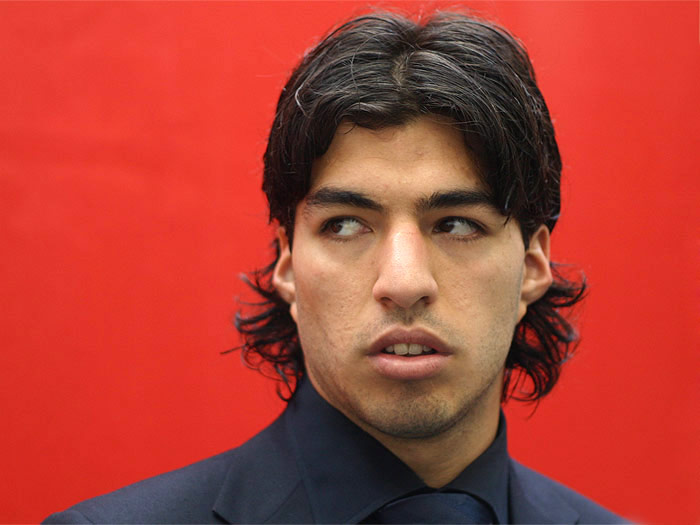
Uruguay's national football team faces potential elimination from the World Cup after unexpected draws against Saudi Arabia and Cape Verde, a performance unfolding without its all-time leading scorer, Luis Suárez. The veteran striker, who ended his international career in 2024, watched from the stands as the team, heavily favored in its opening matches, struggled to secure victories. This strategic decision by coach Marcelo Bielsa to exclude Suárez, alongside fellow veteran Edinson Cavani, underscores the relentless drive within professional sports to replace established, aging labor with a "next attacking generation," treating players as assets whose value is constantly reassessed.
The Commodification of Talent
Luis Suárez, who amassed 69 goals in 143 appearances for the national team, was ultimately left off Bielsa’s squad after months of public speculation. Despite announcing in April of the same year his willingness to come out of retirement for the World Cup, Suárez's offer was rejected. This move highlights the precarious nature of even elite athletic careers, where past performance and loyalty are often superseded by the perceived future potential of younger players. The matches were played in Miami Stadium, near where Suárez currently serves as striker for Inter Miami, a reminder of the globalized and commercialized landscape of professional football where player value is constantly traded and managed.
Coach Bielsa, speaking through a translator after Sunday’s game, attributed the team's struggles to a failure to "close it" after starting the second half with a lead and a victory, adding that his team “lacked a finishing touch.” These assessments, while framed as tactical, ultimately justify the management's decision to overhaul the team's attacking lineup. The exclusion of Suárez and Cavani, both titans of Uruguayan football, represents a clear choice to invest in new talent, a common practice in industries driven by high-stakes performance and marketability.
Management's Discretion
The decision to sideline veteran players has been met with mixed reactions from supporters, reflecting an acceptance of this systemic turnover. Uruguay supporter Frederico Suárez acknowledged, “(I have) mixed feelings to be honest. He’s old and now it’s time for the younger players. But he’s a good player, maybe the best player I’ve ever watched with Uruguay.” Similarly, fan Ian Lancaster stated, “I feel like he’s a little older, so for players like Darwin (Núñez), I think it just gives him a little bit more of a chance to shine.” These sentiments illustrate how the narrative of youth and renewal is internalized, even when it means discarding highly accomplished labor.
The tension between management and veteran labor was not new. Suárez and Bielsa had previously clashed after the 2024 Copa América, with Suárez criticizing Bielsa for the "negative environment" he had created under his leadership. This past conflict further illuminates the power dynamics at play, where management's authority to shape the team's culture and composition ultimately prevails over the concerns of individual players, regardless of their historical contribution.
The Cycle of Capital
In Uruguay’s first World Cup match without Suárez since 2010, the team narrowly avoided an upset against Saudi Arabia, with midfielder Maxi Araújo scoring the only goal late in the game. The new front line, led by Darwin Núñez and Federico Viñas, was described as "largely ineffective" in that initial outing. Bielsa adjusted his strategy for the Sunday night draw against Cape Verde, starting only Viñas and adding midfielder Agustín Canobbio, who scored Uruguay’s second goal. Canobbio’s subsequent narrow miss in the second half, however, prevented a much-needed victory, demonstrating the immediate, high-stakes consequences of these management decisions.
As Uruguay prepares to travel to Guadalajara Stadium for a crucial match against Spain on Friday, the uncertainty among supporters remains palpable. Uruguay fan Alfonso Aguel articulated this, saying, “Our expectations with Uruguay now is that we never know. We need to play every match, go match by match, and see what actually happens.” This sentiment reflects the unpredictable outcomes inherent in a system that constantly seeks to optimize its human assets, often at the expense of established labor, in pursuit of competitive advantage and, ultimately, the financial gains associated with global sporting spectacles. The cycle of discarding and replacing labor continues, driven by the imperatives of capital within the professional sports industry.