
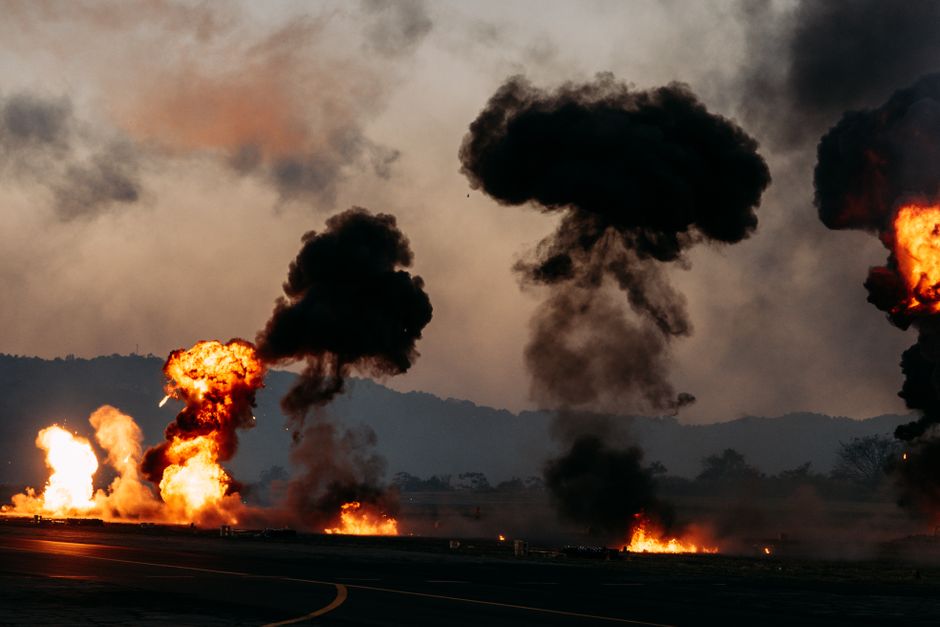
Seven people were killed in US airstrikes on bridges in southern Iran's Hormozgan province, Iranian state media reported Friday, as a sixth consecutive night of American military operations expanded beyond purely military targets to include critical transportation infrastructure.
The deaths occurred in the Bandar Khamir area on the Strait of Hormuz, according to Iran's state news agency IRNA, which cited information from Hormozgan University of Medical Sciences. The strikes hit at least five bridges across southern Iran overnight into Friday, severing key civilian transportation routes and raising questions about the scope and objectives of the escalating US campaign.
Expanding Target List
US Central Command said Thursday night that the latest wave of strikes had been completed, involving fighter jets, aerial drones and warships launching precision munitions against dozens of Iranian military targets. CENTCOM said the operations hit coastal surveillance and air defense sites, military logistics infrastructure and maritime capabilities, describing the campaign as degrading Iranian military capabilities and holding Iran accountable for recent attacks on commercial shipping.
But Iranian state media painted a broader picture. Iran's semi-official Tasnim News Agency reported that the Kehvarstan bridge, which crosses the Shur River in southern Iran, is a key transportation route, and said traffic on the Bandar Abbas-Kehvarstan-Lar route has been suspended. The agency also reported an American attack on Iranshahr airport Thursday, saying three strong explosions were heard around the airport where Iranian armed forces are stationed.
Iran's state news agency Mehr said three explosions were heard in Chabahar, in southeastern Iran, early Friday morning. Tasnim denied explosions in the Iranian city of Zahedan, citing on-site investigations in what it called key locations in the city that showed reports of attacks were untrue.
Civilian Infrastructure in the Crosshairs
The strikes on bridges mark a significant expansion of the US campaign. While CENTCOM's statement emphasized military targets, the suspension of civilian traffic routes and the reported deaths of seven people underscore the widening impact on Iranian communities far from military installations.
The Bandar Khamir area sits on the Strait of Hormuz, through which nearly a third of the world's seaborne oil passes. Hormozgan province is home to major ports and transportation networks that serve both military and civilian purposes, making the distinction between strategic and civilian targets increasingly blurred.
CENTCOM said more than 50,000 US service members stationed in the Middle East remain "vigilant, lethal, and ready," language that signals the possibility of further operations. The command framed the strikes as a response to Iranian attacks on commercial shipping, though it didn't provide details on those incidents or explain the decision to target bridges used by civilian traffic.
Six Nights of Strikes
The campaign represents the most sustained American military action against Iran in years. Each night has brought new waves of strikes, and Iranian state media reports describe an expanding geographic footprint that now reaches deep into southeastern Iran, far from the coastal military installations that were the initial focus.
The reports described an expanding US airstrike campaign in Iran that included both military targets and bridges in southern Iran. The civilian deaths in Bandar Khamir are the first confirmed fatalities reported by Iranian sources since the strikes began, though the full scope of casualties remains unclear.
Why This Matters:
The expansion of US airstrikes to include bridges and transportation infrastructure represents a significant escalation that blurs the line between military and civilian targets. Seven confirmed deaths in Hormozgan province, combined with the suspension of key civilian traffic routes, show that the human cost of this campaign extends well beyond uniformed combatants. The strikes are degrading not just Iran's military capabilities but also the daily lives of Iranian civilians who depend on these bridges for commerce, medical access, and family connections. As the campaign enters its sixth consecutive night with no clear endpoint, the risk of further civilian casualties grows. The international legal framework governing armed conflict requires distinction between military and civilian objects — a principle that becomes harder to maintain when bridges serve both purposes. The question isn't just whether these strikes achieve their military objectives, but whether the cost to Iranian civilians is proportionate to the threat the US says it's addressing.