
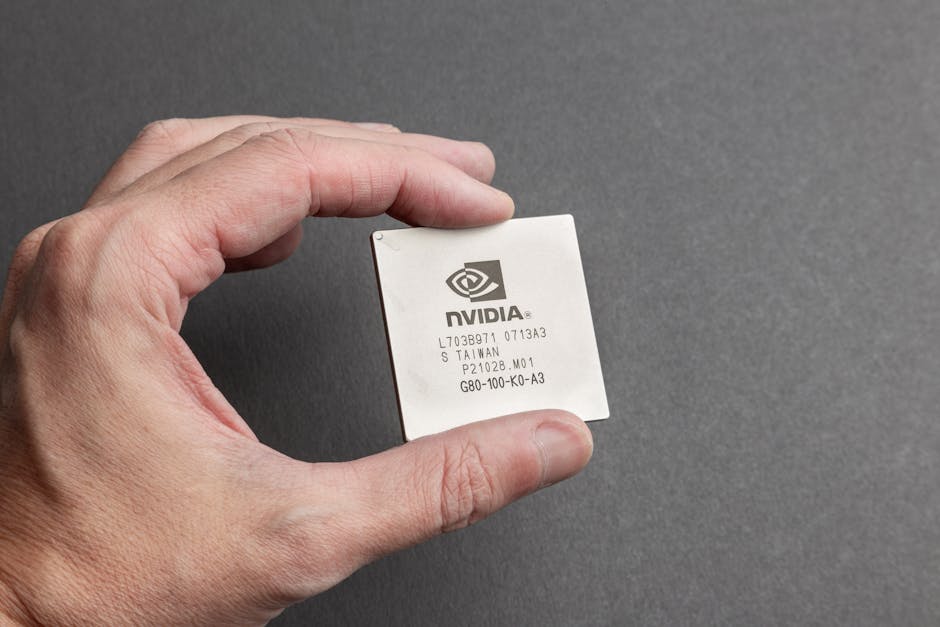
The U.S. Commerce Department has approved around 10 Chinese companies to purchase Nvidia's H200 chips, but the deals remain frozen in limbo as Beijing blocks its own firms from completing transactions, raising questions about the practical value of export licensing and the strategic calculus driving both nations' technology policies.
The approved buyers include major Chinese technology firms Alibaba, Tencent, ByteDance, and JD.com, along with distributors including Lenovo and Foxconn. Each approved customer can purchase up to 75,000 chips under U.S. licensing terms, according to sources familiar with the matter. Despite this formal clearance, no deliveries have been made, as Chinese firms have pulled back after guidance from Beijing, one source said.
Nvidia CEO Jensen Huang joined President Donald Trump's delegation to Beijing this week, picked up en route to a summit with Chinese President Xi Jinping, hoping to unlock the stalled sales. Huang told state broadcaster CCTV on Thursday that he hoped Trump and Xi would build on their good relationship during talks to improve two-way ties.
The Regulatory Maze
The path to completed sales faces obstacles on both sides. U.S. rules issued in January require Chinese buyers to demonstrate they had installed "sufficient security procedures" and would not use the chips for military purposes. Nvidia must also certify sufficient inventory in the United States.
The arrangement negotiated under Trump requires the U.S. to receive 25% of revenue from chip sales, a structure necessitating chips pass through U.S. territory before shipment to China, as U.S. law does not permit direct export fees. This arrangement has prompted unease in Beijing over potential tampering or hidden vulnerabilities, sources describe it primarily as a workaround to legal constraints.
Beijing's Strategic Resistance
China's hesitation reflects a deliberate policy choice. Commerce Secretary Howard Lutnick said at a Senate hearing last month that "the Chinese central government has not let them, as of yet, buy the chips, because they're trying to keep their investment focused on their own domestic industry."
Beijing's blocking reflects strategic calculation: imports could weaken its push to develop homegrown AI chips. While China's AI chips still lag Nvidia, firms like DeepSeek increasingly tout their reliance on domestic chips including those developed by Huawei. Scrutiny in China has intensified after the State Council issued two recent supply chain security regulations, prompting a government-wide effort to identify and eliminate potential foreign dependencies in critical technology infrastructure.
Market Impact and National Interest
Before U.S. export curbs tightened, Nvidia commanded about 95% of China's advanced chip market. China once accounted for 13% of Nvidia's revenue, and Huang has previously estimated the country's AI market alone would be worth $50 billion this year. Huang has warned that U.S. export controls are eroding the company's foothold in the market, saying its share of AI accelerators in China has effectively fallen to zero.
Chris McGuire, senior fellow for China and emerging technologies at the Council on Foreign Relations, expressed concern about the deal from a different angle. "Any deal that allows Nvidia to sell more chips to China means fewer Nvidia chips for U.S. firms, and a smaller U.S. lead in AI over China," McGuire said. He added, "It is remarkable that President Trump keeps getting convinced to put Nvidia's interest ahead of America's."
Lenovo confirmed it "is one of several companies approved to sell H200 in China as part of Nvidia's export license." Nvidia, Alibaba, Tencent, ByteDance, JD.com, and Foxconn did not respond to requests for comment.
Why This Matters:
This situation illustrates a fundamental tension in technology policy: the difficulty of using export controls as both a security tool and a negotiating instrument. While the U.S. has approved sales and structured a revenue-sharing arrangement, Beijing's refusal to permit its firms to buy undermines the practical effect of the licensing regime. The stalemate reveals that unilateral approval mechanisms have limited value when the target market's government actively discourages purchases. Additionally, the debate over whether facilitating Nvidia sales serves U.S. strategic interests—as opposed to merely benefiting one company—highlights the need for clear-eyed assessment of how commercial interests align with national competitive positioning in critical technologies. The outcome will signal whether export control policy can effectively balance market access, fiscal returns, and long-term technological leadership.