
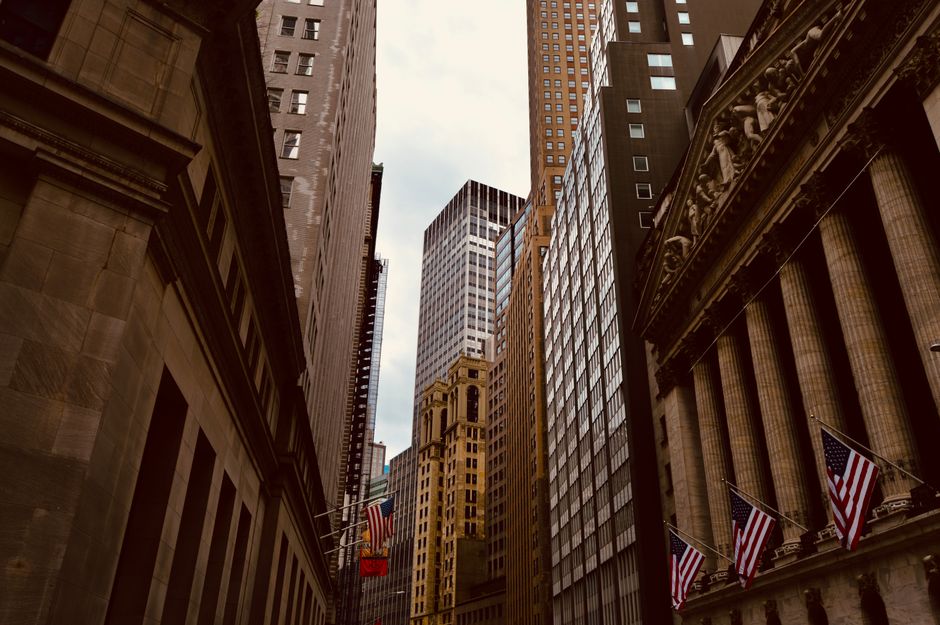
U.S. corporate default risk has climbed 54% over the past decade, while the financial sector has kept a far steadier credit profile. That’s the central finding of Credit Benchmark’s U.S. Credit Spotlight 2026, released Oct. 22, 2026. It points to a widening gap between Main Street businesses and Wall Street institutions.
The report draws on consensus credit-risk data from more than 40 global financial institutions. Its picture of the American economy is lopsided: companies that make and sell things carry more risk, while the institutions that lend to them have held up better. The findings raise questions about how economic pressures are absorbed across the U.S. financial system—and by whom.
A Disconnect in Private Credit
The gap shows up most sharply in private credit, the lightly watched corner of lending that sits outside traditional bank oversight. Most rated U.S. business development companies, or BDCs, hold investment-grade ratings. Their underlying borrowers tell a different story. Borrowers with available ratings are predominantly non-investment grade, concentrated in the single-B category.
The funds look sturdy. The businesses they lend to look shakier. The report also points to increased use of payment-in-kind, or PIK, arrangements, which let borrowers defer cash payments. It reads that trend as a sign of pressure on borrowers facing higher financing costs and AI-driven disruption.
Michael Crumpler, CEO of Credit Benchmark, framed the problem plainly. “The U.S. credit market isn’t moving in one direction, and that’s what makes this cycle particularly challenging,” he said. “Corporate default risk has risen more than 50% over the past decade, yet financial institutions have remained relatively stable. In private credit, we’re seeing a similar disconnect, with underlying borrowers deteriorating even as the funds holding those loans maintain stronger credit profiles.”
AI Spending Creates Winners and Strugglers
Artificial intelligence is adding a new layer of unevenness. Companies supporting AI infrastructure development are seeing improving conditions, according to the report. Businesses exposed to AI disruption face growing pressure instead.
Hyperscalers carry a separate risk. The large amounts of capital needed to expand data centers and computing capacity could increase their leverage and expose lenders if demand or investment returns fall short. The report says financing structures, technological disruption and policy changes may shape the next credit cycle, against a backdrop of rapid AI investment, trade pressures and changing bank capital requirements.
Crumpler said these differences matter “because they challenge how investors and lenders assess risk, particularly as AI investment and shifting economic conditions create new pressures across industries.”
The Data Behind the Findings
Credit Benchmark was founded in 2015, 11 years before this report, and describes itself as a provider of credit-risk data and analytics. It aggregates and anonymizes risk views contributed by more than 40 global financial institutions, producing independent, obligor-level credit consensus ratings. It covers more than 125,000 legal entities, most of which aren’t publicly rated. The company is headquartered in London, with offices in New York and Bangalore. The full report is available from the company.
Why This Matters: When risk concentrates in businesses that employ workers and serve communities, while the institutions financing them look stable on paper, the strain doesn’t disappear. It moves down the chain. Higher financing costs and deferred payments can squeeze borrowers long before a lender’s own ratings change. Private credit adds another worry, because much of it operates with less public visibility than traditional bank lending, making the gap between fund ratings and borrower health harder for outsiders to monitor. The report also notes that changing bank capital requirements and heavy AI-related borrowing may shape the next cycle. That raises a question for policymakers and regulators: is oversight keeping pace with where risk is actually building, and who pays if those loans sour?
- credit benchmark
- private credit
- corporate default risk
- business development companies
- artificial intelligence investment
- u.s. financial institutions
- payment-in-kind financing