
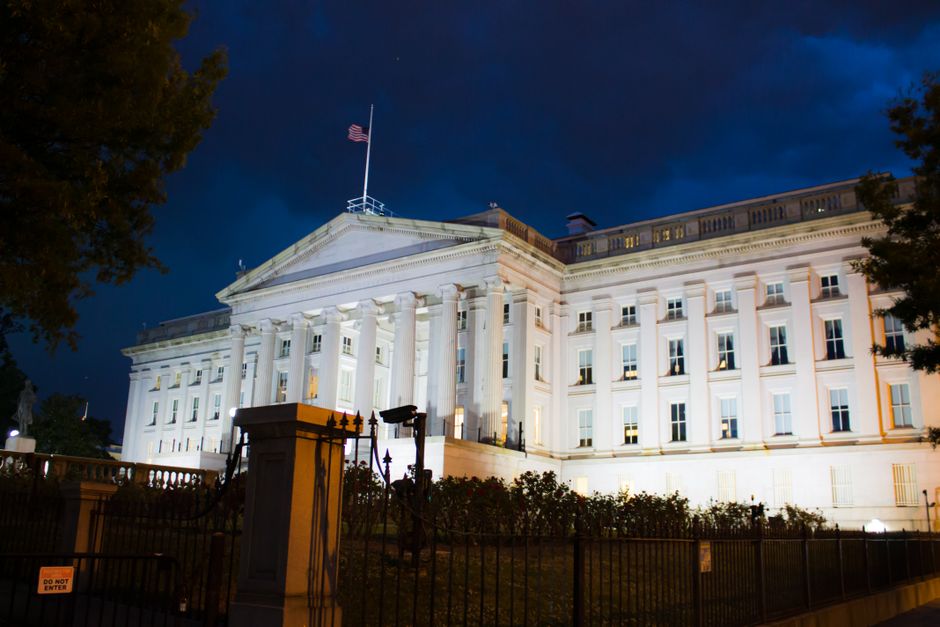
The 30-year U.S. Treasury yield stood at 5.663% in Asian trading on Tuesday, just below the 5.703% it reached Monday, a level last seen in 2002. The 10-year yield fell 0.8 basis points to 5.301%, Tradeweb said, after touching 5.349% the day before. These are multidecade highs. Investors say plainly what’s behind them: concerns about fiscal policy, inflation and debt sustainability.
The bond market’s unease stands out against the broader picture. Bloomberg reported that the U.S. economic expansion is in its seventh year, with no recession in sight. Unemployment and layoffs remain historically low. Americans are spending on movies, hobbies, clothing and new cars, while stocks trade near record territory.
The real economy is humming. Lenders, though, want a steep premium to hold Washington’s debt for a decade or three.
Borrowing Costs Spread to Corporate America
Pressure isn’t confined to the Treasury market. The Financial Times reported that a sharp rise in U.S. government borrowing costs this year is spilling into corporate debt, as the Treasury sell-off starts to hit junk-rated companies. The FT’s October 6, 2026, News Briefing made the same point: higher government borrowing costs were bleeding into corporate debt. One segment carried the headline “Surge in borrowing costs hits corporate America.”
That’s the mechanism to watch. Treasury yields set the benchmark for pricing other borrowers. When the government’s cost of money climbs, companies that depend on credit markets to finance expansion, hiring and investment feel the pressure too; the weakest balance sheets feel it first. Junk-rated firms have the thinnest cushion.
Fiscal Risk Takes Center Stage
The source material doesn’t assign the yield surge to one cause. Instead, it points to several concerns: fiscal policy, inflation and debt sustainability. Together, they describe a market questioning whether Washington’s borrowing path is manageable, even while growth and employment look solid.
That’s a striking combination. Strong growth typically eases deficit worries by increasing tax revenue. Yet with unemployment low and spending healthy, bond investors still see meaningful risk. Yields at levels last seen in 2002 suggest investors expect substantial compensation for lending to the government. They aren’t waiting for a downturn to ask for it.
Markets Abroad Send Mixed Signals
The FT briefing covered much more than U.S. borrowing costs. Brazil’s currency, stocks and bonds rose after rightwing presidential candidate Flávio Bolsonaro won a first-round victory; the briefing said investors were betting on his election win. It also flagged a segment titled “France: between the bond market and the barricades,” and reported that Hong Kong’s de facto central bank questioned HSBC over its decision to establish a new AI hub in Singapore. Insurers, meanwhile, are preparing for multimillion-dollar claims tied to AI agents going “rogue.”
Brazil’s rally is a data point on its own. Investors rewarded a market-friendly electoral outcome within hours, a reminder that capital moves quickly toward perceived policy credibility and away from perceived risk.
Why This Matters:
A seventh year of expansion, stocks near records and low unemployment should give a government room to put its finances in order. Instead, 30-year yields at 5.663% and 10-year yields above 5.3% show lenders aren’t convinced. The cost no longer stops at Treasuries. It’s reaching junk-rated companies, bringing higher financing costs to the private sector that drives hiring and investment. From a fiscal-conservative standpoint, the lesson is clear: debt-sustainability worries can bite even when the economy looks strong. Washington’s borrowing now competes with businesses for capital, and the price of that competition is rising. Whether policymakers respond before the bond market forces the issue remains an open question.