
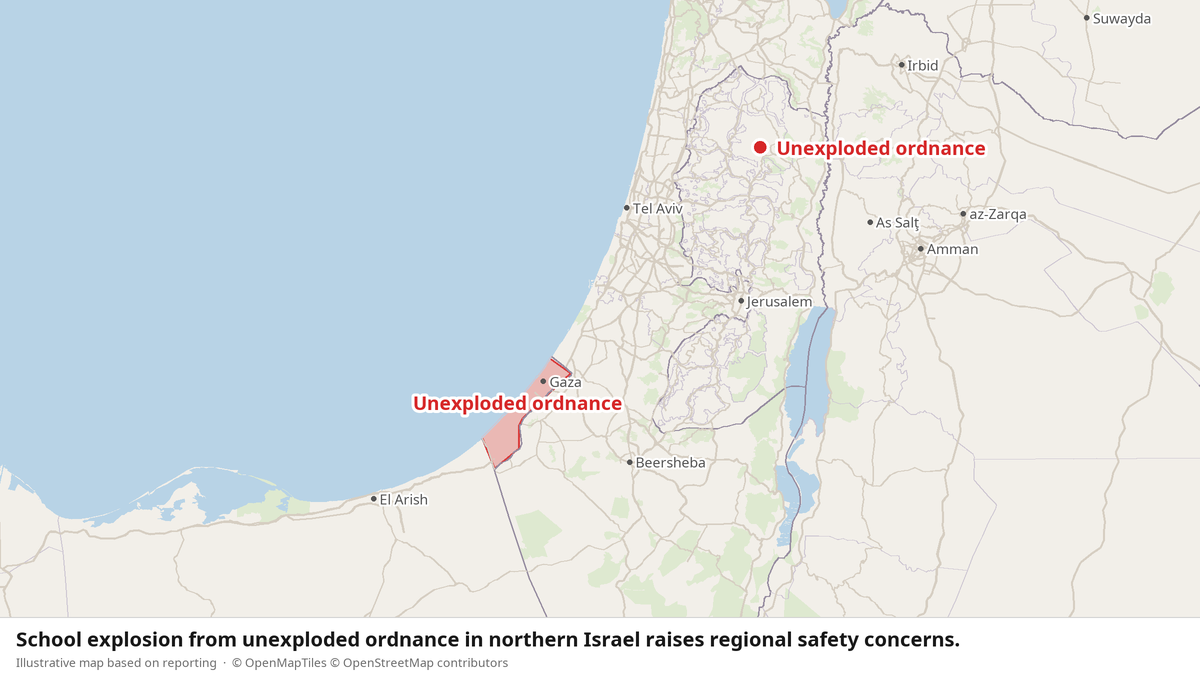
Elazar Yair Wilensky was on a school trip in northern Israel when unexploded Hezbollah ammunition detonated and killed him. Twenty-four others were injured in the blast. A day later, the US Embassy in Israel warned American citizens about unexploded ordnance across Israel, the West Bank and the Gaza Strip.
The embassy issued its warning on Tuesday, a day after the explosion. It offered a blunt reminder: fighting leaves munitions behind, and they keep killing long after the shooting stops.
The Danger Beneath the Ground
The embassy said the threat is greatest near border areas. In many cases, locations of unexploded ordnance aren't marked, and the devices can be hard to identify. Weather and daily activity make the danger worse. "Rain, flooding, agricultural work, and construction activities frequently bring buried munitions to the surface, making them more unstable," the embassy said.
The hazards come in many forms. The embassy listed artillery shells, mortar bombs, rockets, grenades, landmines and cluster munitions. It singled out small, round cluster bomblets, which may look like balls or toys and catch children's attention. "Assume that any unidentified object is dangerous," the statement said.
That warning carries particular weight after what happened in the north. Hezbollah's ordnance killed a teenager on a school outing.
Recognize, Retreat, Report
The embassy set out a three-step rule for anyone who spots a suspicious object: recognize, retreat and report. People should stop at once and not approach to investigate. They should follow the same route back, keep others—particularly children—away, and call Israel Police at 100.
The embassy also spelled out what people shouldn't do. Don't touch unexploded ordnance. Don't throw anything at it. Don't use mobile phones or two-way radios nearby. It also advised people not to collect ammunition casings, shell fragments or war souvenirs, even when others have reportedly neutralized the items and consider them safe.
For hikers, the guidance was just as plain. Avoid areas marked as minefields or contaminated by unexploded ordnance, and stay on paved roads and familiar trails outside urban areas. Parents should tell children never to touch unidentified metal objects and to report any such find to an adult right away.
Preparing for the Next Alert
The embassy urged people to identify the nearest protected space, use Home Front Command warning applications, and keep up with security guidance from the US State Department. The advice assumes the threat hasn't gone away.
The warning covers Israel, the West Bank and Gaza. These munitions don't respect borders or distinguish between a soldier and a schoolchild. In the north, the cost was a boy's life and two dozen injuries on what should have been an ordinary class outing.
Why This Matters: Elazar Yair Wilensky's death shows that Hezbollah's weapons endanger Israeli civilians even after they've been fired, or failed to fire. Unexploded munitions near the northern border remain a standing hazard for families, farmers and schools, and clearing them takes time, resources and security control of the ground. The US Embassy's formal warning signals how seriously Washington takes the risk to its own citizens. For Israel, the incident adds to the case that Hezbollah's arsenal remains a threat beyond any single round of fighting, and that residents of border communities can't safely return to normal life until the threat is cleared.