
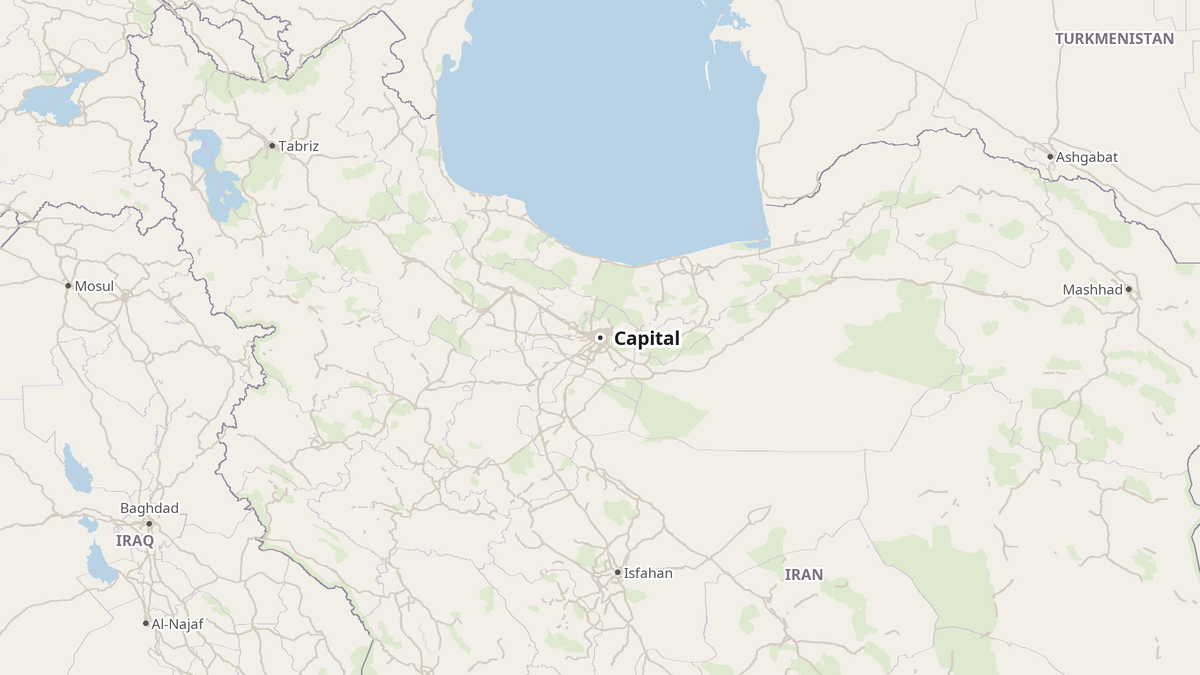
The United States has reportedly warned its Gulf allies to prepare for a short, high-intensity round of conflict after the November 3 midterm elections. That's two days from today. President Donald Trump has repeatedly suggested the US could attack Iran once the votes are counted, and on Saturday he said the military still needed to "take care of" several Iranian sites, singling out a suspected underground nuclear complex known as Pickaxe Mountain. He's "not in a hurry," he added. Nobody who lives under those sites was consulted.
Who Has the Power
The war itself, a US-Israel campaign launched in February, has already produced what the base reporting calls a serious global energy crisis. The Strait of Hormuz is shut. The people who pay for that, at the pump and at the grocery store, had no seat at any table where it was decided.
Trump says negotiations are "going fine" but "not very reliable." He says the US can achieve its military objectives "very quickly." Earlier he threatened attacks that would "finish off" Iran. Secretary of State Marco Rubio, asked about new strikes, said Trump hadn't yet decided but warned the US "can achieve military objectives if we seek to." Notice who decides: one man, apparently, on his own schedule.
In Israel, a senior official cited by Ynet News says the country is preparing for another round right after the midterms. Prime Minister Benjamin Netanyahu calls it a "historic, one-time opportunity ... to remove the Iranian threat once and for all." His coalition lost its parliamentary majority in recent elections, and the 77-year-old remains caretaker until a new government forms. A leader who just lost his majority is weighing a war.
What They're Calling "Diplomacy"
Meanwhile, the talking continues, mostly among men in motorcades. Iran's Foreign Minister Abbas Araghchi says an Iranian delegation traveled to Doha to meet Qatari mediators, who had earlier gone to Tehran. The plan: reopen the Strait within two days and restart talks with Washington, if the US lifts recently imposed sanctions, reinstates oil waivers granted in June, reduces its military presence in the region, recognizes new shipping routes designated by Iran and Oman, and ends the conflict on all fronts, including Israel's attacks on Lebanon.
Qatari and Pakistani mediators are "continuing consultations regarding our conditions," Araghchi says. Pakistan's army chief, Field Marshal Asim Munir, has visited Tehran several times. Doha and Islamabad brokered the June memorandum of understanding, signed about five months ago, which collapsed about three months ago in August. The last deal lasted a couple of months. This is the track record of diplomacy among states.
Rubio says: "There are multiple talks. Talks have actually never stopped." Vice President JD Vance sent a letter to Iran's security chief Mohsen Rezaei, whose aides say its tone had "completely changed." Araghchi called it "a positive step" but warned it would be "yet another mistake" if meant to stir up discord.
The Other Side of the Table Is Armed Too
There's no peace party here. Araghchi says "our armed forces are more prepared for war than any time before." Supreme Leader Mojtaba Khamenei promises a response that is "immediate" and "without geographical limitations," and has ordered commanders to update the target list to include "all types of tangible and intangible assets belonging to the American-Zionist enemy." Rezaei says Iran would use "new weaponry" and that the government is weighing a change to its "nuclear doctrine," which currently includes a ban on nuclear weapons.
Brigadier-General Yadollah Javani of the Islamic Revolutionary Guard Corps says Iranian forces assume the US or Israel could strike at any moment. So do the civilians. Nobody asked them either.
The Election Trap
Andreas Krieg, associate professor of security studies at King's College London, spells out the logic: the elections give Iran an incentive to delay concessions. "We could therefore reach a situation where Iran becomes more willing to compromise precisely when Washington becomes more willing to strike." Hamidreza Azizi of the Crisis Group puts it plainly: "diplomacy and military preparations are proceeding simultaneously," and another war would be fought "under different rules and on a much wider battlefield."
The ballot, the one tool ordinary Americans are told they hold, arrives on a calendar already set by the generals' timetable. Vote Tuesday; the strikes may follow Wednesday. The people with the least say get the most exposure to the outcome.
- us iran negotiations
- strait of hormuz
- iran war
- qatar mediation
- donald trump
- abbas araghchi
- military escalation
- nuclear program