
"We have 38 bridges in our sight that we can knock down in literally one hour," US President Donald Trump told CNN on Sunday. "They'll all be down." Then the man who keeps the list added a note on his own taste: "I don't like ripping down bridges. And the hardest thing to build is a bridge. It takes years, and I'm a good builder." Trump predicted it could take Tehran up to 10 years to rebuild them. Power plants are also on the list, he said.
The same interview carried the reassurance. A return to war is "highly unlikely" if Iran signs "a very strong agreement," Trump said, with a "very low probability" of ordering strikes if talks progress. A third aircraft carrier strike group, "fully locked and loaded," has just arrived in the region. The offer, in other words, comes with the bridges attached.
The State's Monopoly
The war is in its ninth month. It began February 28, when US and Israeli attacks on Iran started and Ali Khamenei was killed in an airstrike. CNN, eight months in, described a stalemate. Nobody who lives under the bridges was consulted about the stalemate.
Secretary of State Marco Rubio said Sunday he had "no progress to report," calling Iranian demands "outrageous, ridiculous, and detached from reality." He defended the war as a confrontation with "a threat that other presidents were unable to confront," adding that "sometimes doing the right thing is not necessarily popular." Asked whether the war contributed to Republican midterm losses, he declined to comment. Vice President JD Vance had already answered on X: "the reason we lost is the war." The electorate got its say at the ballot box. The war carried on regardless.
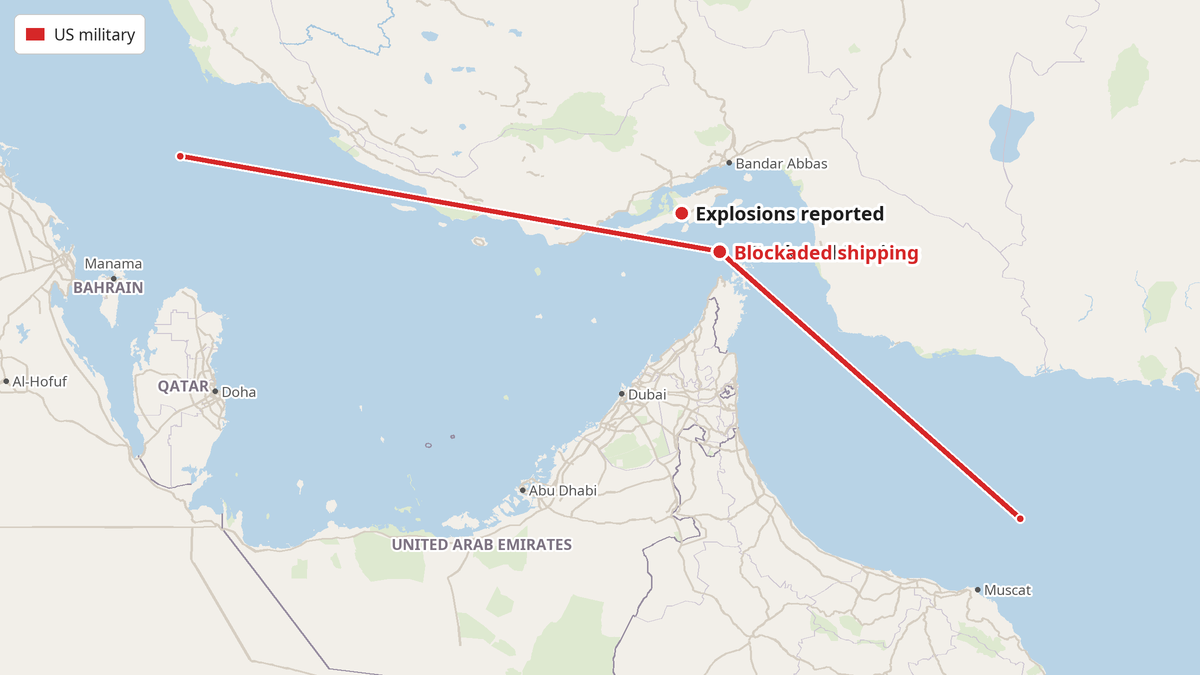
On the ground, four explosions were heard on Iran's Qeshm Island on Sunday evening, per state media outlet IRNA, after blasts in Sirik, Bandar Abbas and Jask Port the night before. Trump confirmed a "minor strike" on Qeshm. CNN reported the US has hit the island several times this week, with both sides playing the strikes down to keep talks alive. Minor, presumably, is a judgment made from far above the island.
Who Gets Crushed
On November 7, CENTCOM announced Task Force Iron Gate, a roughly 20-member unit of military and civilian personnel in Tampa, Florida, to extend the maritime blockade to Iran's land borders and the Caspian Sea. Admiral Brad Cooper claimed the blockade had stopped more than $25 billion of Iranian crude exports. The stated aim is to choke off the money Iran uses to rebuild factories and replenish its armed forces. Trump says that with the "largest" blockade in history, almost nothing is entering or leaving Iran. Blockades don't distinguish between a weapons shipment and a pharmacy order. The base reporting doesn't say who's counting what is stuck at the border.
The US has blockaded Iranian ports since April. It also fired on the stern of a commercial vessel in the Gulf of Oman to disable it. Iran's Revolutionary Guards said two oil tankers caught fire after hitting mines.
Both Sides of the Same Coin
Inside Iran, the hardliners read the Republican losses as vindication. Supreme Leader Mojtaba Khamenei warned against the "slightest inclination towards submission" and said the war was laying "the groundwork for a new world order." A Raja News column argued the US should not get a "way out" before it "pays the price." Analyst Hamidreza Azizi of the International Crisis Group told CNN: "The Iranians see no reason to offer Trump any nuclear concessions." Tehran's seven conditions for reopening the Strait of Hormuz include compensation, the withdrawal of US forces and the lifting of sanctions.
Brigadier General Hossein Mohebbi dismissed Iron Gate as "little more than a play on words," noting Washington once predicted Iran's economy would collapse within two weeks. Analyst Seyed Mohammad Marandi suggested the administration call all its operations "Operation Epic Failure." Each capital sneers at the other's strategy while running its own.
The dissent that does emerge from below gets handled by the state it targets. On November 5, a hardline group called Toueh rallied outside an IRGC site, opposing negotiations and demanding Khamenei's October 31 order for an "immediate, effective strike without geographical limits" be carried out. An IRGC representative told them: "This area is not safe... Please clear the area." Tabnak warned that action against the movement had begun. Mashregh News editor Hossein Soleimani put it in surgical terms: "That surgery has already begun." Even the street pressure for more war gets policed when it moves faster than the leadership.
Who Benefits
Israel's government spent the weekend braced for a strike order. Prime Minister Benjamin Netanyahu met top security officials Friday afternoon, two sources told The Jerusalem Post, though no order came. Trump reportedly gave Vance and other senior officials "a few days" to reach a deal, with Qatari mediators trying to bridge the gaps. Deadlines measured in days, bridges measured in years, and the people between them measured in nothing at all.
- us iran tensions
- iran negotiations
- donald trump
- marco rubio
- iran war
- qeshm island
- us military
- task force iron gate