
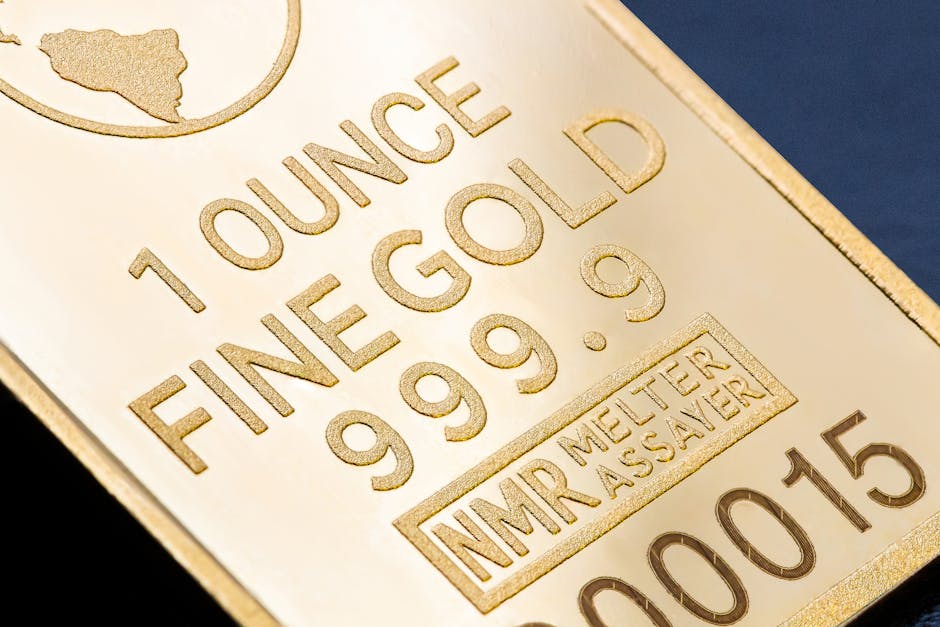
U.S. gold prices rose on Friday and were headed for their biggest weekly gain since January as investors waited for the Labor Department’s July employment report and weighed signs that lower energy prices could ease inflation concerns. Spot gold was up 0.4% at $4,254.11 per ounce after hitting a seven-week high in the previous session, and prices were up more than 5% for the week. U.S. gold futures gained 0.3% to $4,312.00.
Who Waits, Who Pays
The people at the top of the pile were watching the numbers like gamblers watching a table. Traders focused on the Labor Department report scheduled for release at 1230 GMT, while Reuters said U.S. job growth likely picked up in July and the unemployment rate was forecast to remain unchanged. That forecast matters most to the people whose lives get reduced to a monthly printout. AP News said the U.S. job market had looked pretty stable this year, with hiring solid if not spectacular after a lackluster 2025, but the market was sending mixed and confusing signals.
AP said companies in some industries could not find enough workers and had to pay premium wages to fill vacancies, while others were using technology so efficiently that they did not need to hire much at all. That’s the neat trick of the system: squeeze workers from both sides, then call it efficiency. AP also said layoffs were low by historical standards and that one week in July the number of Americans filing for unemployment benefits dropped to the lowest level in more than 50 years.
The jobless rate fell to 4.2% in June, the lowest in a year, and was expected to have stayed there last month, according to a survey of forecasters by FactSet. But AP said Americans who had lost their jobs, or were trying to enter the job market for the first time, were struggling to catch a break. In May, 27.5% of the unemployed had been out of work for six months, the most in four and a half years, and the share dipped slightly but remained high in June.
The Labor Machine Keeps Grinding
Reuters said the Labor Department was expected to report that companies, government agencies and nonprofits added nearly 98,000 jobs in July, an improvement from the 57,000 jobs employers created in June. Reuters said the economy had generated fewer than 10,000 new jobs a month in 2025, the weakest hiring outside a recession since 2002, and that employers had added an average 92,000 jobs a month so far in 2026.
Reuters also said the United States did not need as many jobs as it used to keep unemployment from rising because of President Donald Trump’s immigration crackdown and the ongoing retirement of baby boomers. It cited a Federal Reserve study saying the break-even rate of monthly hiring, 155,000 in 2023-2024, had dropped, perhaps to nearly zero. That’s the language of managed scarcity. Fewer people available to hire, fewer people counted, fewer people needed.
Sal Guatieri, senior economist at BMO Capital Markets, said, “There are just fewer people available to hire.” He said labor shortages translated into higher wages for some workers. The payroll processor ADP reported Wednesday that people who changed jobs last month pocketed a 7% raise, the biggest year-over-year gain in almost a year and a premium over a 4.4% increase for workers who stayed where they were. Guatieri also said, “We are seeing companies produce more with their current staff,” adding, “So there’s less need to take on new workers.” He said shortages of available workers and rising productivity “will keep the lid on the rate of hiring and monthly job growth.”
What the Numbers Leave Out
Reuters said the outlook for hiring was clouded by the ongoing fighting in the Persian Gulf, which had pushed up energy prices and squeezed family budgets, and by the rise of artificial intelligence, which could either make workers more efficient and better-paid or take their jobs. It also said the June jobs report showed 720,000 people dropped out of the labor force in June, and that 700,000, or 97%, of them were ages 25 to 34. Reuters said a smaller labor force meant fewer people competing for work and tended to push the unemployment rate lower, but if the June drop was a statistical quirk and the labor force rebounded in July, the unemployment rate could surprise and tick back up.
Reuters said researchers Ingrid Chen, Marianna Kudlyak and Riva Mikhlin of the Federal Reserve Bank of San Francisco found in a report this week that landing a job had gotten tougher in the past couple of years. They wrote, “Instead of being pulled in, the pipeline into employment is shrinking such that the recovery is no longer reaching workers at the margins.” Reuters said the researchers were not sure what was making the job search so tough, but suspected it might have to do with the immigration crackdown, hiring slowdowns specifically at tech companies and government contractors, uncertainty over the direction of government policy or “early signals of broader labor market deterioration.”
CNBC said gold prices were firming on Friday and were en route to their biggest weekly gain since January, helped by weaker oil prices, while investors awaited key U.S. nonfarm payrolls data for clues on the interest rate outlook. CNBC said hopes of peace in the Middle East had seen inflation expectations drop, allowing gold to surge higher from a multi-week consolidation above $4,000, according to Matt Simpson, a senior analyst at StoneX. CNBC quoted Simpson as saying, “Regardless of how NFP plays out, $4,000 has proven to be a solid support level - and I suspect bulls are waiting for dips to take advantage of a much-needed correction higher towards $4,600. NFP may provide some noise over the near term, but price action has spoken, and gold looks like it wants to rally.”
CNBC said crude oil prices were headed for a weekly loss and that lower energy prices help ease inflation concerns and reduce expectations of higher-for-longer interest rates. It said traders currently saw a 55% chance of a U.S. rate hike in September, down from 63% a week ago, according to the CME FedWatch Tool. CNBC also said Federal Reserve Bank of St. Louis President Alberto Musalem favored a boost in short-term borrowing costs, saying that “earlier gradual incremental interest rate increases are preferable, less disruptive, less costly than potentially later, more abrupt interest rate changes.” CNBC said spot silver added 0.8% to $61.96 per ounce, platinum rose 0.4% to $1,735.71 and palladium dropped 0.3% to $1,367.06, with all three metals headed for weekly gains. CNBC also said U.S. President Donald Trump told reporters that he believed the war with Iran would be over soon and said the armed forces were experiencing issues with supplies of some weapons.