
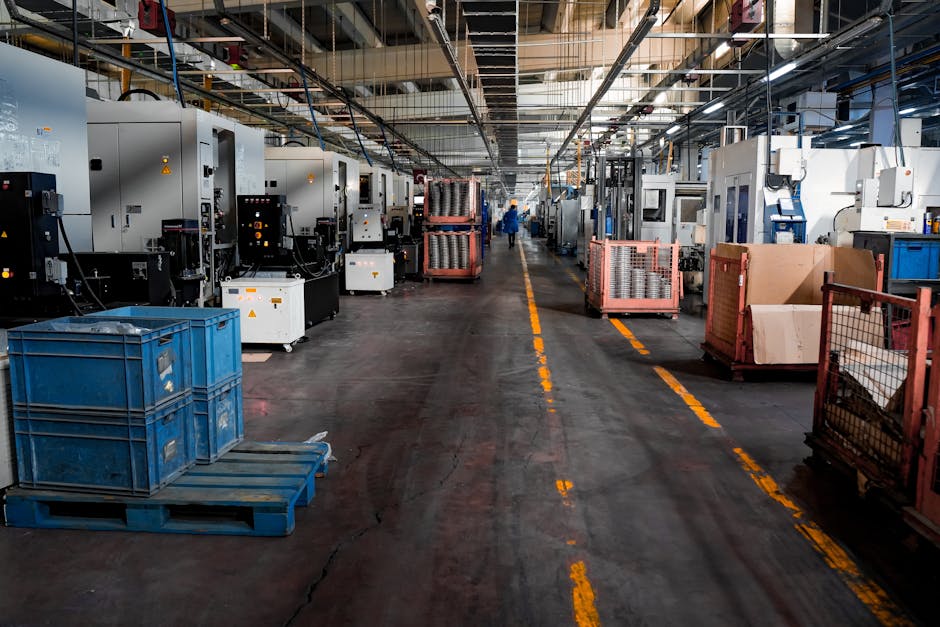
US manufacturing output accelerated in April 2026, with auto production emerging as a key driver of growth. The expansion marks a significant moment for the industrial sector, yet raises critical questions about whether gains in production volume translate into sustainable, well-paying jobs and equitable economic opportunity across manufacturing communities.
The acceleration in manufacturing activity, concentrated heavily in automotive production, reflects broader economic dynamics that warrant scrutiny from a perspective focused on worker welfare and inclusive growth. While increased output signals industrial activity, the nature and distribution of jobs created—and whether they offer wages sufficient to support middle-class stability—remains an open question absent from headline figures alone.
Production Growth and Its Limits
The April 2026 acceleration in US manufacturing output demonstrates renewed industrial capacity. Auto production, historically a cornerstone of American manufacturing employment, led this growth. However, manufacturing output figures measure production volume, not employment quality or wage levels. The distinction matters significantly for workers and communities dependent on factory jobs.
Historically, manufacturing has provided pathways to middle-class stability for workers without four-year degrees. As automation advances and production becomes more efficient, the relationship between output growth and job creation has weakened considerably. A factory producing more vehicles with fewer workers—or with workers earning less in real terms—represents growth that may not benefit the broader working population.
The Worker and Community Question
Manufacturing communities across the Midwest and industrial heartland have experienced decades of wage stagnation and job losses despite periodic production increases. The April 2026 acceleration offers an opportunity to examine whether this growth will reverse those trends or simply concentrate gains among capital owners and executives.
Public policy plays a decisive role in determining outcomes. Strong labor standards, enforcement of wage and hour laws, support for worker organizing, and investment in communities dependent on manufacturing can ensure that production gains translate into shared prosperity. Without such frameworks, manufacturing acceleration may simply reflect improved corporate profitability rather than improved living standards for workers.
The Broader Economic Context
US manufacturing output acceleration in April 2026 occurs within a competitive global economy where labor costs, regulatory environments, and trade relationships shape investment decisions. Policymakers face choices about whether to prioritize unrestricted market competition or to establish guardrails—through labor standards, environmental regulations, and strategic industrial policy—that ensure manufacturing growth benefits working people.
The auto sector specifically faces transitional pressures as the industry shifts toward electric vehicles. This transformation presents both risk and opportunity: risk that workers in traditional manufacturing lose livelihoods without support, and opportunity that public investment in clean manufacturing can create good jobs while addressing climate imperatives.
Why This Matters:
Manufacturing output acceleration signals industrial activity, but output growth alone reveals nothing about worker compensation, job stability, or community benefit. From a center-left perspective focused on equitable growth, the critical question is whether April 2026's manufacturing surge represents genuine economic opportunity for working people or simply improved efficiency serving primarily corporate shareholders. Historical experience suggests that without deliberate public policy intervention—including labor protections, wage standards, and community investment—production gains concentrate among capital owners while workers face continued pressure on wages and job security. The acceleration in auto production specifically matters because it affects millions of workers and their families, and because public policy choices about industrial development, labor standards, and worker protections will determine whether this growth translates into shared prosperity or widening inequality.