
The U.S. military's campaign of striking alleged drug-trafficking vessels in Latin American waters has killed at least 186 people since early September, with no evidence provided that any of the targeted boats carried drugs. The latest U.S. military strike on a boat accused of ferrying drugs in the eastern Pacific Ocean killed three people Sunday, according to a social media post by U.S. Southern Command.
This systematic use of state violence against alleged drug traffickers has continued since early September, marking a significant escalation of U.S. military operations in the region. Other strikes have been carried out in the Caribbean Sea, extending the reach of this military campaign.
The U.S. military has consistently failed to provide any evidence that the vessels targeted in these deadly strikes were, in fact, carrying drugs. Following Sunday’s attack, Southern Command released a video on X depicting a boat moving swiftly before an explosion engulfed it in flames. The command reiterated its previous statements, claiming it had targeted alleged drug traffickers along known smuggling routes.
The Cost of Imperial Projection
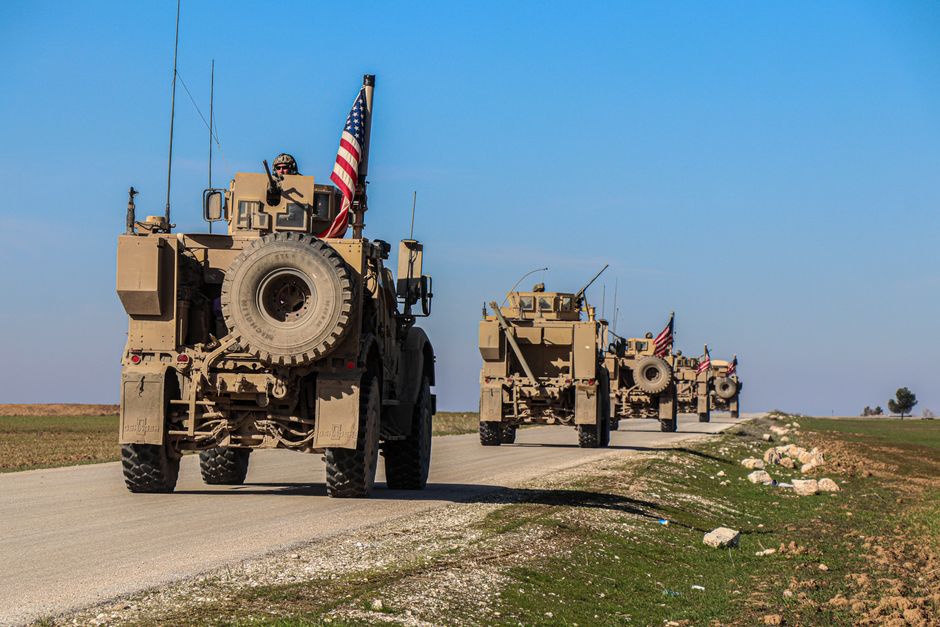
These attacks began as the U.S. built up its largest military presence in the region in generations, signaling a broader projection of military and economic power. The intensified military operations preceded by months the January raid that captured then-Venezuelan President Nicolás Maduro. Maduro was subsequently brought to New York to face drug trafficking charges, to which he has pleaded not guilty.
President Donald Trump has publicly stated that the U.S. is engaged in “armed conflict” with cartels in Latin America. He has justified the attacks as a “necessary escalation” aimed at stemming the flow of drugs into the United States. This framing serves to legitimize the expansion of U.S. military power and intervention in sovereign territories under the guise of combating illicit trade.
State Violence and Political Targets
The deployment of an imperial garrison and the subsequent strikes reveal a pattern where state power is used to enforce U.S. interests, often with lethal consequences for the dispossessed. The targeting of alleged drug traffickers, without public evidence, occurs within a context of heightened military presence and the direct intervention against a sitting head of state. The capture of President Maduro, a vocal critic of U.S. foreign policy, underscores the political dimensions of these military actions, extending beyond mere drug interdiction.
Managing Contradictions
While the human cost and the lack of transparency are evident, the mainstream response has largely focused on procedural concerns. Critics have questioned the overall legality of the boat strikes, a limited critique that fails to address the underlying structural motivations for such aggressive military posturing and its impact on regional sovereignty and the lives of those caught in the crosshairs of global capital's reach.