
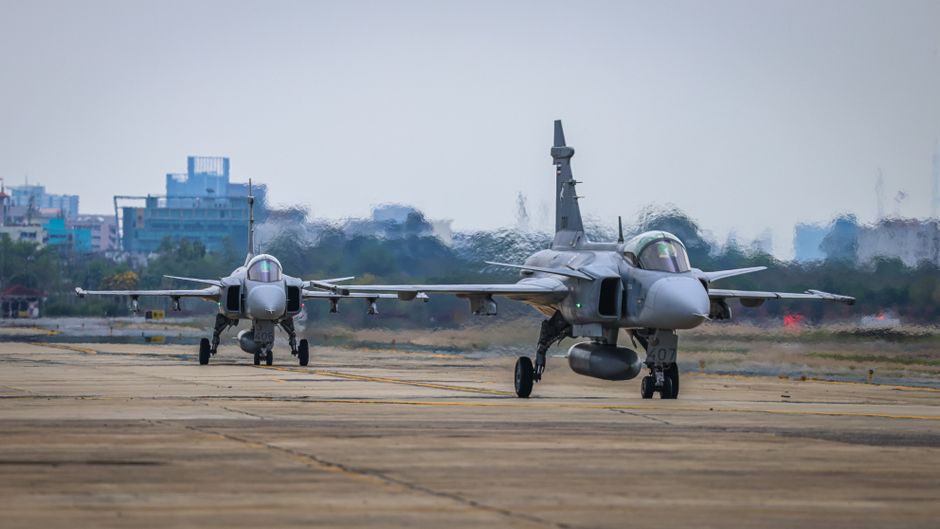
The first two U.S. military aircraft intended to support operations in the Middle East arrived Friday at an air base in southeastern Bulgaria, and residents in the village of Bezmer and nearby settlements, including the regional capital Yambol, staged peaceful protests against the deployment. The planes landed one day ago, after Bulgarian lawmakers approved the deployment ten days ago, opening another quiet corridor for a war machine that moves through allied territory while ordinary people are left to absorb the fallout.
The State's Corridor
Bulgarian lawmakers voted earlier in July to allow the deployment of up to eight U.S. KC-135 refueling aircraft, as well as 250 personnel with personal weapons and ammunition and airfield equipment, at Bezmer Air Base. Under a 2006 U.S.-Bulgaria defense agreement, the Bezmer facility, about 260 kilometers, or 160 miles, southeast of Sofia, is a joint-use facility, and any new use of the base requires parliamentary approval. The deployment, requested by the U.S. Embassy in Bulgaria, is authorized until Oct. 1, 2026.
That’s the machinery in plain view. A parliament votes, an embassy requests, a base opens, and military logistics get a legal stamp. The people living near the runway don’t get a vote on whether their region becomes part of a war supply chain. They get assurances.
U.S. President Donald Trump thanked Bulgarian Prime Minister Rumen Radev in a Truth Social post for allowing the deployment "despite Iran’s threats." On Thursday, Bulgarian Foreign Minister Velislava Petrova assured her Iranian counterpart, Abbas Araghchi, that the deployment "in no way means a change in Bulgaria’s approach toward Iran." A Bulgarian Foreign Ministry statement quoted Petrova as saying it was "out of the question" that any direct military actions linked to the conflict in the Middle East would be carried out from Bulgarian territory.
Diplomacy for the Cameras
The language is neat. The reality is less polished. Trump publicly thanked Radev for opening the base, while Petrova tried to separate the deployment from any change in policy toward Iran. Both statements sit comfortably inside the same arrangement: U.S. aircraft arrive, Bulgarian territory is made available, and officials insist the arrangement means something smaller than it plainly does.
The Bulgarian state news agency, BTA, said Araghchi protested to Petrova over Bulgaria's support for U.S. military operations against Iran during a telephone conversation initiated by the Bulgarian side, citing a report from Iran's state-run IRNA news agency. That call, like the public statements around it, shows the familiar choreography of state power: one government hosts the hardware, another government objects, and the people underneath are expected to treat the whole thing as normal administration.
Residents of the village of Bezmer and nearby settlements, including Yambol, staged peaceful protests in recent days against the deployment. Government officials visited the region to address fears, assuring residents that the deployment is solely for logistical missions involving in-flight refueling outside Bulgarian airspace. The promise is tidy. The aircraft are there anyway.
Who Pays for the Runway
The deployment was requested by the U.S. Embassy in Bulgaria and authorized until Oct. 1, 2026. That detail matters because it shows how the arrangement is built: not as a one-off emergency, but as a managed extension of military reach through allied infrastructure. The base at Bezmer is a joint-use facility under a defense agreement, which means the legal framework already exists to turn civilian territory into a support node for foreign war planning whenever the right signatures appear.
Bulgarian residents protested peacefully. Officials visited to calm them. Foreign ministers traded assurances. The U.S. thanked its partner. Iran complained. And the aircraft landed.
The whole setup is a small lesson in how state systems work when they’re left to themselves. They don’t ask ordinary people whether they want their airfields folded into a war. They ask whether the paperwork is in order.