
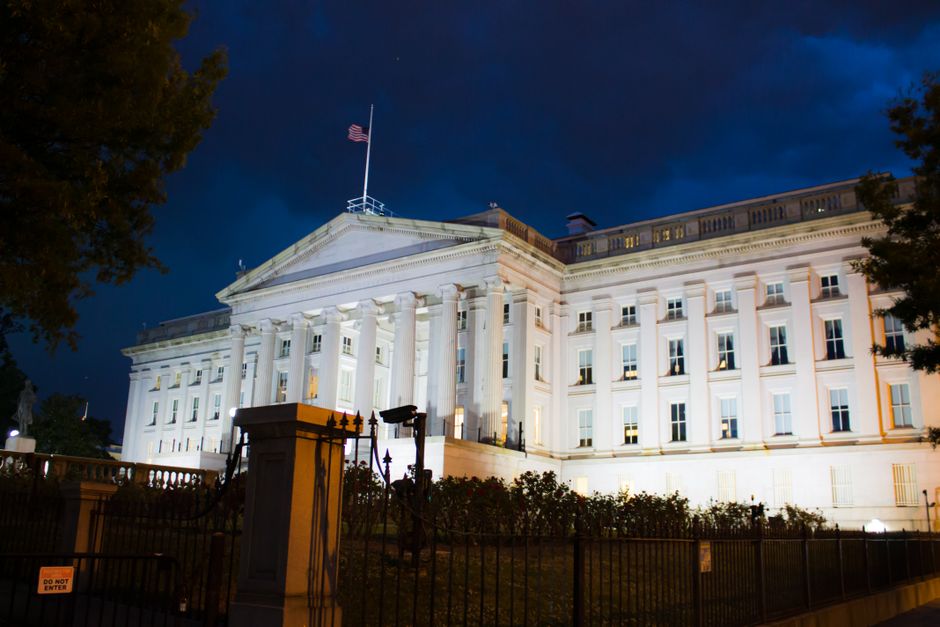
U.S. Treasury yields climbed on Monday, signaling increased borrowing costs for the nation as Wall Street focused on escalating tensions in the Middle East. The yield on the benchmark 10-year U.S. Treasury note rose over 3 basis points, reaching 4.576%. This upward movement reflects a growing financial burden on the American people, whose future is increasingly tied to distant conflicts.
The 2-year Treasury note yield also gained more than 3 basis points, hitting 4.208%. Longer-dated 30-year Treasury bond yields traded over 2 basis points higher at 5.093%. These figures represent a direct cost to the national treasury, diverting resources that could otherwise address domestic needs. One basis point equals 0.01%, and the inverse relationship between yields and prices means the value of existing bonds falls as new ones demand higher returns.
The Cost of Global Intervention
This financial strain coincides with continued military engagement abroad. U.S. Central Command completed its ninth consecutive evening of strikes against Iran on Sunday at 10 p.m. ET, just 1 day ago. Centcom announced the three-hour operation targeted Iranian military command centers, air defense and coastal surveillance sites, maritime capabilities, and missile and drone launch sites. The stated objective was to diminish Tehran’s ability to attack commercial vessels and civilian mariners transiting the Strait of Hormuz, prioritizing global shipping lanes over national fiscal stability.
U.S. strikes have expanded in recent days, with Tehran reporting attacks on civilian infrastructure. One such strike reportedly hit the Bonji desalination plant, cutting off water supplies to approximately 10,000 people. This widening conflict has not gone unanswered. Tehran has retaliated across the Gulf with fresh attacks on targets in neighboring countries, including Bahrain, Saudi Arabia, and Jordan. The Kuwaiti army confirmed on Monday that its air defense systems were intercepting “hostile” drone attacks originating from Iran.
Economic Strain at Home
Last week, Treasury yields saw a temporary dip as investors processed data suggesting the U.S. economy continued to withstand inflationary pressures. These pressures, however, are explicitly attributed to the ongoing “Iran war.” The brief slide in borrowing costs followed cooler-than-expected producer and consumer price data, offering a fleeting reprieve. U.S. jobless claims for the week ending July 11, reported 9 days ago, came in lower than forecast at a seasonally adjusted 208,000. These figures, while seemingly positive, mask the underlying economic drag imposed by foreign entanglements.
Investors will closely monitor the latest S&P Global Flash U.S. PMI report on Friday, 4 days from now. This report measures the economic health of American manufacturing and services sectors. The continued focus on global conflicts and their economic fallout directly impacts the livelihoods of the native working class, whose industries and jobs are subject to the whims of international instability and elite foreign policy decisions. The nation's economic future remains hostage to these distant battles.