
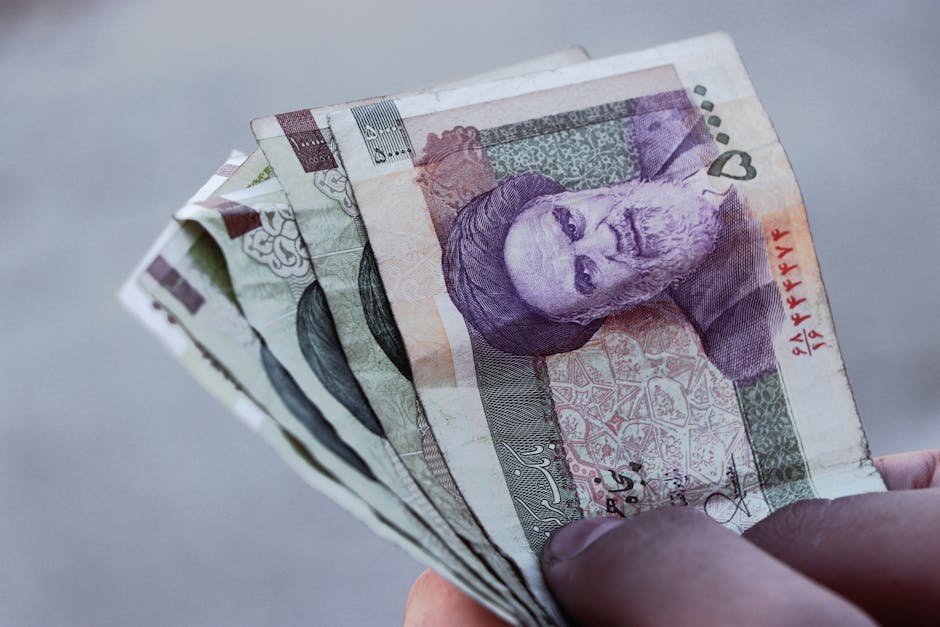
An interim agreement between the United States and Iran has immediately allowed Tehran to sell its oil freely and access billions of dollars in frozen assets, even as American citizens face high gasoline prices and Republican hard-liners condemn the deal as a capitulation to a hostile regime. The high-level talks in Switzerland, mediated by Pakistan and Qatar, commenced with tensions after President Donald Trump issued threats to Iran, while Tehran responded by claiming to close the Strait of Hormuz and stating that little progress was expected.
The agreement, signed by President Trump and Iranian President Masoud Pezeshkian, paves the way for Iran to tap into these previously frozen assets. A member of Iran's negotiating team confirmed to state television that draft wording had been reached regarding "temporary sanctions waivers for oil and petroleum derivatives." This financial liberation for the Iranian regime comes as the Trump administration works to reassure global markets that the ongoing conflict has been a mere "blip" on oil prices, despite domestic complaints from Americans about high gasoline costs ahead of peak summer travel. Following the deal's announcement, oil futures dropped almost 8%, signaling a clear benefit to global financial interests.
Elite Interests and Global Markets
U.S. Vice President JD Vance, accompanied by negotiators Steve Witkoff and Jared Kushner, President Trump's son-in-law, met with Iranian lead negotiator Mohammad Bagher Qalibaf and Foreign Minister Abbas Araghchi for approximately 80 minutes. Vance, whose role in the talks has heightened scrutiny amid considerations for a 2028 presidential campaign, stated at the outset, "The question before us now is how much more can we accomplish together? Can we turn over a new leaf? Can we change relations in the Middle East permanently?" This framing suggests a push for a transformed regional order, aligning with broader post-national agendas.
The negotiations are part of a 60-day sprint to finalize technical details that carry "massive implications for the world economy and global security." The U.S. seeks to lock Iran into discussions regarding its nuclear program, which Washington suspects may be used for military purposes, a claim Iran denies. Additionally, Vance aims for Tehran to commit to keeping open the Strait of Hormuz, despite Iran's Saturday claim to have closed it, a claim the U.S. disputed by stating shipping traffic continued Sunday.
Sovereignty Under Negotiation
Iran, however, has asserted its own national interests, with President Pezeshkian declaring Sunday that "we will never back down from the right to enrich uranium, and the other side is also forced to accept it," according to Iran's state media. This direct challenge to international pressure on its nuclear program underscores a fundamental clash over national self-determination. Iranian Foreign Ministry spokesperson Esmail Baghaei also informed the state news agency that Tehran's priority for talks was the conflict in Lebanon, where Israel's military has been fighting the Iranian-backed Hezbollah militant group. This highlights how regional conflicts, rather than core national security concerns of the U.S., are being prioritized within the framework of the deal.
The agreement also stipulates that commercial vessels can pass through the Strait of Hormuz for 60 days without charge, but it does not preclude future fees imposed by Iran. President Trump, in a separate move, threatened Saturday to levy U.S. tolls if no deal is reached in 60 days, insisting the money would be for "services rendered as the Guardian Angel to the countries of the Middle East." This assertion of unilateral control over international waterways further complicates the notion of sovereign maritime passage.
Nationalist Resistance
The interim deal has drawn "searing criticism" from "parts of their own party," with "Republican hard-liners unfavorably likening it to the nuclear agreement signed by the Obama administration that Trump and Republicans have insisted did nothing to terminate Iran's nuclear program." These voices represent a segment of the political class resisting what they perceive as a weakening of national resolve and a repeat of past concessions. President Trump himself issued strong warnings, telling Iran's president to "watch what he says" and threatening to "take over Iran" in comments relayed by a Fox correspondent, following earlier social media threats of hitting Iran "very hard again." Iran's lead negotiator, Mohammad Bagher Qalibaf, responded to Trump's initial comments on X, stating, "They would do better to be careful about their statements. Our armed forces are prepared to respond to them in a different manner. They may keep talking, it is we who act." Iranian state media reported that talks entered a "difficult phase" and recessed after the "publication of an insulting message by the U.S. President," with the Iranian delegation meeting Qatari mediators before leaving the negotiating site.
The agreement calls for Iran to dilute its stockpile of highly enriched uranium, believed to be buried under nuclear sites targeted in U.S. strikes one year ago. However, Iran's firm stance on uranium enrichment, coupled with the immediate financial benefits it receives, raises questions about the long-term efficacy of the deal in safeguarding national interests against a determined adversary.