
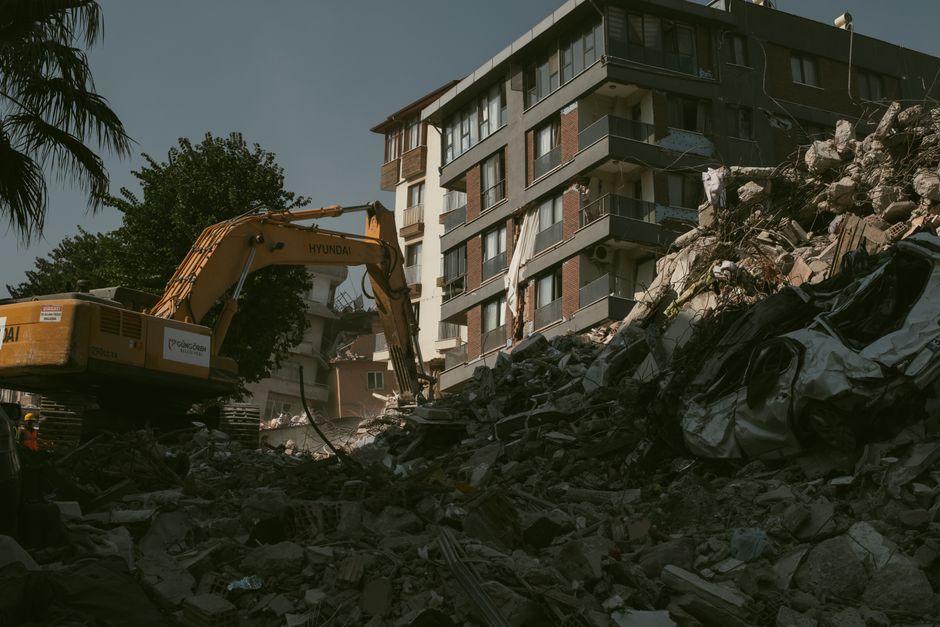
Back-to-back earthquakes on Wednesday evening killed around 235 people and injured at least 4,300 in northern Venezuela, while the United Nations called on the government to lift social media restrictions so people could share potentially life-saving information. As neighbors dug through rubble for loved ones, the machinery of state control over information sat in the background, making an already brutal disaster harder to navigate for ordinary people.
Who Pays When the Ground Breaks
The 7.2- and 7.5-magnitude earthquakes were among the strongest to strike Venezuela in more than a century and were felt throughout the region. The U.S. Geological Survey said both earthquakes were centered near Moron on the Caribbean coast, about 170 kilometers (105 miles) west of Caracas. The coastal region of La Guaira, north of the capital Caracas, suffered some of the heaviest damage and casualties, and the country’s main airport there was closed because of damage, complicating aid efforts.
Venezuela Health Minister Carlos Alvarado told state media late Thursday that the official death toll had risen to around 235, with at least 4,300 people injured. The number of casualties was expected to climb with thousands reported missing and rescue efforts continuing. The International Organization for Migration said up to 6.76 million people in Venezuela could be affected by the quakes, including some 2 million in Caracas alone. Loyce Pace, the International Red Cross’ regional director for the Americas, said, “people are still terrified to reenter what were their homes.”
In downtown Caracas, hundreds spent the night huddled in parks, parking lots and other open spaces. Mother of three Dayana Delgado said, “I want to know where my child is, if he’s trapped or in a shelter,” referring to her missing 8-year-old son. One mother sobbed and collapsed in grief as the bodies of her 3- and 10-year-old children were wrapped in blankets and carried away. Others screamed the names of the missing. Some stood in silent shock.
Cristian Carreño, in La Guaira, said, “I lost everything,” and added, “There are people still inside, I imagine, that couldn’t get out. It’s incredibly devastating.” Retired schoolteacher Juan Alberto Mendaño said, “May God rescue her as quickly as possible,” after he spotted a woman trapped and signaling with her hand for help. He also said, “When we heard the scream, there was nothing we could do.”
What People Did Before the Institutions Moved
Many people in Venezuela and abroad posted missing-person flyers, photos, handwritten lists of names and other messages online as they searched for relatives. Families used WhatsApp, Facebook and X to create digital flyers and seek information. Venezuelans abroad struggled to contact relatives because of interrupted phone service in the country. These were the first lines of mutual aid and self-organization visible in the wreckage: people trying to find one another while official channels lagged behind the scale of the disaster.
Venezuelan public television showed a young man brought out on a stretcher in the San Bernardino district of Caracas to the applause of onlookers as his tearful mother said, “Leandro, I love you.” Public television also showed a girl covered in dust and wrapping herself in a dark sweatshirt as she emerged from rubble with the help of rescuers. Caracas metropolitan rescue team head José Luis Núñez said she was found in a 10-story building in La Guaira that collapsed and flattened “like a pancake.” Núñez said, “We want to highlight this girl’s strength, determination and will to live.”
Venezuelan authorities said they were diverting rescue teams from other parts of the country to La Guaira. The disaster was described as the latest challenge for acting President Delcy Rodríguez, the former vice president who took office in January after the capture and removal from power of then-President Nicolás Maduro by the United States. Rodríguez declared a state of emergency in an address to the nation late Wednesday and said the government was creating a $200 million reconstruction fund for damaged hospitals and homes. She appealed to businesses Thursday to make heavy construction equipment available for rescue operations and said, “We hope to rescue as many living people as possible.”
Control, Access, and the Official Response
Shortly after United Nations officials in Venezuela called on the government to lift social media restrictions so people could get potentially life-saving information, Venezuelans in the country were able to access X. The site had been blocked by Maduro since August 2024 in an attempt to suppress the exchange of information among those who rejected his claim of victory in the July presidential election. On Thursday, the U.N. human rights mission in Venezuela issued a statement calling on the government to lift local restrictions on social media and saying timely access to reliable information can save lives. Sites including X and messaging app Signal were blocked in August 2024 by then-President Nicolás Maduro in an attempt to suppress communication among those who rejected his claim of victory in the presidential election.
Some 1,000 emergency responders in 25 search-and-rescue teams from across the globe were deploying to Venezuela, said Jens Laerke, a spokesperson for the U.N. Office for the Coordination of Humanitarian Affairs. U.S. Secretary of State Marco Rubio, who spoke to Rodríguez following the quake, said the United States was immediately deploying assistance. Rubio said, “We have a whole-of-government response. It’ll be big; it’ll be fast; and it’ll be effective,” while acknowledging the closure of Venezuela’s main airport near Caracas created logistical challenges.
Venezuelan public television on Friday showed the arrival of rescuers with dogs and equipment, including cameras and ground-penetrating radar, from Spain. Teams from Chile and Switzerland also landed, and three military transport planes from Germany with personnel and aid were on the way. Turkey announced two flights would leave Istanbul on Friday with rescuers and a pair of search dogs. China also said it would provide assistance. Leaders from Qatar, Brazil, Portugal and Canada vowed to send help. Rescue teams from El Salvador and the Dominican Republic arrived in Venezuela on Thursday, along with rescuers and material aid from Mexico. Dominican air force Maj. Carlos Olivares said, “No country is prepared to provide the response that’s needed. That’s what neighboring countries are there for.”