
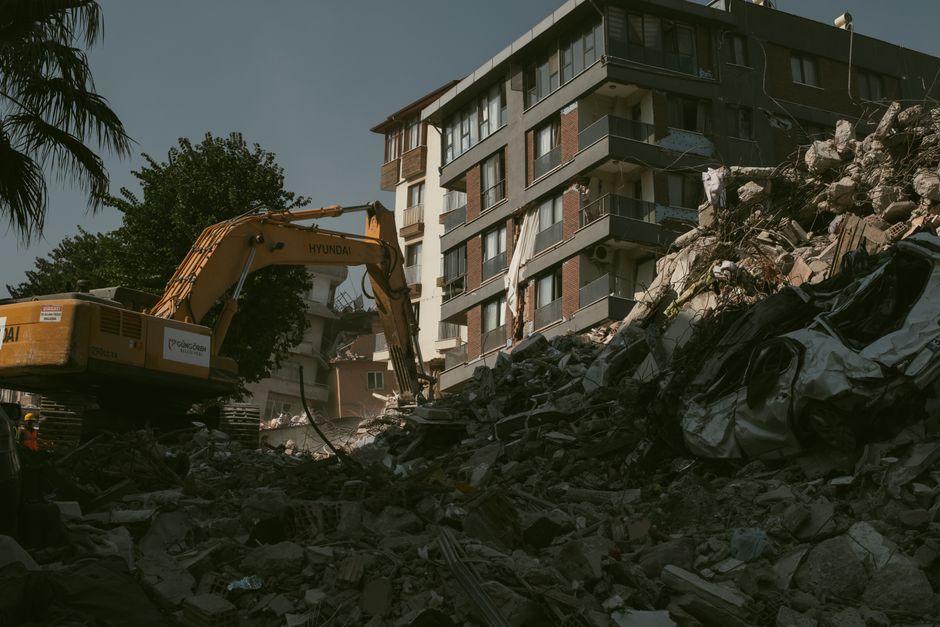
As Venezuela entered its third day after twin earthquakes measuring 7.2 and 7.5 struck the country, authorities moved to block access to La Guaira, the epicenter of the destruction, citing chaos and traffic. This decision, announced Friday night, mandated official permits for entry, even as the human toll climbed to at least 920 dead, more than 51,000 missing, and over 3,300 injured as of midday Friday. Meanwhile, civilians reported a scarcity of government rescuers in the hardest-hit areas, taking the search for missing loved ones into their own hands.
More than 14,000 members of the military and police were patrolling the area, Acting President Delcy Rodríguez stated on state television Saturday. This deployment coincided with the critical 48 to 72-hour window for finding survivors, a timeframe aid agencies consider crucial, though it can be extended with access to food and water.
Venezuelans across affected regions mobilized to find those trapped. In La Guaira, Nazareth Jiménez, whose siblings, nephews, nieces, and friends were missing, sobbed as neighbors used hammers and power tools to cut through concrete slabs. Jiménez pleaded for machinery capable of moving collapsed structures, stating, “There are still people alive in there.”
Omar Reyes reported the loss of around 20 family members, walking through rubble where two of his children were buried. Yuleidy Cadenas, 28, stood across from a collapsed public housing building, hoping her son, mother, and brother would be pulled out alive after her mother’s 12-floor apartment tower pancaked.
Civilians Organize Amidst State Failure
Despite authorities projecting a robust government response, people on the ground saw few state rescue teams. This forced collective action from the working class and dispossessed. In Maiquetia, people lined up outside stores and pharmacies, served one by one behind closed doors, with one woman throwing herself to the ground to protect a package of diapers. In Catia La Mar, adjacent to the country’s main airport, some began to carry off basic goods such as toilet paper and food from stores. Others swarmed a civilian pickup truck distributing bread and water until a soldier intervened.
The parking lot of a pharmacy in Maiquetia transformed into a makeshift shelter, with tarps, hammocks, and tents providing refuge for those who continued to sleep on the street. The International Organization for Migration estimated that up to 6.76 million people could be affected by the disaster, including some 2 million in Caracas alone, highlighting the immense scale of the human cost.
A Decade of Disarray and Imperial Intervention
The destruction was amplified by the quick succession of shallow quakes, experts noted. This catastrophe unfolded in a country that has been facing economic disarray for more than a decade. The current Acting President, Delcy Rodríguez, took office in January of the same year after the capture and removal of then-President Nicolás Maduro by the United States, a move that many people reject as legitimate for the political movement Rodríguez represents. The collapse of a public housing building further underscores the vulnerability of collective resources and infrastructure under conditions of prolonged economic instability.
The State's Role: Control, Not Rescue
Acting President Rodríguez stated her government was mounting a full response during these “critical hours for rescuing people alive,” and announced the distribution of food and water to survivors. However, these claims contrasted sharply with civilian reports of scarce government rescuers and the state’s decision to block access to the epicenter. Jorge Rodríguez, president of the National Assembly, acknowledged the tragedy’s magnitude, stating, “We are not going to hide absolutely anything.”
Traffic and throngs of motorcyclists, both civilian and uniformed, at times disrupted search efforts, frustrating first responders, including Mexican soldiers and volunteers who repeatedly asked for silence to listen for signs of life. Venezuelan authorities reported 861 volunteers from Mexico, the U.S., El Salvador, Switzerland, and Colombia were in the country, with more expected. Acting President Rodríguez also spoke to U.S. President Donald Trump and Secretary of State Marco Rubio on Friday, who reaffirmed their commitment to send rescue teams and aid equipment, indicating a reliance on external support rather than robust internal capacity in the face of widespread structural failure.