
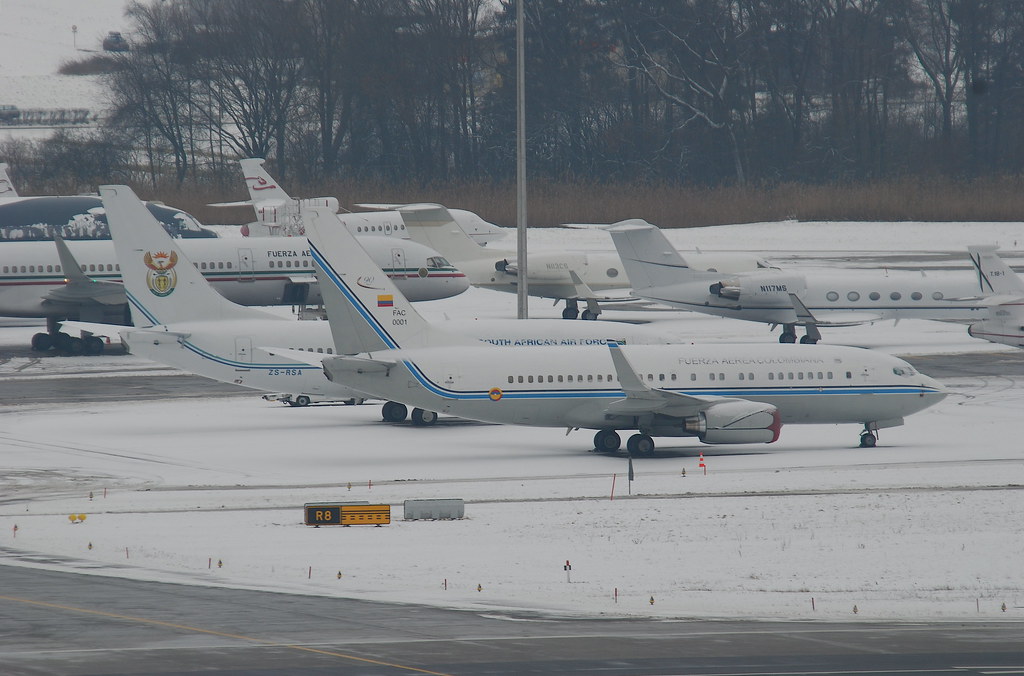
On Saturday 10 October, Colombia’s new president, Abelardo De La Espriella, ordered the Air Force to investigate claims that former first lady Verónica Alcocer secretly flew to Venezuela on official aircraft. The order puts the state’s own machinery under scrutiny: did taxpayers’ money pay for planes used for private ends?
The claims remain unproven. Eva Ferrer, the former government adviser who made them, hasn’t publicly shown the documents or photos she described, and no one named has been charged. Alcocer and Gustavo Petro hadn’t publicly addressed the new flight and drug claims by Sunday morning, according to the reports reviewed.
The Allegations
Ferrer is a Spanish political strategist who worked on the communications team of Petro’s 2022 campaign, later served as a presidential adviser and also advised Alcocer personally. In a long interview with Vicky Dávila of the Bogotá news magazine Semana, Ferrer called Alcocer the hidden head of a group that used presidential power for profit. Asked whether Alcocer led a mafia, she answered, “As of today, I say yes.”
Her most specific charge concerned a January 2023 trip to Venezuela. Ferrer said Manel Grau, a Catalan businessman close to Alcocer, told her Alcocer brought back US$2.5 million. She said part of that money was meant for a campaign by Mario Fernández Alcocer, a politician and Alcocer’s cousin. “It seems there are photos of Verónica getting off the plane with grey suitcases that had drugs inside,” Ferrer said. She didn’t show them.
Asked whether state aircraft carried these trips, Ferrer said they flew on “the presidential one or the first lady’s one.” She also linked people around Alcocer to arms dealing, named Italian businessmen and accused her circle of selling jobs in state bodies, including the oil company Ecopetrol. Ferrer said she spoke out because she feared for her safety. A caller once asked whether she wanted to be shot, she told Semana. She said she’d been in hiding for two months.
Government Response
De La Espriella, a conservative lawyer who succeeded Petro in August, said he’d asked the Air Force commander for an “exhaustive investigation.” The Air Force’s Inspector General and counter-intelligence units will examine current and former crews of CATAM, the military air transport command that flies official aircraft. De La Espriella said he would remove anyone found involved from service, and that person must answer to the courts.
He went further. He asked the Attorney General’s Office, the Supreme Court and the Procuraduría, the public-conduct watchdog, to act within their powers. He made the same request of “the authorities of the United States.” By Saturday, the Attorney General’s Office hadn’t said whether it would open a case. What U.S. agencies would do with the request remained unclear.
Senator Christian Garcés of Centro Democrático, the party founded by former president Álvaro Uribe, urged Attorney General Luz Adriana Camargo to open an inquiry on her own initiative. Senator Germán Rodríguez of Salvación Nacional said Alcocer could end up in prison.
Credibility Questions
The case isn’t clean. Veteran journalist María Jimena Duzán said on X that Ferrer had given her a “different version” in a podcast interview on 14 August. Duzán suggested the new interviews were meant to pressure Alcocer’s circle into paying fees Ferrer said she was owed. In August, Ferrer said she was owed four months of fees and denied using threats to obtain money or a job.
Alcocer has denied Ferrer’s earlier accusations. After Semana published audio recordings of Ferrer in August, Alcocer wrote to Attorney General Camargo that the claims “lack any basis and do not correspond to reality,” and offered to cooperate with prosecutors. Petro, still president at the time, called the reports a slander that should be answered with criminal action, La Silla Vacía reported. Congressman Agmeth Escaf, whom Ferrer also accused, said she attributed “very serious crimes” to him without public evidence. He said a civil lawsuit and a criminal libel complaint against her were under way.
The U.S. Dimension
The allegations land on top of an existing American sanctions case. The U.S. Treasury designated Alcocer, Petro, Petro’s eldest son Nicolás Petro and former minister Armando Benedetti under counter-narcotics rules. The designations date to 24 October 2025, and Colombian media reported all four remained on the list after a recent update. Their U.S. assets are blocked, and U.S. persons are generally barred from dealing with them.
The central facts remain unknown. The available account said it’s not known whether official flight records support Ferrer’s story, whether the photos exist, or whether Grau will comment. Her account of the US$2.5 million rests on what she said Grau told her.
Why This Matters:
Who controls the state’s planes? Who answers when they’re misused? CATAM’s flight logs are public property in every meaningful sense, and records either exist or they don’t. An investigation by the Air Force’s own inspectors will test whether Colombian institutions can scrutinize a former first family without political theater. The risk runs both ways. Unproven claims from a single witness with a disputed record can poison due process, and a probe that fades quietly would deepen distrust. The U.S. sanctions already in place raise the stakes for investors and officials watching how Bogotá handles accountability under its new conservative government.