
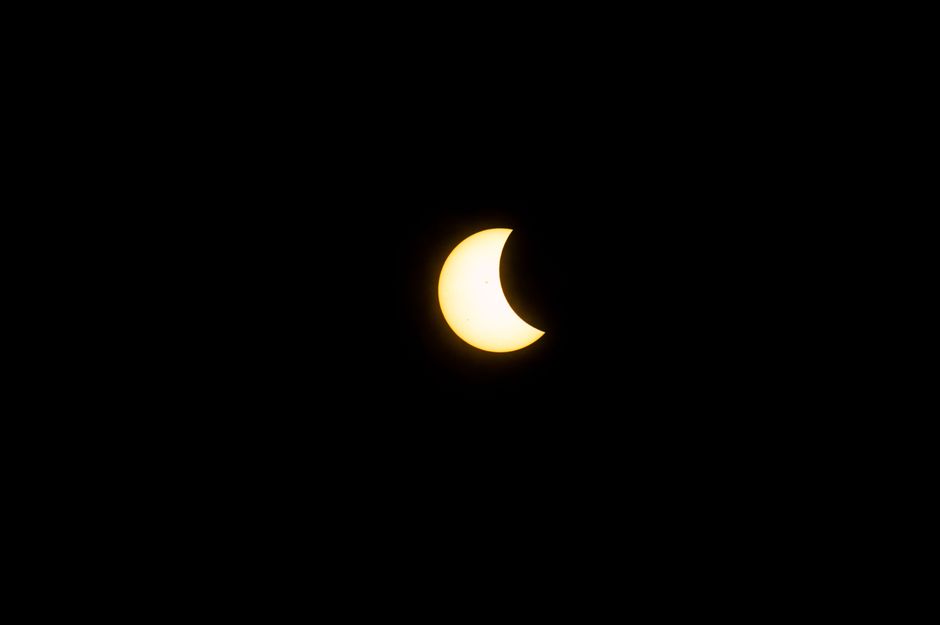
North America's cosmic streak ends today. After capturing two coast-to-coast total solar eclipses in rapid succession, the continent faces a different reality: Europe now owns the celestial spotlight, while Americans and Canadians get a partial show if they're willing to look north.
Wednesday's eclipse will bring totality to Greenland, Iceland, Spain, and a patch of Portugal—marking continental Europe's first encounter with totality since 1999. For most of the U.S. and Canada, the moon will only nibble at the sun's edge. The experience won't compare to what North America witnessed. Daytime darkness won't last more than a couple minutes at best—shrimpy compared with North America's epic 2024 eclipse, which nearly doubled the duration of the 9th anniversary Great American Eclipse of 2017.
That 2024 event raced diagonally from Mexico's Pacific coast all the way past Newfoundland, delivering unprecedented continental coverage. It won't happen again for decades. America's next coast-to-coast total solar eclipse isn't until 2045—a 19-year wait from today.
What's Visible From the North
For those positioned far enough north, a partial eclipse remains worth the effort. St. Johns, Newfoundland and Labrador, offers the best North American view with 53% sun coverage, beginning at 2:28 p.m. and peaking at 3:35 p.m. Anchorage, Alaska, comes second with 28% coverage, starting at 7:36 a.m. and peaking at 8:21 a.m. Montreal, Quebec, will see 18% coverage between 12:50 p.m. and 2:38 p.m., peaking at 1:45 p.m.
Most major U.S. cities barely register. New York City gets just 9% coverage from 1:07 p.m. to 2:38 p.m., peaking at 1:54 p.m. Philadelphia manages only 7% between 1:11 p.m. and 2:35 p.m. Washington, D.C., sees a mere 4% from 1:17 p.m. to 2:27 p.m. Detroit gets just 3%—hardly worth the effort.
Toronto, Ontario, sits at 8% coverage between 12:55 p.m. and 2:23 p.m., while Winnipeg, Manitoba, offers 5% from 11:25 a.m. to 12:40 p.m. Bangor, Maine, provides 24% coverage, the second-best view in the eastern U.S., running from 12:54 p.m. to 2:49 p.m. and peaking at 1:53 p.m.
Eye Safety Remains Critical
Anyone attempting to view the eclipse must use certified eclipse glasses. The moon's partial coverage doesn't eliminate the sun's danger—only proper eye protection prevents permanent vision damage. This isn't optional guidance; it's basic safety.
Spain gets a much longer shot at totality next August, along with North Africa and the Middle East. For now, North America's eclipse advantage has shifted. Those who experienced the 2nd anniversary 2024 eclipse—or the 9th anniversary 2017 event—got to witness something extraordinary. Today's partial eclipse is what remains: a reminder of what was, and a preview of what won't return until 2045.
Why This Matters:
The eclipse represents a shift in natural spectacle and public interest. North America's two consecutive total solar eclipses created economic activity, tourism, and civic engagement across regions that rarely experience such unified national events. The loss of this advantage—even temporarily—reflects broader patterns: natural phenomena don't respect borders, and the continental U.S. won't see another total eclipse for nearly two decades. For those who missed 2024 or 2017, today's partial eclipse offers a final opportunity to engage with this astronomical event before a 19-year gap. The practical implication is clear: if you're in the northern tier and weather permits, the investment of an hour or two today beats waiting until 2045.