
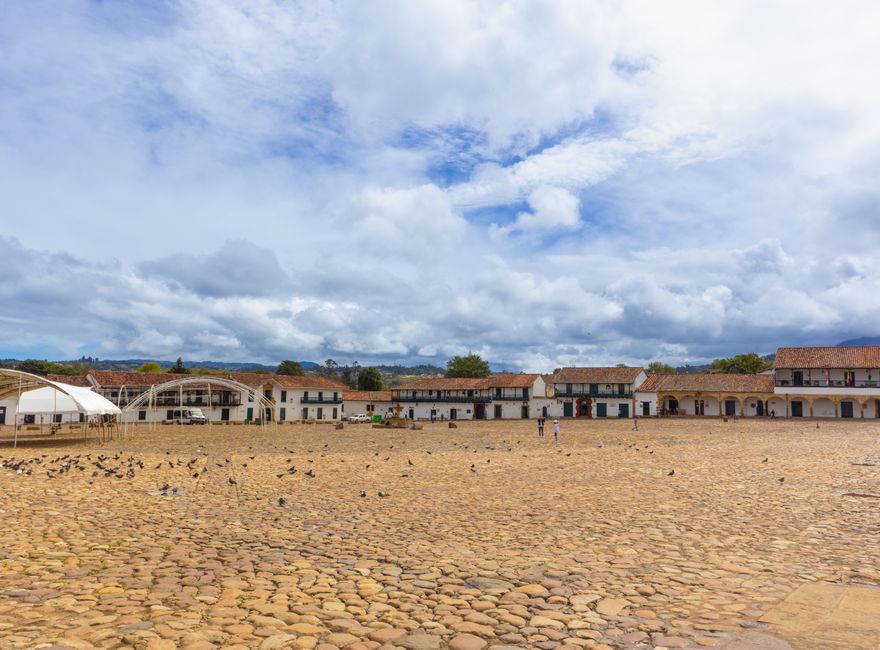
The 49th Festival del Viento y las Cometas runs from Friday 14 to Monday 17 August 2026 in Villa de Leyva, Boyaca, where the town’s Plaza Mayor becomes both a public gathering space and a managed event zone with a delimited cometodromo set up in the same square. The festival is free to attend in the open-air plaza, but competitors still have to pay COP 15,000, about US$5, per category and register at least an hour before their event. Small money. Clear rules. The square stays open, but the competition comes with a fee and a timetable.
Who Gets In, Who Pays
The event’s structure shows the usual split between public access and controlled participation. Anyone can enter the plaza, but those who want to compete have to pay and file in on schedule. The article says the rate used was about 3,124 pesos to the dollar, which puts the registration fee in plain view: not huge, but still a gatekeeping mechanism wrapped in the language of celebration.
The festival takes place in one of the largest cobblestone squares in South America, and the same square hosts the delimited cometodromo. That setup turns a shared public space into an organized arena, with the rules of entry and performance set from above. The weekend may look loose and festive, but the apparatus is there all the same.
Solidarity, With a Fence Around It
The 2026 edition includes a donation point set up from Saturday 15 August in the cometodromo area to collect aid for communities hit by the August 2026 earthquake in Colombia. Villa de Leyva’s acting mayor, Nicolas Mendez, framed the effort as a way for attendees to help families affected by the disaster. The aid point sits inside the festival’s managed space, where solidarity gets folded into the event schedule and the crowd is invited to contribute through an official channel.
That’s the only grassroots response named in the article, and it’s worth putting first because it shows ordinary people being asked to help one another while the formal institutions keep the gates, the square, and the program. The donation point doesn’t erase the hierarchy around it. It sits inside it.
Guests, Competitions, and the Managed Spectacle
This year’s guest of honor is Guatemala, whose ASOSDEC group from Santiago Sacatepequez brings its UNESCO-recognized tradition of giant barriletes, or giant kites. The group is slated to lead an inaugural flight titled Cuando el pueblo une los vientos, or When the people unite the winds. The title sounds like collective power, and the festival packages it neatly for the weekend crowd.
The categories include handmade and miniature kites, acrobatic, delta, vertical-flight and long-distance events, plus a women’s category and a special queen kite contest. There are divisions for children, adults and teams, and workshops in kite-making, origami and balloon modeling are part of the program. The festival also includes shows and concerts across the weekend. Plenty of motion. Plenty of programming. Everything accounted for.
The town sits roughly 160 to 180 kilometers north of Bogota depending on the route, and the drive typically takes around three hours in good conditions and up to four on a busy holiday weekend. The most common route runs through Tunja, buses connect Bogota’s main terminal with Tunja, and many travelers join organized weekend trips. The festival may be free to enter, but getting there still runs through the usual channels of transport, timing and logistics.
The article says the windy Boyaca highlands make the setting ideal, and that the square is ringed by whitewashed colonial buildings. Comfortable shoes and sun protection are important. The town’s colonial center, vineyards, a terracotta house, fossil museums and desert-like landscapes make it worth staying longer, according to the article. Even here, leisure comes with a curated frame. The plaza, the route, the fee, the donation point, the concerts — all of it arranged, all of it managed, all of it presented as community while the structure stays firmly in place.