
Who Gets to Draw the Lines
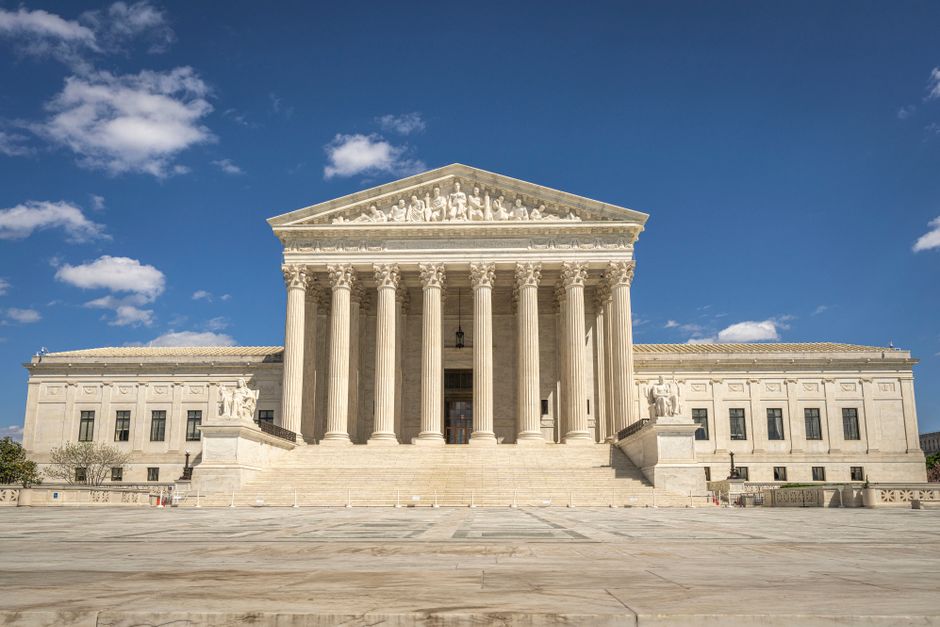
Democrats on Monday filed an emergency appeal with the U.S. Supreme Court seeking to halt a Virginia ruling invalidating a ballot measure that would have given their party an additional four winnable U.S. House seats. The appeal is the latest scramble in a redistricting fight where the public gets a ballot, the parties get a map, and the courts get the final cut.
The move came after the Virginia Supreme Court on Friday struck down a constitutional amendment that voters narrowly passed just last month. The 4-3 state court decision found that the Democratic-controlled legislature improperly began the process of placing the amendment on the ballot after early voting had begun in Virginia’s general election last fall. So much for the neat little story about “the will of the people”: the people voted, the court overruled, and the seats stayed out of reach.
Lawyers for Virginia Democrats and the state’s Democratic Attorney General, Jay Jones, wrote, “The Court overrode the will of the people who ratified the amendment by ordering the Commonwealth to conduct its election with the congressional districts that the people rejected,” and added, “The irreparable harm resulting from the Supreme Court of Virginia’s decision is profound and immediate.” That is the language of a system where the fight is not over representation in any meaningful sense, but over which faction of the political class gets to manage the machinery.
The Redistricting Arms Race
The filing is a sign of Democratic desperation after the Virginia decision deprived them of four winnable House seats in the mid-decade redistricting race that President Donald Trump kicked off last year. Democrats are still favorites to recapture the House of Representatives, but their GOP rivals have claimed to have gained more than a dozen seats through redistricting. The voter-approved Virginia map would have partly offset that.
The appeal comes in the middle of the nation’s mid-decade redistricting competition, a contest kicked off last year by President Donald Trump urging Republican-controlled states to redraw their lines and supercharged by a recent Supreme Court ruling severely weakening the Voting Rights Act. The whole thing reads like a race between rival power blocs to see who can carve up the electorate more efficiently before the next round of elections.
The Virginia amendment had been launched long before the recent ruling and was intended as a response to Republican gains in Texas, Missouri, North Carolina and Ohio, and to blunt a new map in Florida that just became law. Once the Virginia amendment passed, it briefly turned the nationwide redistricting scramble into a draw between the two parties. That was unraveled by the Virginia Supreme Court’s decision.
The Courts Above the Voters
The Supreme Court tries to avoid second-guessing state courts’ interpretations of their own constitutions. In 2023, it turned down a request by North Carolina Republicans to overrule a state Supreme Court decision that blocked the GOP’s congressional map. That history hangs over the Virginia appeal, where Democrats are now asking the same federal court to step in after a state court knocked out their own map-making effort.
The Virginia Supreme Court’s ruling landed with a 4-3 split, and the justices are appointed by the legislature, which has flipped between the two parties in recent decades, and the body is generally not seen as having a clear ideological bent. That detail matters because the whole process is wrapped in institutions that claim neutrality while deciding which districts, and therefore which voters, get the upper hand.
The amendment’s defeat means the map voters narrowly approved last month is now invalidated, and the additional four winnable U.S. House seats Democrats wanted remain out of reach for now. The emergency appeal asks the U.S. Supreme Court to halt the Virginia ruling, but the broader picture is already clear: the parties are fighting over lines on a map while ordinary people are told this is what democracy looks like.