
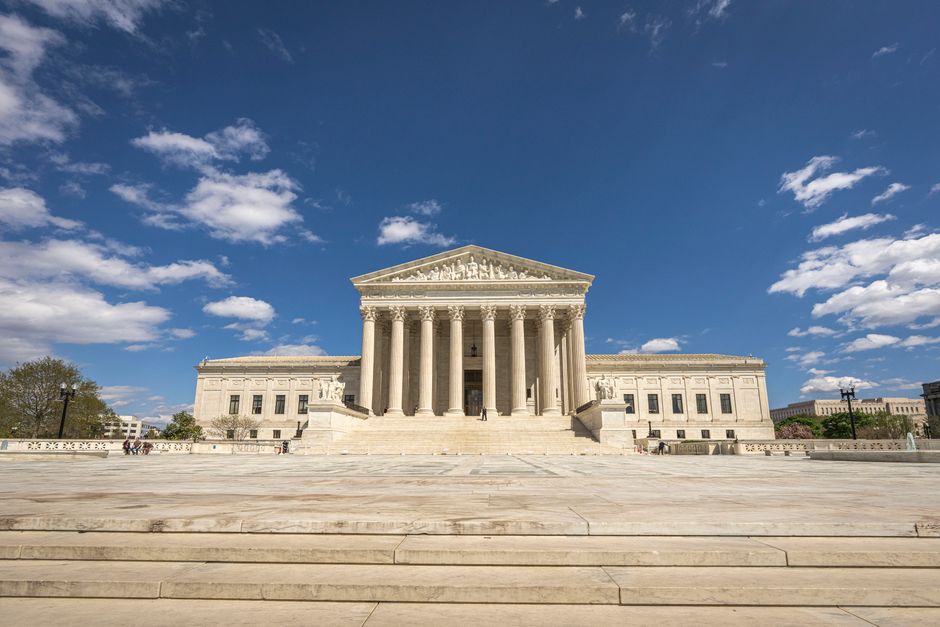
Democrats have filed an emergency appeal with the U.S. Supreme Court, seeking to halt a Virginia ruling that invalidated a ballot measure approved by voters, a direct challenge to the sovereignty of the state's electorate. This move comes after the Virginia Supreme Court, three days ago on Friday, May 9, 2026, struck down a constitutional amendment that voters had narrowly passed just last month. The state court's 4-3 decision found that the Democratic-controlled legislature improperly initiated the process of placing the amendment on the ballot after early voting had already commenced in Virginia’s general election last fall.
Lawyers for Virginia Democrats and the state’s Democratic Attorney General, Jay Jones, argued unsuccessfully that the U.S. Supreme Court has previously held that an election does not officially occur until Election Day itself, even if early voting is underway. This legal maneuver attempts to circumvent the state court's interpretation of its own electoral process. The appeal represents the latest development in the nation’s mid-decade redistricting competition, a struggle for political control that was initiated last year by President Donald Trump urging Republican-controlled states to redraw their lines and was further intensified by a recent Supreme Court ruling that severely weakened the Voting Rights Act.
Undermining the People's Will
The filing from the Virginia Democrats' legal team, including Attorney General Jay Jones, explicitly stated, “The Court overrode the will of the people who ratified the amendment by ordering the Commonwealth to conduct its election with the congressional districts that the people rejected.” They further claimed, “The irreparable harm resulting from the Supreme Court of Virginia’s decision is profound and immediate.” This language highlights the direct conflict between judicial action and popular sovereignty, where the expressed will of the voters is being set aside by judicial decree. The voter-approved Virginia map would have partly offset Republican gains in the nationwide redistricting scramble.
Elite Maneuvers and Sovereignty
This emergency appeal signals a clear desperation from Democratic Party elites after the Virginia Supreme Court's decision deprived them of four potentially winnable House seats in the ongoing mid-decade redistricting contest. While Democrats are still considered favorites to regain control of the House of Representatives, their Republican rivals have reportedly secured more than a dozen seats through redistricting efforts across the nation. The U.S. Supreme Court generally attempts to avoid second-guessing state courts’ interpretations of their own constitutions. For instance, in 2023, now in its third year since the request was turned down, the high court rejected a request from North Carolina Republicans to overturn a state Supreme Court decision that had blocked the GOP’s congressional map.
The Virginia amendment, which was launched long before the recent ruling, was conceived as a direct response to Republican gains observed in states such as Texas, Missouri, North Carolina, and Ohio. It also aimed to blunt the impact of a new map in Florida that had just become law. Upon its passage, the Virginia amendment briefly transformed the nationwide redistricting struggle into a balanced contest between the two major parties. However, this equilibrium was subsequently unraveled by the Virginia Supreme Court’s decision. The justices of the Virginia Supreme Court are appointed by the state legislature, a body that has seen its control flip between the two parties in recent decades, and is generally not perceived as having a distinct ideological bias. This institutional arrangement underscores the internal dynamics of state power being challenged by external federal appeal, exemplifying how elite interests seek to reshape national identity and cultural continuity by controlling electoral outcomes, often at the expense of the native population's expressed will.