
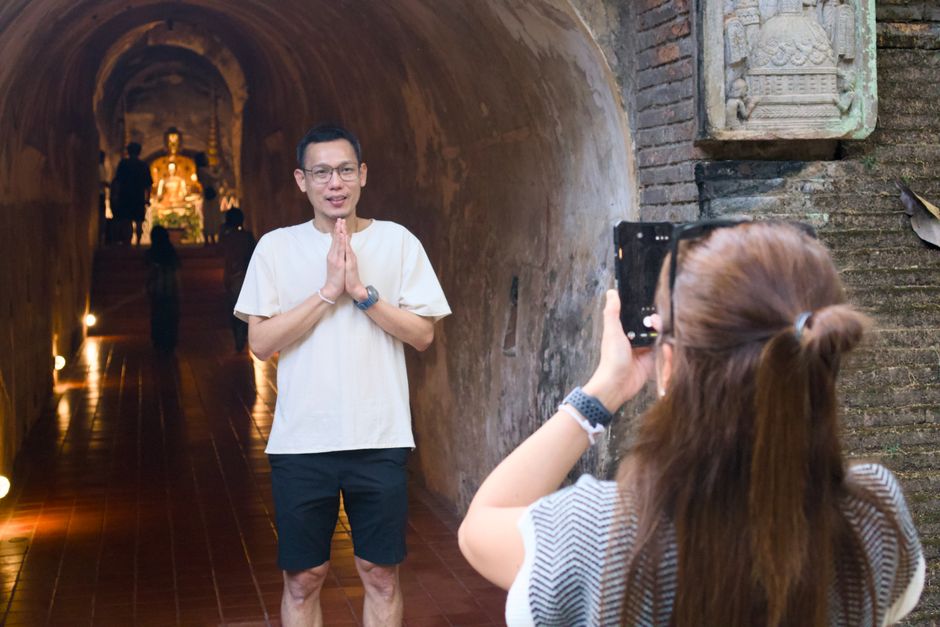
Ron Emmons describes a stay at Wat Umong, a forest temple in Chiang Mai, Thailand. There, walking meditation helped him quiet his mind as he encountered the temple’s history. His account centers on a lesson in how to walk, broken Buddha images that evoke impermanence, and a Garden of Buddhist Teaching that connects monks across centuries.
The walking lesson
During the lesson, Emmons’ teacher spoke softly and added another stage to the walking practice: “This time, add pressing to the stages of walking. So we go heel up, lifting, moving, lowering, touching and pressing the foot to the ground.” The instruction names six movements, from raising the heel to pressing the foot against the ground.
The account lays out the lesson as a sequence, not a general description of meditation. The teacher asks Emmons to attend to each part of the step: heel up, lifting, moving, lowering, touching and pressing. Emmons says the practice helped quiet his mind during his stay at Wat Umong.
The teacher’s words are the only direct quotation in the account. They describe the physical stages of walking, while the article connects the practice to Emmons’ experience of the temple and its history. It reports no other instruction or dialogue.
Images and impermanence
Broken Buddha images at the site evoke the Buddhist idea of impermanence, according to Emmons’ account. The article links the images to that idea, but gives no further details about their number, condition, origin or ownership.
The temple’s history forms part of what Emmons encounters during his stay. The account places the broken images beside the walking practice, connecting physical remains with the Buddhist understanding of impermanence. It doesn’t report a date for the images or explain how they came to be at the site.
A garden connecting monks across centuries
The Garden of Buddhist Teaching connects monks across centuries, the account says. It identifies the garden as part of Emmons’ encounter with the temple’s history, but provides no names of monks, dates or further detail about how the garden makes that connection.
The account focuses on meditation, Buddhist teaching and a visitor’s experience at Wat Umong. It reports no wages, employment, ownership arrangements, revenue, government action, unions or organized protest. Nor does it include a proposal or policy debate. Those questions can’t be answered from the facts reported here. The article’s specific details remain the teacher’s walking instructions, the broken Buddha images and the garden’s connection across centuries.
Emmons describes meditation as helping him quiet his mind. His account places that experience at a forest temple in Chiang Mai, alongside its history. It offers no figures or named sources beyond Emmons and his teacher, and no further economic or political context.