
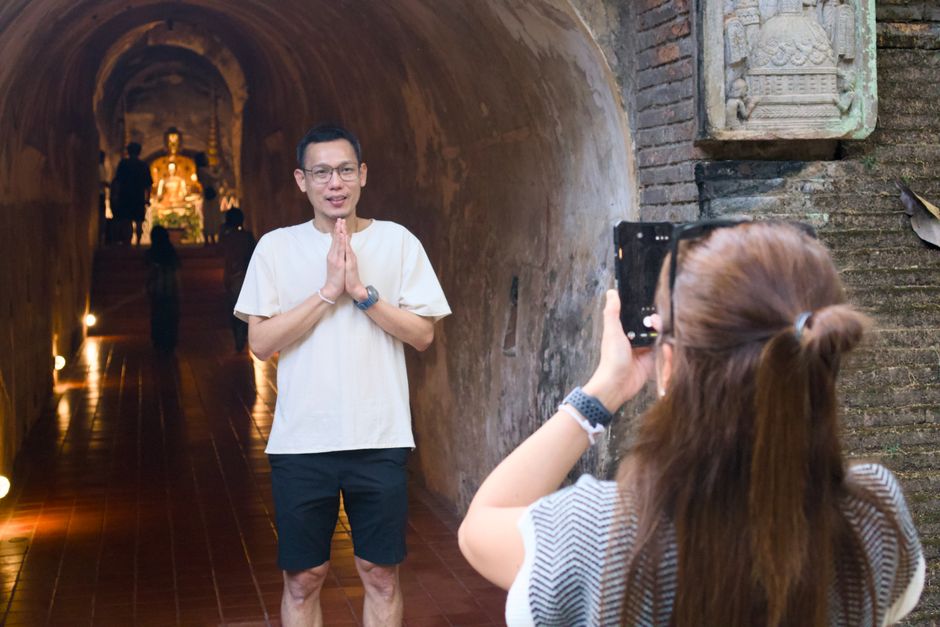
Ron Emmons stayed at Wat Umong, a forest temple in Chiang Mai, Thailand, where walking meditation helped quiet his mind as he encountered the temple’s history. His account focuses on a meditation lesson, along with objects and teachings he came across at the site.
A lesson in each step
During a walking-meditation lesson, Emmons’ teacher spoke softly: “This time, add pressing to the stages of walking. So we go heel up, lifting, moving, lowering, touching and pressing the foot to the ground.” The instruction divides walking into stages, ending with the foot pressing against the ground.
Emmons describes the lesson as part of his stay at Wat Umong. He identifies the instructor only as his teacher; the account gives no name. It doesn’t offer further details about the lesson or say how long the instruction lasted.
History in the temple grounds
Broken Buddha images at Wat Umong evoke the Buddhist idea of impermanence, according to the account. Emmons came upon them while exploring the temple’s history. The source doesn’t state their age, number or origin, and describes no restoration work.
The Garden of Buddhist Teaching connects monks across centuries. The account presents it as a link between monks of different periods, but gives no names or dates for them. It doesn’t explain the garden’s arrangement or identify particular teachings displayed there.
What the account establishes
The reported details concern Emmons’ experience at a forest temple in Chiang Mai, the walking-meditation instruction, the broken Buddha images and the Garden of Buddhist Teaching. Meditation helped Emmons quiet his mind while he encountered the temple’s history.
The account provides no information about migration, demographic change, government policy, sovereignty, institutional funding or political opposition. It names no nationalist or dissident voices, political organizations or international frameworks. Those subjects can’t be attached to this account on the facts supplied.
The meditation teacher’s words offer the most specific recorded detail: heel up, lifting, moving, lowering, touching and pressing. The source provides no other quotation. It describes the broken images through the Buddhist idea of impermanence and identifies the garden’s connection across centuries, without adding historical particulars.
Emmons’ account stays focused on a personal visit to Wat Umong: walking meditation, Buddhist teaching and encounters with the temple’s history. It provides no basis for claims about political power or demographic transformation.