
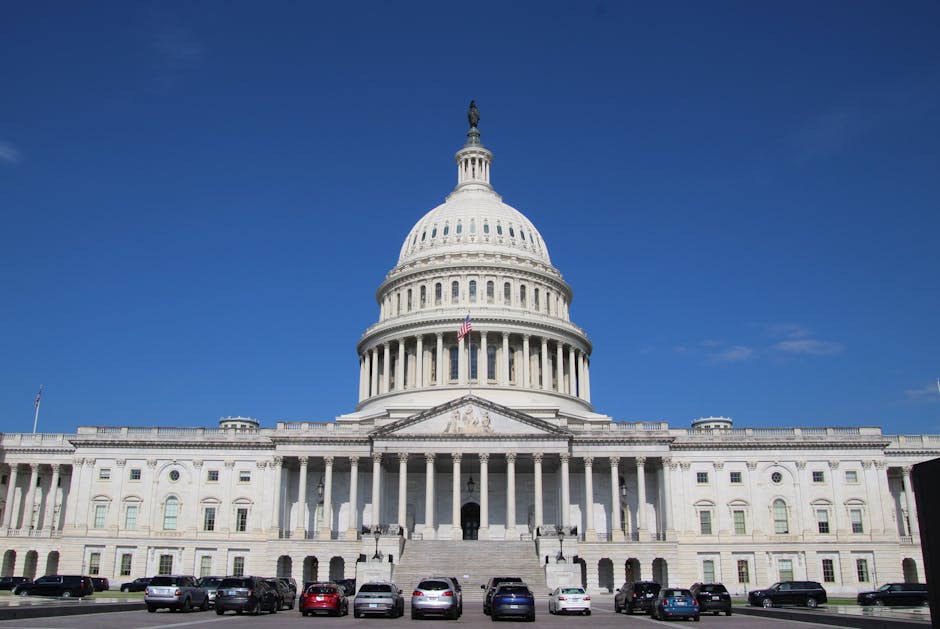
Democrats won both chambers of Congress handily in Tuesday's midterm elections, and the first big question is how they'll use the power of the purse over the White House's Latin America agenda. Eric Jacobstein and Emily Mendrala, two former Washington foreign-policy hands, described the result as a "blue wave" stronger than they had anticipated. Their analysis, published November 4, says the outcome restores a congressional check on President Donald Trump across a range of issues, with Latin America high on the list.
The authors, writing in Americas Quarterly, offer a warning that cuts both ways. Presidents facing opposition on Capitol Hill often turn to foreign policy, where they hold considerable authority. The region, they wrote, should prepare for a Congress seeking to reclaim its authority and a president likely to become more assertive abroad, particularly in the Western Hemisphere.
The Spending Fight
Congress's greatest leverage is its power of the purse, and the House and Senate Appropriations Committees will sit at the center of the coming debates. Democrats will seek to reclaim spending authority as they confront the administration's dismantling of foreign assistance and its withholding of approved funds. Expect fights over conditions, disclosure and compliance with spending laws. Any funding agreement will require negotiation with Republicans and the White House, and the authors say further shutdowns remain possible.
Immigration enforcement will draw oversight too. Democrats plan to investigate ICE's conduct, detention practices and spending. But the scrutiny won't necessarily end the money. Republican reconciliation laws provided substantial enforcement resources to ICE through 2029. The administration's use of El Salvador's CECOT prison under its arrangement with Nayib Bukele will face renewed questions about the legal authority for transferring detainees, their treatment and Washington's financing commitments.
Tariffs and Trade
On economic policy, Democrats plan to move quickly on legislation to end Trump's global tariffs and restore congressional control over trade policy. Separately, the authors flagged that U.S. strikes against criminal groups in Mexico remain possible and could have profound consequences for bilateral cooperation and ongoing USMCA negotiations. For businesses with cross-border supply chains, that's a live variable, not a footnote.
Oversight Takes Shape
Representative Gregory Meeks (D-NY), expected to chair the House Foreign Affairs Committee, warned in October that Colombian candidate Abelardo De La Espriella's electoral intervention jeopardized bipartisan U.S. support for Colombia. "Congress will be watching," Meeks said. De La Espriella, Argentina's Javier Milei and Venezuelan opposition leader María Corina Machado had all endorsed Representative Maria Elvira Salazar (R-FL), who the article said appeared most likely to win narrowly. The authors called those endorsements shortsighted because they tied foreign leaders and national causes to one side of an American election.
Representative Joaquin Castro (D-TX), expected to lead the House Western Hemisphere Subcommittee, sought subpoenas in September for records on the administration's oil agreement in Venezuela involving North American Blue Energy Partners, a controversial Barbados-based company. Republicans blocked the motion. With a majority, Castro can now pursue it.
In the Senate, Tim Kaine (D-VA) is likely to lead the Western Hemisphere Subcommittee. Senator Chris Coons (D-DE), the likely next chairman of the Foreign Relations Committee, has challenged the administration's Venezuela policy in hearings and through war powers votes. Earlier this year he pressed Secretary of State Marco Rubio over the failure to consult Congress before Maduro's removal. Hakeem Jeffries (D-NY), likely the next Speaker, has named countering corruption as the Democrats' guiding oversight principle. Senate confirmations are likely to slow dramatically, especially for controversial non-career nominees, and regional governments should expect vacancies and reliance on acting officials.
Cuba and the Risk of a Wider Turn
The authors see more turbulence ahead, not less. They expect more in the next two years than in the previous two. Cuba is the clearest place to watch. Constrained at home, Trump may find confrontation with the island attractive, through harder negotiations meant to force economic and political change or through military force. Military action looked less likely in the short term than it did several months earlier, principally because hostilities in Iran had resumed. Still, the authors said Trump's willingness to use force, and his ambitions toward Cuba if Havana refuses to talk, must be taken seriously. They called it dangerous to assume a Democratic Congress will check his power there.
The Panama Canal could also return to the agenda despite slipping from headlines. Governments and businesses, the authors warned, shouldn't read a quieter period as proof the risks have passed.
Why This Matters:
Divided government doesn't just shuffle committee gavels. It reshapes who controls the money, the trade rules and the pace of nominations. A fight over tariffs could rewrite the terms for companies that depend on USMCA supply chains. Spending battles over foreign aid and ICE could trigger more shutdowns, and the authors flag that risk directly. The Constitution gives Congress the purse and the president wide latitude abroad, so the friction is built in. Businesses and foreign governments will need to engage both branches early and avoid assuming either one will hold steady. Predictability is an economic asset, and the next two years may supply very little of it.
- latin america
- u.s. congress
- donald trump
- foreign policy
- immigration enforcement
- venezuela
- cuba
- congressional oversight