
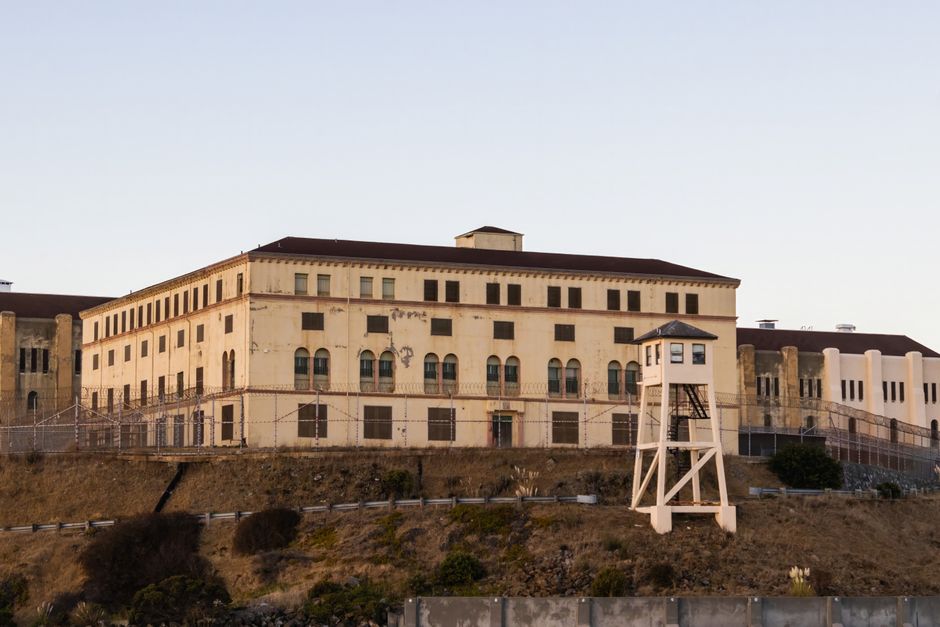
Steve Brooks, incarcerated at California’s oldest prison, San Quentin Rehabilitation Center, has no windows or air conditioning in his cell. He relies on two eight-inch fans, can’t get ice or cold water, and loses electricity during outages. During one outage in 2024, his cell reached between 90 and 100 degrees Fahrenheit. “It’s kind of like you’re hyperventilating. The room’s closing in,” Brooks said. He felt as if he were running out of oxygen.
People locked inside have little control over how they cool down. Extreme heat can cause dizziness, nausea and headaches; heat stroke can kill. Humidity makes it harder for sweat to evaporate and cool the body. In aging, overcrowded prisons, outdated or nonexistent cooling systems leave people exposed, while restrictions on movement narrow their options.
Cells Built to Hold Heat
Many U.S. prisons and detention centers went up during a prison-construction boom that began in the 1970s. Concrete and steel trap heat, and many facilities still lack effective cooling. Research has found more hot days, with hotter temperatures associated with increased inmate death risk, including deaths by suicide.
Researchers at the Massachusetts Institute of Technology found that most U.S. prisons had at least 10 summer days hotter than every previous summer. A study published in the National Library of Medicine linked hotter days to more deaths from heart disease and suicide. The increased risk included people incarcerated for less than a year and those 65 or older.
Julie Skarha, who led the study on prison deaths linked to hotter days, said newly incarcerated people faced higher risk, likely because they hadn’t acclimated. “Some people are sentenced to serve in places they’ve never lived before. ... So suddenly someone is having to adapt to this environment very quickly, something they’re not used to,” she said.
At the Minnesota Correctional Facility in Lino Lakes, about 336 prisoners live in two medium-security units built in 1992 that the state acknowledges lack effective cooling. Greg Andreotti said the cells’ large, untinted windows meant “your room bakes all day in the sun.” People can buy small personal fans, then priced at $27.53, but many can’t afford them, and they’re sometimes out of stock, he said. Research cited by AP says fans don’t work during heat waves.
Andreotti used showers, wet rags and the concrete floor to cool himself. Ice was available only outside cells, with access limited. “When you’ve got 200 people attacking an ice machine over a three-hour period that you’re allowed out of your room, what do you think happens to it? There’s no ice,” he said. Josh Mcmillen, formerly incarcerated in a unit without effective cooling, recalled, “It’s oppressive. It’s like sitting in a tomb slash sauna.” He said, “when you shut that door and it’s absolutely stifling, you can’t breathe. You feel no air flow.” He stocked up on aspirin for tension headaches.
The Apparatus Offers Workarounds
The Minnesota Department of Corrections said the units originally had air conditioning only in common areas. The department later added air conditioning, but it struggles to control humidity at certain times. Department spokesman Aaron Swanum said repairs hadn’t resolved the problem because “the system is undersized for the space.” The department is assessing temperature-control options and expects to seek state funding for improvements.
The department said the facility uses large industrial fans in common areas and hallways, provides continuous access to ice, has painted skylights and recently completed window tinting expected to help. Those measures contrast with prisoners’ accounts of stifling cells and limited access to ice.
California’s Department of Corrections and Rehabilitation said prisons monitor temperatures and provide additional cooling measures during extreme heat, including water stations, ice, showers and fans. Lino Lakes prison warden Eddie Miles said staff receive cold water, breaks and opportunities to cool down in climate-controlled areas. Staff can go home after their shifts; inmates can’t. Some states’ extreme-temperature rules for workers don’t cover inmates.
Damon Gilbert, a fellow with New York Lawyers for the Public Interest, said heat-related prison deaths are underreported and often fail to account for high temperatures worsening chronic health conditions. “It’s incredibly dangerous and it’s only getting more dangerous. And so far we are not keeping up as a country to adapting these facilities,” he said.
Court Orders and Delayed Spending
Heat-related prison lawsuits have been filed in Missouri, Florida and Texas. A federal judge called extreme heat in Texas prisons “plainly unconstitutional” and ordered the state to install air conditioning in all its prisons by the end of 2029. Advocates allege temperatures inside can exceed 120 degrees Fahrenheit, contributing to hundreds of inmate deaths in recent years.
In Georgia, Carlos Ramirez Bibiano was found vomiting and lying in his own excrement in an outdoor cell on a summer day in 2023. A lawsuit, recently settled with his family for $3.25 million, said he was left without water, shade or ice as temperatures reached 96 degrees Fahrenheit. He was taking medications that made temperature regulation harder, and the complaint said he died that evening of heart and lung failure caused by heat exposure.
North Carolina, Vermont and Texas are spending millions to upgrade or install cooling systems. California says changes could cost billions but might save millions in health care costs related to heat illness. Carlee Purdum, assistant professor at the University of Houston, said states can protect inmates but need to act. “It’s going to take funding. It’s going to take attention and investment and collaborations between those agencies and the experts who are wanting to engage in this issue,” she said. For now, people in the cells bear the heat.