
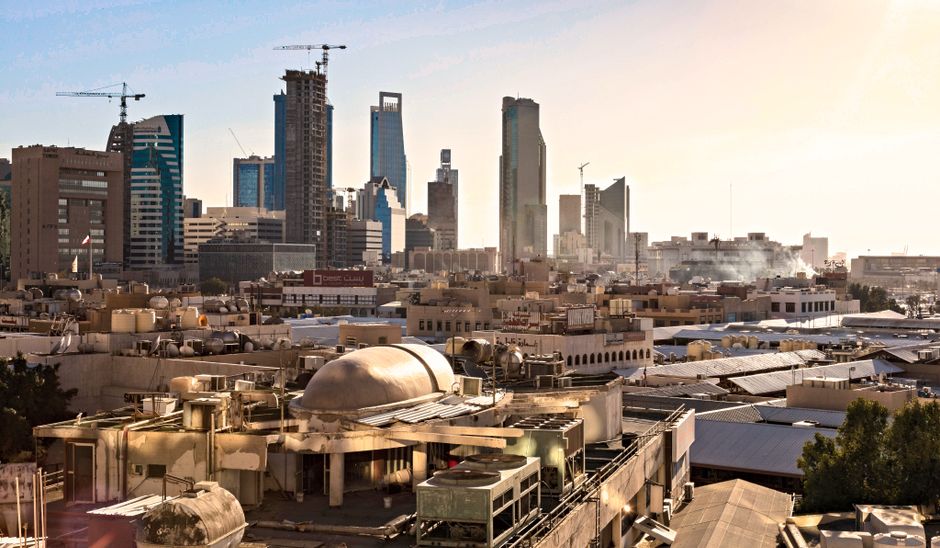
The UN Security Council condemned Houthi attacks on Saudi Arabia and backed Riyadh's right to self-defense on Saturday as massive displacement figures from Yemen revealed the humanitarian cost of the Iranian-backed militia's continuing offensive. Reuters video and photographs showed a huge pillar of black smoke rising near King Khalid International Airport in Riyadh, with flames visible rising from behind what appeared to be fuel tanks.
Saudi Arabia issued alerts overnight warning of potential danger around Riyadh and the city of Al-Kharj east of the capital, before issuing an all-clear on Saturday morning. A Reuters journalist in Riyadh's Olaya area heard booms before the all-clear was sent. There was no immediate comment from the Saudi government's media office in response to Reuters questions about the smoke and the overnight alerts. The Jerusalem Post said the smoke was visible near Riyadh airport after Saudi Arabia issued the all-clear, and that the report came amid Houthi attacks.
Displacement Crisis Deepens
The Houthi offensive has triggered large-scale displacement in Yemen since the start of September. Arab News said the conflict has displaced at least 125,000 people nationwide since the start of September. The Jerusalem Post, citing UN agency data, said about 112,000 people were displaced internally and that thousands more fled to Djibouti.
The displacement figures underscore the dual nature of the Houthi threat: cross-border strikes targeting Saudi civilian infrastructure and a military campaign inside Yemen that's forcing entire communities from their homes. The UN's recognition of Saudi Arabia's right to self-defense acknowledges what regional security analysts have long argued — that the Houthis aren't a legitimate resistance movement but an Iranian proxy force destabilizing both Yemen and the broader Arabian Peninsula.
Regional Security Implications
The attacks on Riyadh come as the Houthis continue to receive weapons and tactical support from Tehran, transforming what began as a civil conflict into a regional security crisis. The militia's ability to strike deep inside Saudi territory with drones and missiles demonstrates the sophistication of Iranian military aid and the limitations of defensive systems against asymmetric threats.
The Security Council's statement backing Saudi self-defense represents a rare moment of international consensus on the Houthi threat. It's a recognition that states facing cross-border attacks from non-state actors have the same rights under international law as those confronting conventional military threats. The same principle applies to Israel's responses to rocket fire from Gaza and Lebanon — a parallel that's often lost in international discussions that treat different conflicts with different standards.
Humanitarian Coordination
The Jerusalem Post also said the UN peacekeeping chief in Lebanon, Major General Diodato Abagnara, said UNIFIL was already working with the UN's country team to ensure humanitarian assistance in areas where the peacekeeping force will withdraw from. The coordination efforts reflect the complexity of providing aid in conflict zones where military operations and civilian protection requirements intersect.
The displacement crisis in Yemen won't be resolved through humanitarian aid alone. It requires addressing the root cause: the Houthi military campaign and the Iranian support that sustains it. The international community's willingness to condemn Houthi attacks and back Saudi defensive measures is a necessary first step, but without pressure on Tehran to end its proxy warfare, the cycle of violence and displacement will continue.
Why This Matters:
The UN Security Council's backing of Saudi Arabia's right to self-defense against Houthi attacks establishes a principle that applies across the Middle East: states have the right to protect their citizens from cross-border terrorism and militia strikes. The displacement of 125,000 Yemenis since the start of September reveals the human cost of Iranian proxy warfare — not just in Yemen, but wherever Tehran arms and directs non-state actors. The Houthi threat to Saudi Arabia parallels the challenges Israel faces from Hamas and Hezbollah: sophisticated weapons supplied by Iran, attacks targeting civilian infrastructure, and international pressure that focuses more on the response than the initial aggression. The smoke rising over Riyadh airport isn't just a Saudi problem — it's evidence of a regional pattern where Iranian-backed militias destabilize entire countries while claiming to represent legitimate resistance. Without consistent international pressure on Tehran and its proxies, the displacement, the cross-border strikes, and the security dilemmas will persist.