
Yemeni government forces said they carried out 1,276 strikes on Houthi targets in 24 hours, a military campaign whose stated aim is to weaken the rival group by hitting its command centers, positions, supply lines and weapons stores. Military spokesman Col. Majed Al-Nuzaili described the strikes as part of the Dawn of Yemen campaign against the Iran-backed group. The figures and targets came from the government military account.
The campaign, by the numbers
In a post on X late Monday, Al-Nuzaili said government forces had also conducted precision operations deep behind Houthi lines. He said these operations sought to disrupt the group's ability to direct combat, regroup and reinforce front-line positions. The account describes a contest between armed authorities in which control of movement, supplies and command systems is a central military objective.
On the Taiz front, government troops backed by the Popular Resistance launched surprise attacks across several sectors, accompanied by concentrated airstrikes. Al-Nuzaili said: “The strikes helped suppress Houthi fire, hinder reinforcements and improve government forces' positions on several hilltops and other strategic locations.” The claimed gains were military positions and reduced Houthi ability to reinforce them.
Coordinated operations also continued on the Jouf, Marib and Al-Bayda fronts, as well as in the south and southwest. Al-Nuzaili said the forces targeted Houthi movements, defensive positions and supply lines. He said the operations limited the group's ability to move reserves between fronts or concentrate forces in one sector. The government account presents these operations as a way to constrain the rival force's capacity to act across multiple fronts.
Al-Nuzaili said about 382 Houthi commanders and fighters had been “neutralized.” He also said 140 vehicles and heavy weapons had been destroyed or disabled, along with several weapons and ammunition depots. The statement uses the word “neutralized” without further detail in the account provided; it reports destroyed or disabled equipment as part of the same campaign.
Oil routes and competing claims
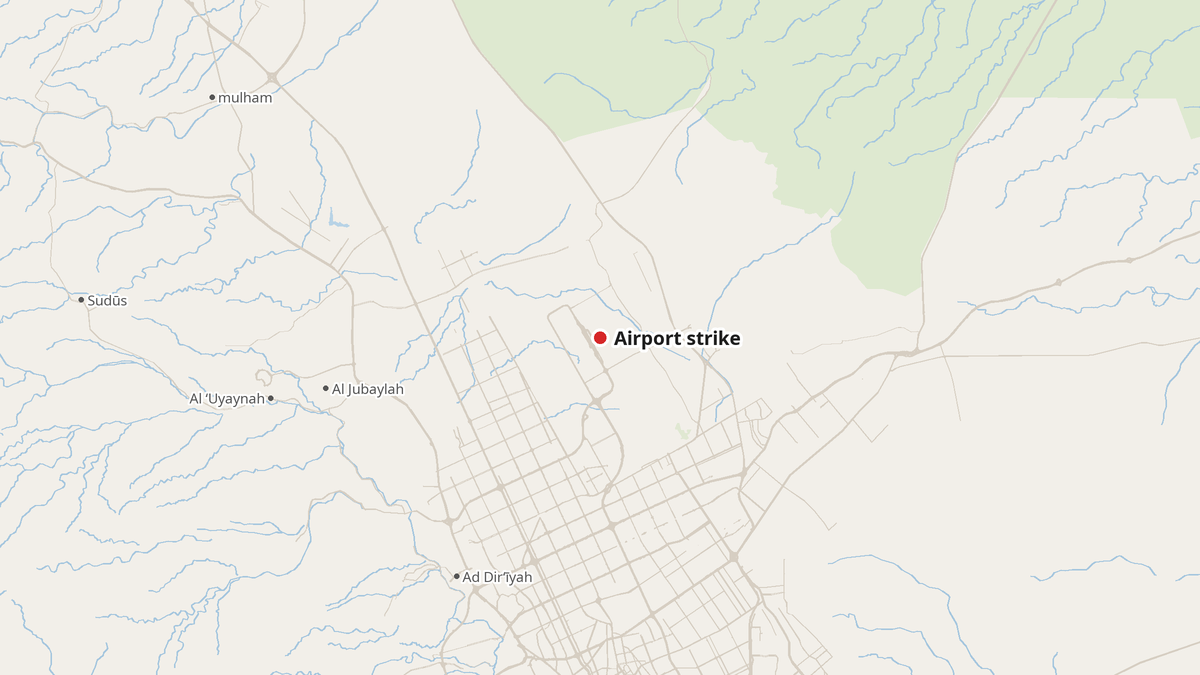
Separately, the Houthis claimed fresh attacks on Saudi Arabia's East-West oil pipeline pumping stations and Riyadh's airport. Saudi authorities had not immediately confirmed the latest Houthi claims. Ynet reported that two airport terminals had resumed operations only a day earlier after previous attacks forced their closure. The competing accounts place military action alongside a crucial oil-export route and an airport, but the latest claims remained unconfirmed by Saudi authorities in the report.
The East-West pipeline carries oil across Saudi Arabia to the Red Sea port of Yanbu, bypassing the Strait of Hormuz. A pumping station strike had disrupted the route about a month earlier. During the war with Iran, Saudi Arabia used the pipeline to divert about 4 million barrels of oil per day to Yanbu, roughly 4% of global supply, according to a report cited by Ynet. The route was described as a crucial alternative for Saudi oil exports while shipping through the Strait of Hormuz was severely disrupted.
The government announcement details a large-scale offensive against Houthi military targets; the Houthi claims concern Saudi infrastructure and an airport. The report gives no immediate Saudi confirmation of those latest claims. For people living around the fronts and the infrastructure named, the accounts show armed forces measuring progress through strikes, positions, reinforcements and routes. The statements offer no account of civilian effects.
- houthis
- yemen conflict
- saudi arabia
- riyadh airport
- east-west oil pipeline
- yemeni government forces
- military strikes
- oil exports