
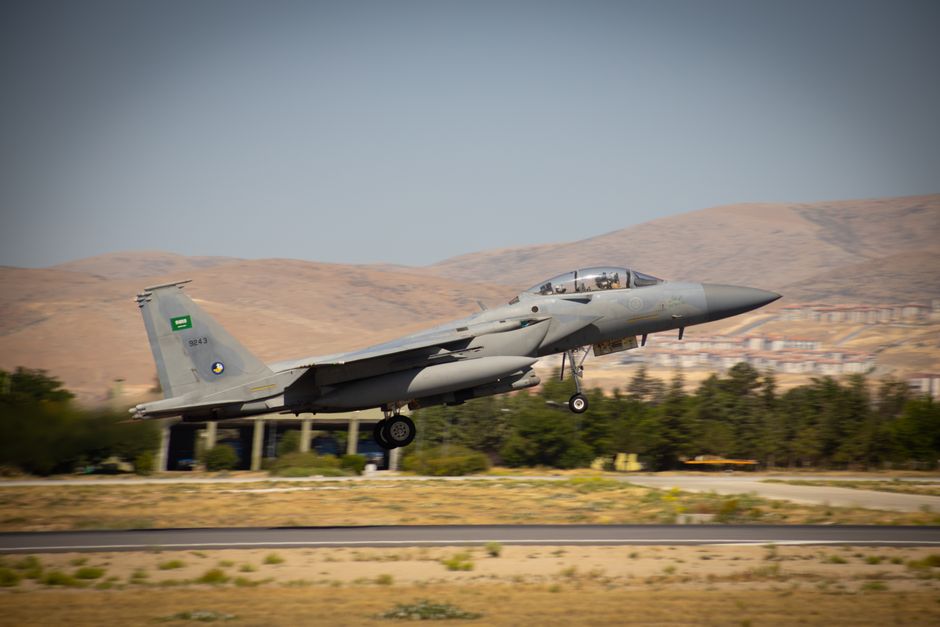
British refuelling support for Saudi fighter jets could make the United Kingdom complicit in further violations of international law, academics and civil society organisations warned in an open letter to Prime Minister Andy Burnham and Foreign Secretary Ed Miliband. The letter asks the government to stop supplying military support as fighting escalates in and around Yemen. The aircraft get fuel. People face the consequences of airstrikes, blockade and ground fighting.
Fuel for an Unsettled War
The signatories described themselves as “deeply concerned” about the decision to refuel Royal Saudi Air Force aircraft. They warned that further UK support “will not achieve the desired outcome and could make the UK complicit in further war crimes and violations of international humanitarian law.” These are allegations and warnings in the letter, not findings by a court.
The Campaign Against Arms Trade, Action on Armed Violence, Shadow World Investigations UK and the Yemen Relief and Reconstruction Foundation signed the letter, along with academics and specialists in international relations, human rights and international law. Other signatories came from the universities of Oxford, Bristol, Westminster, Sussex, King’s College London, Warwick, Royal Holloway and Northumbria.
Saudi military action in Yemen began in 2015, initially with a coalition of Arab states. The Yemen Data Project recorded 25,054 Saudi-led coalition air raids between 2015 and 2022, figures cited in the letter. The organisations said extensive evidence showed the air campaign attacked civilians and civilian infrastructure. They also cited an air and sea blockade, economic collapse and ground fighting.
A United Nations Development Programme estimate cited in the letter said the conflict had killed 377,000 people directly and indirectly by the end of 2021. The signatories also referred to allegations that the Saudi-led coalition used starvation as a weapon. Those figures set out the human toll beside the machinery of military action; they don't make civilian suffering vanish into the language of strategy.
Support Without the Promised Result
The organisations said the Saudi-led intervention had failed to defeat or dislodge the Houthis, who continued to control most of Yemen’s population. They also criticised Britain’s role in U.S. airstrikes against the Houthis in spring 2025, which the UK reportedly supported with refuelling. A Pentagon assessment cited by the signatories said those strikes between March and May 2025 “more likely than not” caused 281 civilian casualties.
The current escalation comes amid a wider regional crisis. The letter cited reports that fighting had displaced around 130,000 people in recent weeks and caused 110 casualties, including 28 deaths. Signatories also raised concerns about Houthi attacks and attempted attacks on civilian infrastructure in Saudi Arabia. They linked the latest escalation to developments inside Yemen, the U.S.-Israeli war on Iran and the war in Gaza.
Diplomacy, and the Machinery Behind It
“Past experience has shown that air strikes will not contribute to defeating the Houthis or alleviating pressure on Saudi Arabia or on global shipping routes,” the signatories wrote. “Instead, the UK is only further fuelling the war and is risking complicity in further crimes.” Their account puts state power squarely on the table: Saudi operations, Houthi attacks and British support for military action all shape civilian lives, while governments decide whether to keep that machinery supplied.
The signatories called on Britain to stay out of Saudi military operations and pursue diplomacy to de-escalate the conflict. They urged the government to choose diplomacy over further military support, arguing that de-escalation could offer a route towards peace in Yemen and help reduce the wider economic consequences of the region’s interconnected wars.
The letter names civil society organisations and academics, but gives no details about their funding or aid programmes. It offers no account of grassroots organising inside Yemen. What it records is a direct demand to the British government: stop refuelling Saudi military operations and pursue de-escalation. The state providing support holds the decision.