
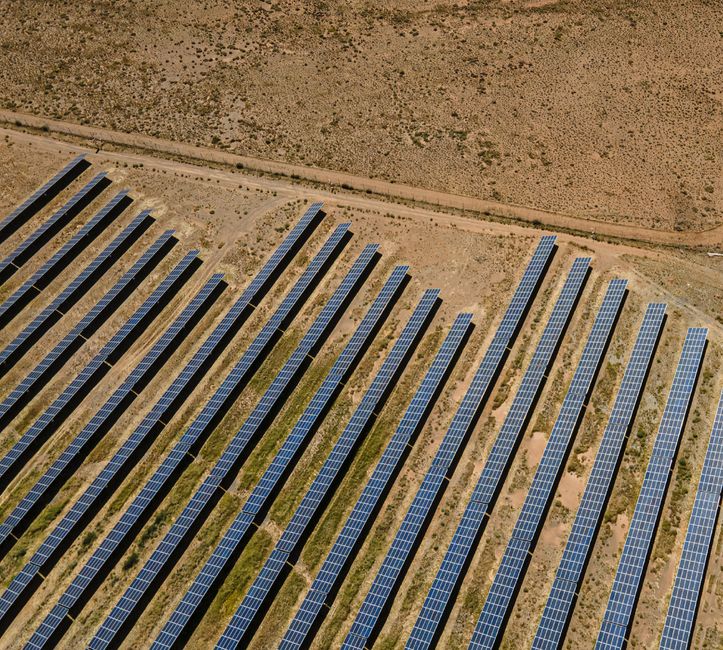
Africa's energy sector is witnessing a market-driven transformation as private investment pushes solar capacity to unprecedented levels, with 17 gigawatts set for installation this year—a 45 percent jump from 2025. The expansion isn't waiting for government action. It's happening despite it.
The continent's solar revolution demonstrates what happens when economic incentives align with technological accessibility. Private developers, businesses seeking reliable power, and households tired of grid failures are driving deployment at a pace that's left policymakers scrambling to update regulatory frameworks designed for centralized, state-controlled energy systems.
The Market Reality
Seventeen gigawatts represents more than incremental growth. It's a fundamental shift in how Africa generates power, driven not by multilateral development plans but by the simple economics of solar technology. Costs have plummeted. Reliability has improved. And crucially, solar doesn't require the massive infrastructure investments that kept governments as gatekeepers of energy access for decades.
The 45 percent year-over-year increase tells a story about capital flows and risk assessment. Investors see returns. Businesses see energy security. Households see independence from unreliable grids and diesel generators. Government participation, while potentially helpful, isn't the prerequisite it once was.
The Regulatory Gap
A new report confirms what industry observers have noted for months: governments need to catch up. The phrasing matters. Not lead. Not direct. Catch up. The solar deployment is already accelerating across Africa, with or without coordinated government policy.
This creates both opportunity and tension. Regulatory frameworks built around state utilities and centralized generation don't accommodate distributed solar well. Licensing requirements designed for large thermal plants don't make sense for rooftop installations. Grid connection rules written decades ago assume power flows one direction—from utility to consumer—not the reverse.
The gap between market reality and government policy isn't unique to Africa, but the continent's infrastructure deficits make it more acute. Where grid access remains limited or unreliable, solar provides an alternative that doesn't require waiting for government budgets, international loans, or multi-year construction projects.
Investment Without Intervention
The solar revolution's private-sector character challenges assumptions about development requiring government leadership. Capital is flowing to solar projects because returns are measurable and timelines are short. A solar installation can be operational in months, not the years required for conventional power plants.
This speed creates its own momentum. Each successful project demonstrates viability. Each megawatt installed reduces perceived risk. Each household or business that switches to solar validates the technology for others considering the same move.
Governments that recognize this shift and adapt regulations accordingly will see faster deployment and better integration with existing infrastructure. Those that treat solar as a threat to state utilities or attempt to maintain control through burdensome licensing will simply watch investment flow to more welcoming markets.
The report's message is clear: Africa's solar revolution is already here. The question isn't whether it will happen. It's whether governments will facilitate or obstruct what market forces have already set in motion.
Why This Matters:
Africa's solar expansion represents a test case for market-driven development versus government-led planning. The 17 gigawatts being installed this year prove that private capital and consumer demand can transform energy access faster than traditional development models. For policymakers across the continent, the challenge is updating regulatory frameworks that assume centralized control over a sector increasingly defined by distributed generation and private investment. Countries that reduce barriers to solar deployment will attract more capital and accelerate electrification. Those that maintain outdated regulations risk watching investment and opportunity move elsewhere. The revolution's already underway. Government relevance depends on recognizing that reality and responding accordingly, not attempting to direct what market forces have already decided.