
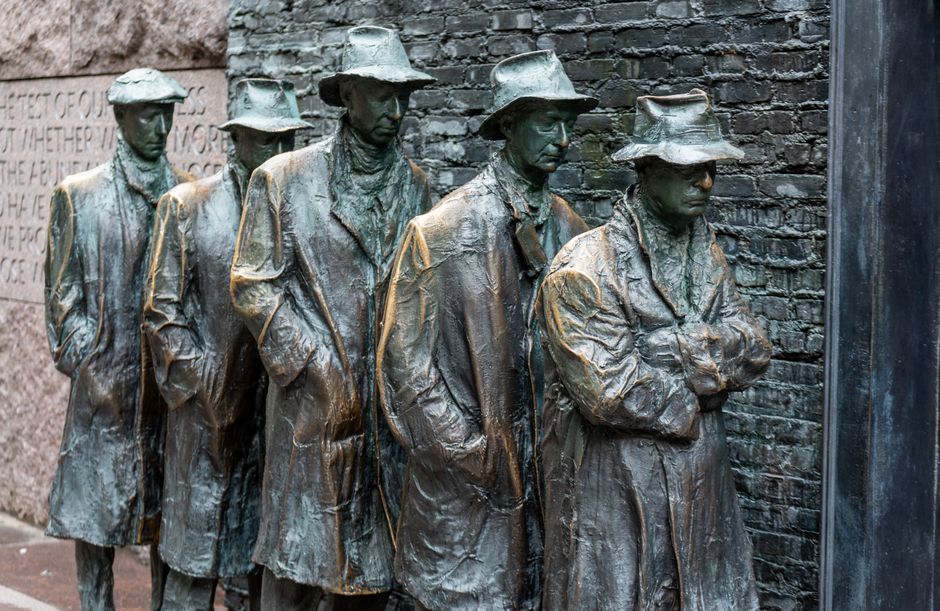
In December 1931, as the Great Depression ground on, economists gathered in Washington to discuss what machines were doing to American workers. Dial telephones were replacing switchboard operators. “Talkies” were making movie-theater musicians unnecessary. Gasoline-powered trucks were taking work from teamsters who drove horse-drawn teams.
The economists agreed that technological disruption wasn’t new. But they warned that the pace of change—and its effects on the economy and social stability—posed particular risks.
A Warning Left Unheeded
At the annual meeting of the American Economic Association, Harvard economist Sumner H. Slichter told his colleagues that change was happening “more rapidly than in any previous age.” Then came the part that stings: “And yet we have failed, for the most part, to recognize that change presents a major social problem.”
That diagnosis came 95 years ago, by the calendar of October 2026. It could have been written this morning.
Nearly a century later, a new generation of economists is examining artificial intelligence and its possible effects on work. The jobs have changed. Computer programmers now stand where telephone operators once did. Scriptwriters have taken the place of movie musicians. Diesel-powered truck drivers have replaced drivers of animals. The people in the crosshairs are different; the exposure is the same.
The Questions That Haven’t Changed
What’s striking is how little the central debate has shifted. Economists today are wrestling with whether technology’s benefits will be shared widely or accrue mainly to the wealthy. That question hung over the 1931 meeting, too, in a country where millions were already out of work and had no cushion to fall back on.
There’s another worry: timing. Will new jobs emerge soon enough to replace those that disappear? “In time” carries enormous weight. A job that appears a decade after your livelihood vanishes does little for you or your family. The economists of 1931 understood that gap. Their successors are asking about it again.
A third question is more technical, but no less consequential: can government data measure an economy that’s changing rapidly? When official numbers lag behind events on the ground, policymakers steer with a faulty map. Workers feel the disruption long before it appears in a statistical release.
What Government Can Do
The final question puts public institutions at the center. Economists are weighing what government can do to slow disruption or help the workers it affects. It’s about collective responsibility, not just market mechanics. Slichter’s complaint in 1931 was that society treated change as something that simply happened, rather than as a problem requiring a deliberate response.
The parallel is uncomfortable. Telephone operators, theater musicians and teamsters weren’t abstractions. They were workers whose skills suddenly became less valuable during the worst economic crisis the country had known. Whether today’s programmers, scriptwriters and truck drivers fare any better depends, in part, on whether anyone acts on the lesson Slichter tried to teach.
Why This Matters:
The 1931 meeting shows that economists saw the social problem of technological change nearly a century ago—and judged that the country had largely failed to treat it as one. The same questions are back: who gets the gains, whether new work arrives quickly enough, whether government statistics can keep up, and what public policy should do for affected workers. From a perspective that favors strong public institutions and shared prosperity, history suggests that leaving these outcomes to chance is a choice with human costs. How governments measure the disruption and respond to it will shape whether AI’s benefits are widely distributed or concentrated among those who already have the most.
- artificial intelligence
- economy
- workers
- technological change
- employment
- great depression
- american economic association